

Getting around Lisbon
Lisbon is crossed on one reloadable card, a red metro line from the airport and a handful of yellow trams that do real work, while the hills decide where you ride and where you walk.
- Card
- Navegante Ocasional €0.50
- Ticket
- Single €1.90
- Airport
- Red line from Terminal 1
Before your first ride in Lisbon you need one thing, a Navegante card at €0.50, and after that the choices are small: the metro for distance, the trams for the hills and the suburban train for the coast. The red line drops you into the city about twenty minutes after the airport, while the old funiculars that once shortened the climb are mostly stopped, apart from the one to Graça, so the slope of the street now decides more than the map does.
The red line
Aeroporto station sits at the southern edge of the Terminal 1 arrivals hall, and the direct red line from it reaches the centre in about 20 minutes. It calls at Oriente, where trains for the rest of the country leave from one big building, about ten minutes from the airport. If you are staying in the centre for the first time, change at Alameda to the green line for Baixa-Chiado, the usual stop. Contactless bank cards open the metro gates, and for trams, buses and trains you should count on the Navegante card described below.
The Aerobus that older guides still list stopped running in 2023. If you land after the metro has closed, night buses leave the arrivals area for Baixa, Cais do Sodré and Oriente, and taxis wait outside the halls at any hour. The ride to the centre is short, about fifteen minutes.
Metro
- Red line
- about 20 min to the centre
- Change
- Alameda, green line to Baixa-Chiado
- At night
- buses to Baixa, Cais do Sodré and Oriente
- Taxi
- waits outside the halls at any hour
Private transfer
- a driver meets you at arrivals
- booked ahead, late flights too
- costs more than public transport

One card, three ways to pay
The small card is the Navegante Ocasional, €0.50, sold from machines in metro stations and valid for a year, and everything else is credit loaded onto it. A single ride on the metro or a Carris bus or tram costs €1.90, the same ride on zapping credit costs €1.72, and a 24-hour ticket costs €7.25. Zapping suits a few rides scattered through the day, and if you expect to ride from morning to night, add up your rides and compare the total with the day ticket before you buy it.
Paying the driver is the dearest way in, with a bus ticket at €2.30 and a tram ticket at €3.30, and the modern articulated trams on line 15 do not accept cash at all, so load the card before you board.
If Sintra or Cascais joins the day, the 24-hour Carris/Metro/CP ticket at €11.40 covers the suburban trains too. Compare it with the ordinary day ticket plus two train rides at €2.05 on zapping and take the cheaper, and if the two come out level, take this one for the sake of one thing fewer to think about.

The metro
The metro has four colour-coded lines, blue, yellow, green and red, with 56 stations over 44.5 kilometres. It runs every day from 6:30 until 1:00, with trains every 5 to 8 minutes off-peak and every 3 to 5 at rush hour.
The interchanges a visitor needs are few. Baixa-Chiado joins the blue and green lines under the old centre, Alameda joins green and red, and Marquês de Pombal joins blue and yellow at the top of the Avenida. Rato, on the yellow line, is the stop for Príncipe Real. Cais do Sodré on the green line is where the Cascais trains start, and Santa Apolónia on the blue line lies at the lower edge of Alfama. The metro does not enter the narrow lanes of Alfama or reach Belém. That is exactly where the trams and trains take over.
The working ones and the famous ones
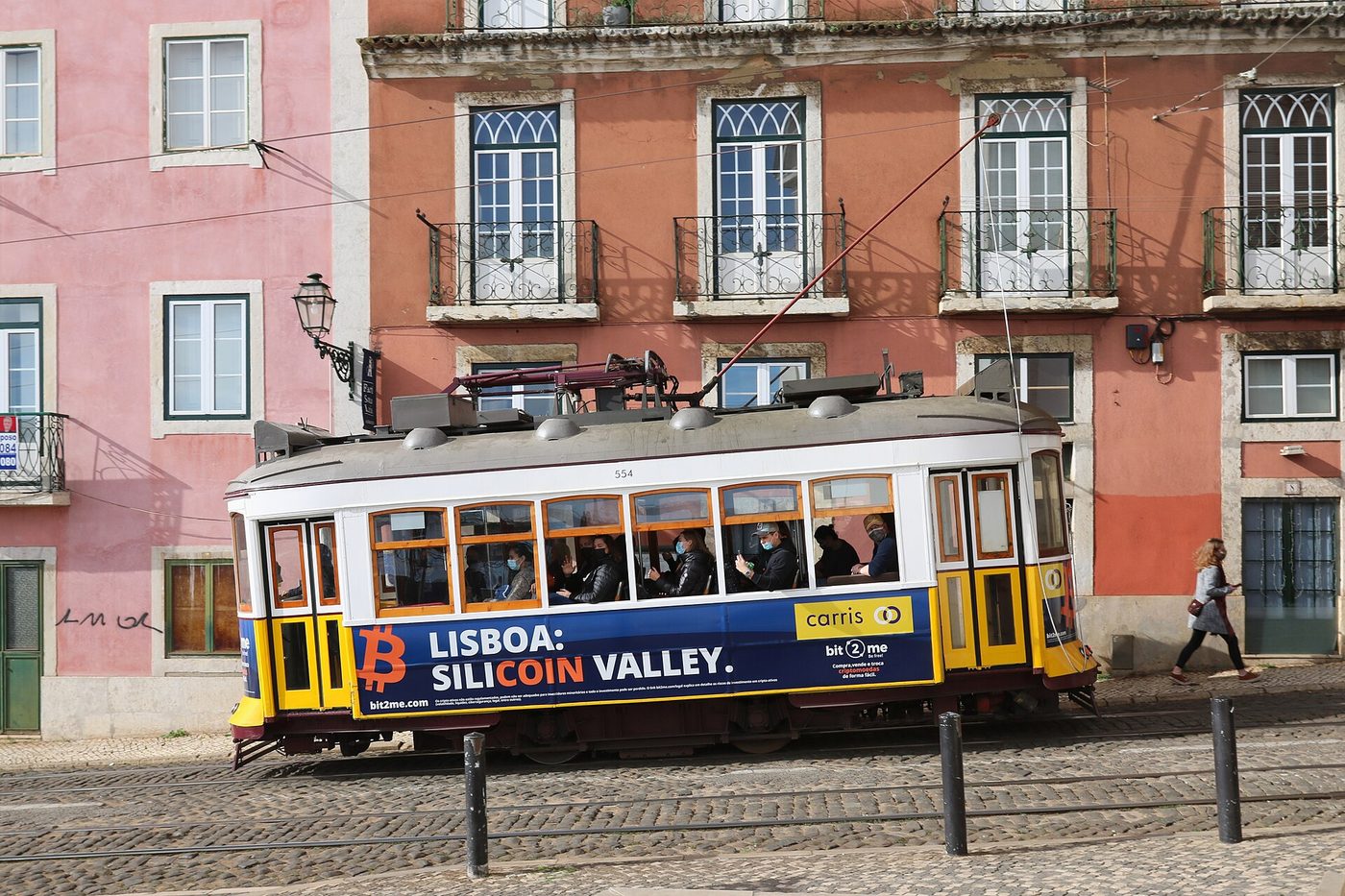
Six tram lines remain, on 31 kilometres of track, and 45 of the 63 vehicles are the old yellow Remodelado cars. If you want transport rather than atmosphere, take the 15, which runs from Praça da Figueira through Belém to Algés on modern articulated cars and reaches the monastery and the tower without a change. The others are the 12, a clockwise loop from Praça da Figueira past the Santa Luzia viewpoint. The 18 runs from Cais do Sodré to the Ajuda cemetery and the 24 from Praça Camões to Campolide. The 25 runs from Praça da Figueira to Prazeres, and the 28 from Martim Moniz through Graça and Estrela to the same terminus.

Hills, lifts and walking
Lisbon is built on steep ground, and the lifts that used to take the climb out of a walk are not running. The Santa Justa lift and the Glória, Bica and Lavra funiculars have been stopped since the Glória accident of September 2025, and only the Graça funicular, reopened in April 2026, still carries passengers, at €4.30 for two rides. So if you plan a long day, go up a hill by tram or metro and come down on foot. The steep climb from Baixa to Chiado and Bairro Alto now falls to your legs.
The coast, Sintra and the rest of the country
Three stations matter. Cais do Sodré is where the Cascais line starts, calling at Belém on the way, Rossio is where the Sintra line starts, and Oriente is where trains for the rest of the country leave. The Sintra and Cascais trains are suburban services paid for with zapping credit at €2.05 a ride, with no reservation, so you can simply turn up. The timings and what waits at the far end are on the day-trips page.

When the metro stops
The metro runs until 1:00, counted from the last departure at each line's terminus, so if you plan a late dinner in Bairro Alto, plan the taxi or the long walk home as well. After that the night buses and taxis are what is left, and the night routes from the airport go to Baixa, Cais do Sodré and Oriente.


Where to next
Lisbon in 3 days
→The castle at its nine o'clock opening, all of day two in Belém, tram 28 from the empty end on day three: three days arranged around opening hours and closing days.

Sintra · 22 km
→Royal palaces on a mountain the mist keeps cooler than Lisbon

How well does Lisbon suit you?
→Six questions: a score for this place and others like it.
Nomadinho scores out of 100, the same ones behind “Where to go”.
If you like Lisbon
Three places with the closest scores, from any country.


Before you go
Short answers to what people ask most before setting out.
How do I get from the airport to central Lisbon?
By the red metro line from Aeroporto station in Terminal 1, about 20 minutes to the centre. The Aerobus was discontinued in 2023, and a taxi to the centre takes about fifteen minutes.
What is the cheapest way to ride in Lisbon?
A Navegante card at €0.50 with zapping credit at €1.72 a ride; for a full day of riding, compare the total with the €7.25 day ticket.
Can I pay for the metro with a contactless card?
At the metro gates you can; for trams, buses and trains the Navegante card is the safe choice, and the driver also sells a ticket on board.
Ready for Lisbon?
Front row for the next trip
Leave your email and we'll let you know when a new destination or story goes up.