

What to eat in Lisbon
Lisbon is eaten from the counter outwards: a pastel de nata and an espresso at the bar, a bifana on the way, a tasca's dish of the day at lunch, and cod, clams or grilled sardines in the evening.
- Pastel de nata
- From €1.30 at the counter
- Bifana
- €3.50–5, pork in a roll
- Tasca
- Prato do dia €8–14
Lisbon eats at the counter in the morning, at a tasca table at lunch and over fish in the evening, and each of those meals has its dish and its price. A pastel de nata starts at €1.30, a bifana is €3.50–5, and a prato do dia in a tasca is €8–14, with soup, bread and a drink included. This page goes dish by dish. The daily total, the tax and the admissions stay on the costs page.
Pastel de nata, and the original
The pastel de nata is a creamy egg custard tart in flaky pastry, eaten warm with cinnamon and icing sugar, and it began with the monks of the Jerónimos Monastery in Belém. They starched their habits with egg whites and used the leftover yolks for sweets. When the monasteries closed in 1834 the recipe was sold to a sugar refinery next door, whose owners opened the Fábrica de Pastéis de Belém in 1837, and the family keeps it to this day. That house says it alone makes the original recipe and sells more than 20,000 a day, while everywhere else the same tart is simply a pastel de nata, from €1.30 with a small espresso at €0.80–1.50.
A food tour with a local guide: several tastings in one walk.

The sandwich on the way
A bifana is pork simmered with garlic and wine and served in a warm roll, lighter in the south of the country, with a thin cutlet and a mild marinade. In Lisbon it is the cheap, fast, filling meal that people eat standing at the counter, €3.50–5, and it often comes with mustard or hot sauce.

Lunch in a tasca
A tasca is a small family restaurant, and its prato do dia, the dish of the day, gives you a whole meal at one price. You get a portion of fish or meat with soup, bread and a glass of wine or water, for €8–14. The tascas aimed at people on their office lunch break cluster in Mouraria, Intendente, Campo de Ourique and Santos, so if you are staying nearby, look there first. Dinner in a mid-range restaurant is already €20–40.
Salt cod and clams
Salted cod, bacalhau, is the staple ingredient of Portuguese cooking, and people say there are 365 ways to cook it, one for every day of the year, while others say 1,001. By the 1700s it was food for ordinary people, which earned it the nickname of the loyal friend. In Lisbon you order bacalhau à Brás, shredded cod with onions, thin matchstick fried potatoes and eggs, a dish that comes from this city, and for a starter you ask for pastéis or bolinhos de bacalhau.
The other classic dish of the city is amêijoas à Bulhão Pato, clams with olive oil, garlic, coriander and white wine. They are said to date from the 1850s, though who invented them is still disputed, and they come with crusty bread to mop up the sauce.
Sardines in summer
Sardinhas assadas, grilled sardines, are the simple summer snack, and their big night is Santo António, the festival of Lisbon's patron saint, on the night of 12 to 13 June. Every district goes out on the street to eat sardines and drink beer, and the districts compete in the Marchas Populares on the wide Avenida da Liberdade. Through the summer you will find them on restaurant menus too, most often with potato and salad.

A market under one roof
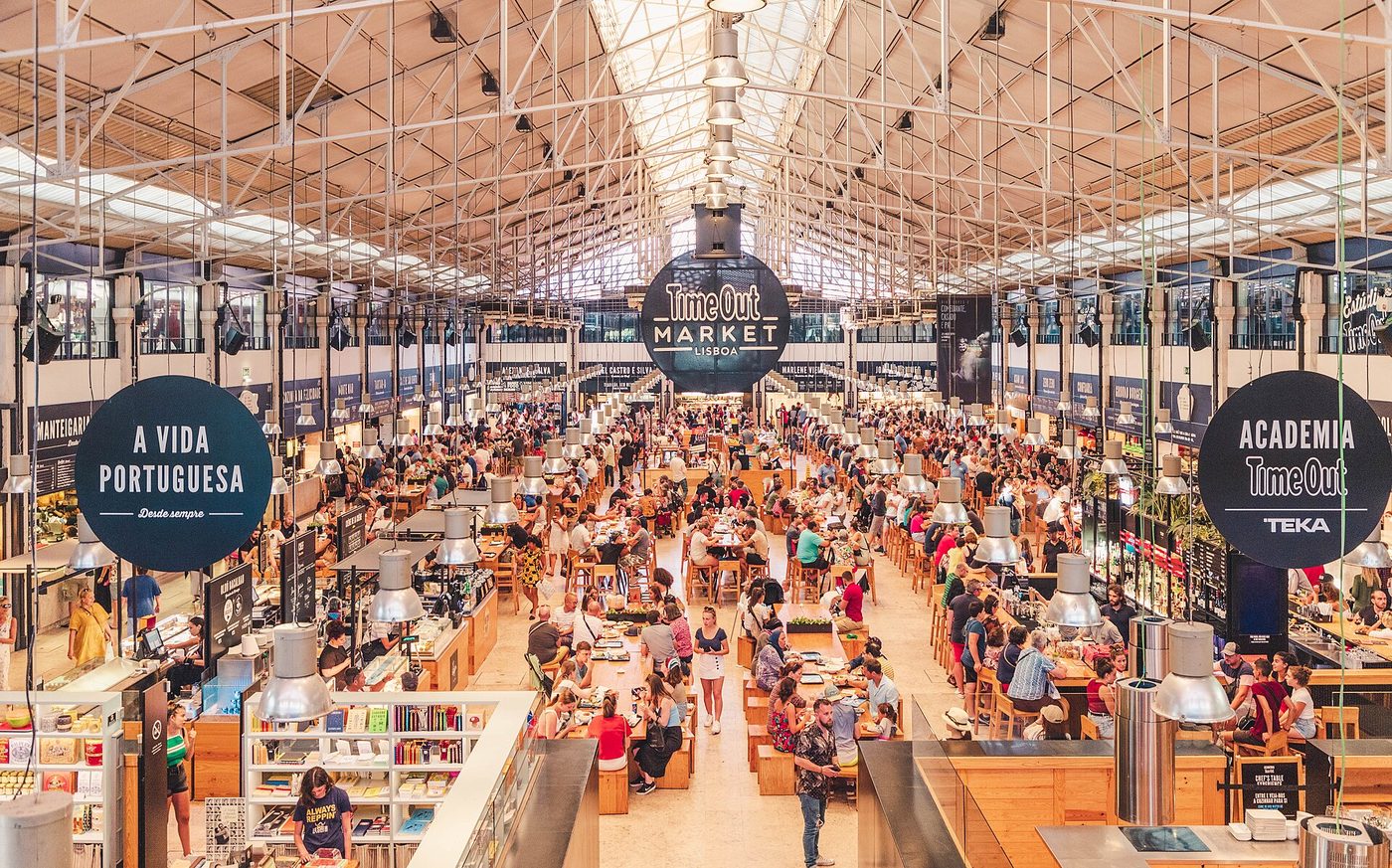
The old Mercado da Ribeira in Cais do Sodré has housed the Time Out Market since 2014, with 26 restaurants and 8 bars under one roof, open every day from 10:00 until midnight. If your group cannot agree what to eat, everyone can order something different here.

Ginjinha
Ginjinha is a sour-cherry liqueur in a small glass, with a cherry at the bottom, and it is Lisbon's typical drink. The first bar to sell it in the city was the one on Largo de São Domingos, open since 1840, founded by a Galician friar of the church of Santo António, Francisco Espinheira. He left sour cherries in aguardente with sugar and cinnamon. Sem Rival and Rubi came after, and in Óbidos it is served in a chocolate cup.


Where to next
The best time to visit Lisbon
→May, June and September for the hills and viewpoints, August for heat on the climbs, November for the most rain.

Sintra · 22 km
→Royal palaces on a mountain the mist keeps cooler than Lisbon

How well does Lisbon suit you?
→Six questions: a score for this place and others like it.
Nomadinho scores out of 100, the same ones behind “Where to go”.
If you like Lisbon
Three places with the closest scores, from any country.


Before you go
Short answers to what people ask most before setting out.
How much is lunch in Lisbon?
A prato do dia in a tasca is €8–14, with soup, bread and a drink; dinner in a mid-range restaurant is €20–40.
Where do I buy the original pastel de nata?
At the Fábrica de Pastéis de Belém on Rua de Belém, baking since 1837 and open every day; everywhere else the same tart starts at €1.30.
When do people eat sardines in Lisbon?
In summer, and the big night is 12 to 13 June, the festival of Santo António, when grilled sardines are eaten all over the city.
Ready for Lisbon?
Front row for the next trip
Leave your email and we'll let you know when a new destination or story goes up.