

Strasbourg
A cathedral that was the world's tallest building for two centuries, and a market five hundred years old
- When to go
- October 13° · 13 rainy days
- Per day
- €€€€price 4 of 5
- How many days
- 2days
- For you
- 6 questions →
- Nearest airport
- 10 km Strasbourg
- Right now
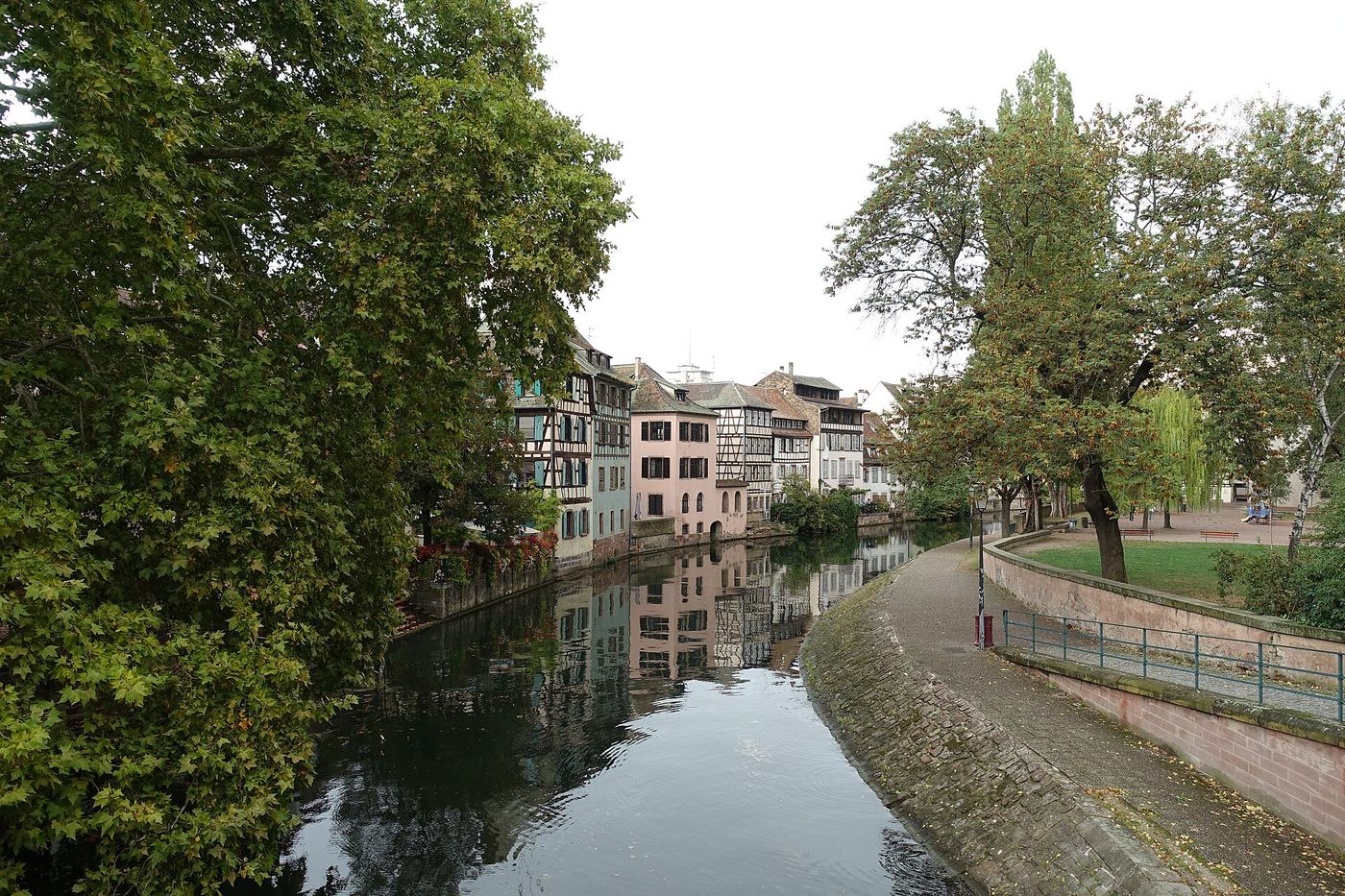
Strasbourg changed country four times in seventy-five years: French from 1681, German from 1871, French again in 1918, German in 1940, French in 1944. It shows on every street — a Gothic cathedral in red sandstone, Alsatian timber-framed houses, and a whole nineteenth-century German imperial quarter. That biography is why the European Parliament ended up here.
The cathedral was begun in 1015 and finished in 1439, and with a single tower of a hundred and forty-two metres it was the tallest building in the world for two hundred and twenty-seven years, from 1647 to 1874. The nave is free to enter. The platform sits at sixty-six metres and is reached on foot, with a ticket. The astronomical clock is the third on the same spot, from 1843, the work of Jean-Baptiste Schwilgué: every day at half past twelve the cockerel crows three times and the apostles file past Christ. That slot needs a separate ticket: it is sold from ten to eleven at the stands outside the cathedral, and you go in from half past eleven.

The historic core is an island made by the river Ill, and in 1988 it became the first entire city centre inscribed by UNESCO; the German Neustadt was added in 2017. Petite France at the western end looks like a postcard, but the name has nothing to do with romance: a hospice for soldiers with syphilis opened here in 1503, and the Germans called the disease the French one. The quarter belonged to tanners, millers and fishermen, and those steep open roofs are shaped the way they are because hides were dried under them.
The Christmas market is the one period when Strasbourg is planned backwards from the room: from the last week of November to Christmas Eve a bed here costs two to three times what it does in October and is booked in summer. Leave it late and you sleep in Colmar, or in German Kehl across the Rhine, which tram D reaches in twenty minutes or so.
What to see in Strasbourg
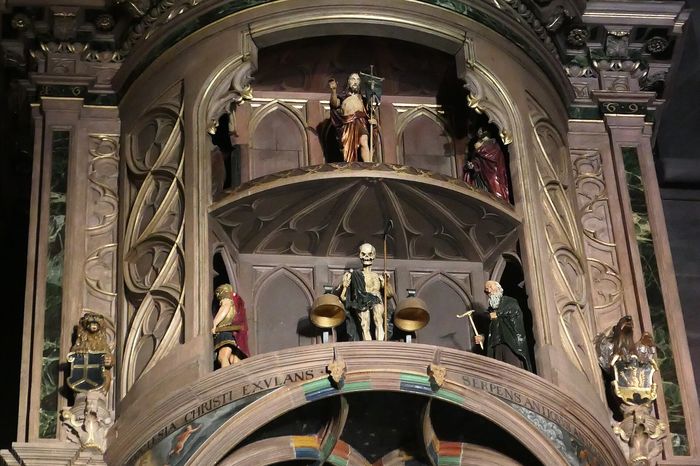
The cathedral and the astronomical clock
A hundred and forty-two metres of red sandstone and a single tower, because the second was never built. The clock has run since 1843 and sends the apostles round every day at half past twelve; that needs its own ticket, €4, bought on the spot. The platform at sixty-six metres is climbed on foot.
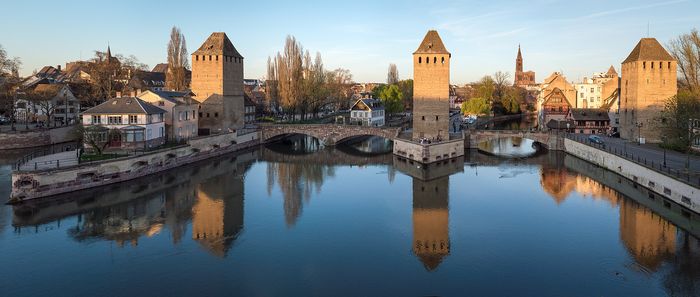
Petite France
The tanners' quarter at the end of the island, with canals, locks and sixteenth- and seventeenth-century houses. The Ponts Couverts are three bridges with four towers, and just behind them the Barrage Vauban has a roof terrace — the best view over the quarter, and free.
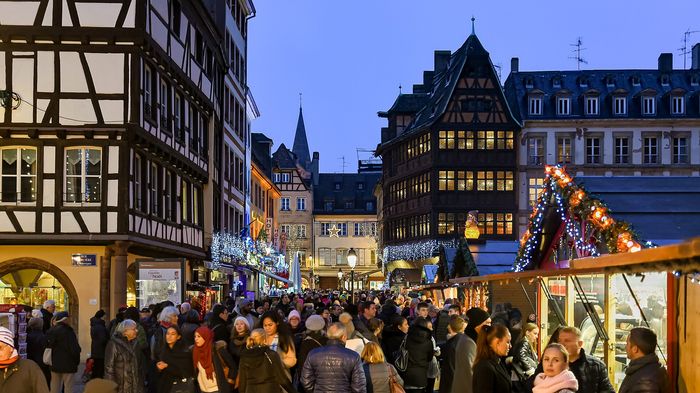
The Christmas market
Running since 1570, the oldest in France. The Christkindelsmärik proper is on Place Broglie, a thirty-metre tree stands on Place Kléber, and further markets open around the cathedral, in Petite France and on the Carré d'Or. The 2025 edition ran from 26 November to 24 December; the 2026 dates come out in autumn.
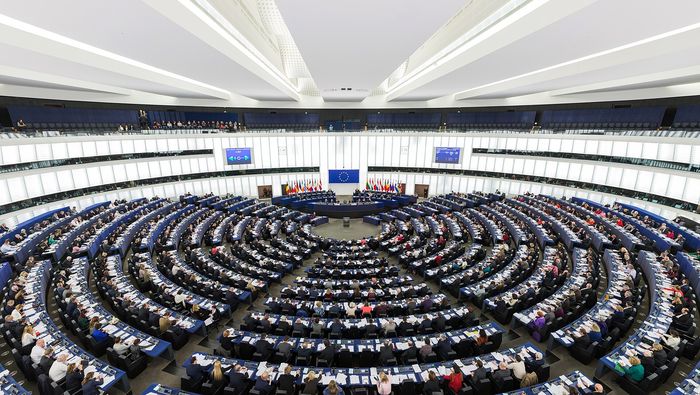
The European Parliament
Visiting is free. The Parlamentarium Simone Veil is open weekdays nine to six, Saturdays half past nine to six with a midday break, closed Sundays; during sessions the hours shrink. Twelve times a year there is a four-day plenary session, and then you can watch seven hundred and twenty MEPs at work from the gallery.
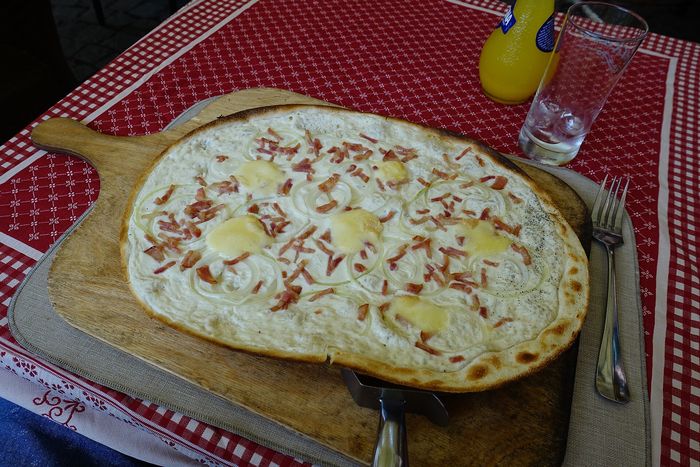
Flammekueche and Alsatian cooking
Flammekueche is bread dough rolled paper-thin with cream, onion and bacon, baked in a wood oven for a minute or two. It started as the test of whether the oven was hot enough for bread. It comes on a board and gets shared; choucroute and baeckeoffe sit alongside it, and Sunday lunch is slow.
- T
The Alsace wine route
A hundred and seventy kilometres through sixty-seven villages, from Marlenheim in the north to Thann in the south. Ninety per cent of production is white — riesling, gewurztraminer, pinot gris. Colmar is half an hour by train and the easiest base; Obernai has a train from Strasbourg every half hour, while Riquewihr has no station — you take the bus from Colmar.


Two things you probably did not know
Between 1870 and 1945 Strasbourg changed country four times, from France to Germany and back. That is why it reads as two cities: the French core and the German imperial quarter built after 1871.
The astronomical clock in the cathedral, from 1843, shows the positions of the planets, the phases of the moon and the movable church feasts, and corrects itself for leap years. At noon the apostles process across it.
Ready for Strasbourg?
Within reach from here
Places sorted by straight-line distance from Strasbourg — day trips or weekends.

France
→From Paris the TGV reaches Lyon, Bordeaux and Strasbourg in about two hours — France is chosen by direction, not by city

Italy
→The cities on the high-speed line are an hour or two apart; the coast, Matera and the Tuscan hills lie off it

Spain
→A country where dinner is at ten and the city wakes up as everywhere else turns the lights off
All 277 places we write about sit on one page — narrow them down by continent, country, price or what you are travelling for.
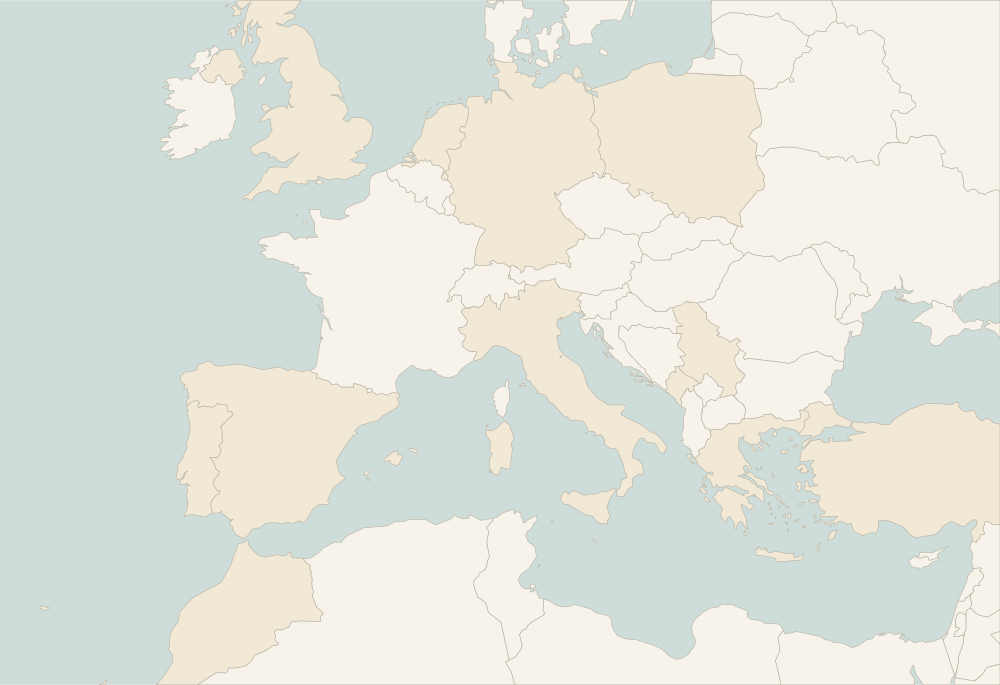
Within reach from here: Heidelberg, Frankfurt and Nuremberg
See how much of that actually suits you — or pin Strasbourg if you have been.
Front row for the next trip
Leave your email and we'll let you know when a new destination or story goes up.