

Lyon
France's capital of eating, with four hundred passages cut through its buildings
- When to go
- October 14° · 12 rainy days
- Per day
- €€€€price 4 of 5
- How many days
- 2–3days
- For you
- 6 questions →
- Nearest airport
- 19 km Lyon · 57 km Grenoble
- Right now

Lyon isn't marketed like Paris, which makes it easier to carry. The city sits where the Rhône meets the Saône, has a Roman theatre from 15 BC on the hill and a Renaissance quarter at its foot, and between the two you eat better than anywhere else in France. The TGV from Paris takes about two hours.
A bouchon is a Lyon eating house, named after the bundle of twisted straw that hung over the door instead of a sign in the sixteenth century, back when the cooking was for silk workers. The menu has hardly moved: Lyonnaise salad with a poached egg, pike quenelles, andouillette, tablier de sapeur — breaded tripe — and cervelle de canut to finish. Wine arrives in a forty-six centilitre bottle. Since 1997 there has been a certification, Les Authentiques Bouchons Lyonnais, with a Gnafron sticker; about twenty houses hold it and far more use the word. Three courses usually land between €25 and €35.

Traboules are passages cut through buildings and courtyards. The Croix-Rousse silk workers used them to carry cloth to the merchants without the rain getting at it. There are around four hundred and about forty are open to the public; the famous one is the Cour des Voraces, whose staircase opens like a stage set. Nearly all of them are entrances to buildings people live in — close the door behind you and don't shout in the courtyard.
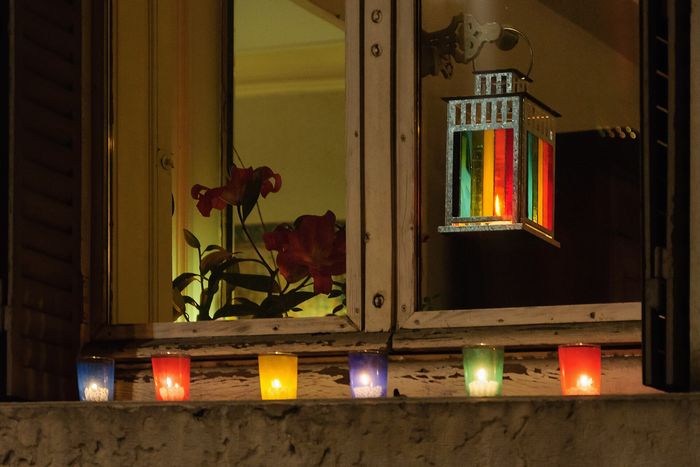
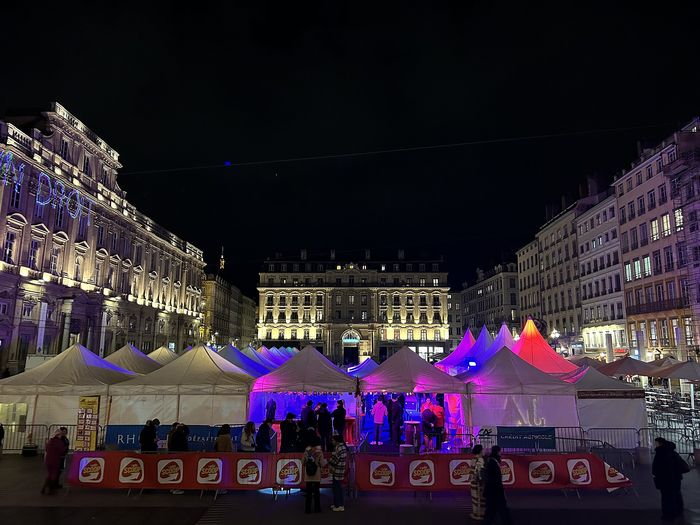
On the first weekend of December the city switches itself off and back on. The Festival of Lights runs 5–8 December 2026, costs nothing, and the reason is old: on 8 December 1852 a storm cancelled the unveiling of the gilded Virgin on Fourvière, so people put candles in their windows instead. Today installations fill the whole centre and the city takes in millions of people over four evenings. Candles in glasses still sit on the windowsills, the one part of the festival nobody projects. If that's when you come, book a room in summer and expect to walk everywhere.
Guides for Lyon
Shorter, practical pages for one concrete question each — how many days, how much money, where to sleep, where to escape the city.

Lyon in 2 days
→Fourvière before the museum opens, the long traboule after lunch, the market hall before 2.30 and the Confluences until…

Lyon beyond Vieux Lyon: seven addresses, from the Mur des Canuts to a pebble garden
→A 1,200-square-metre wall, a revolutionaries' staircase, a garden a mason built from pebbles and the shed of the first…
What to eat in Lyon
→A city where breakfast is pork scratchings and andouillette with wine at nine in the morning, and the pralines are pink…
What to see in Lyon
Vieux Lyon and the traboules
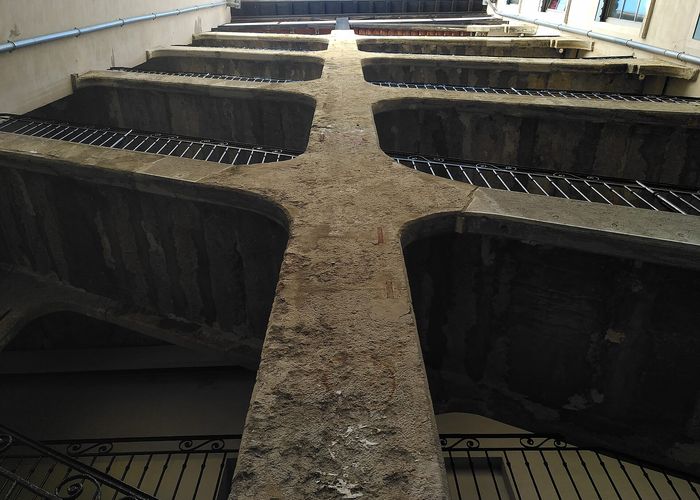
The Renaissance quarter at the foot of the hill, UNESCO-listed since 1998, with narrow streets and fifteenth- and sixteenth-century courtyards. Some forty passages are open through them; the easiest start is 54 rue Saint-Jean, which puts you out on a different street, as though you had walked through the building.
Fourvière and the Roman theatres
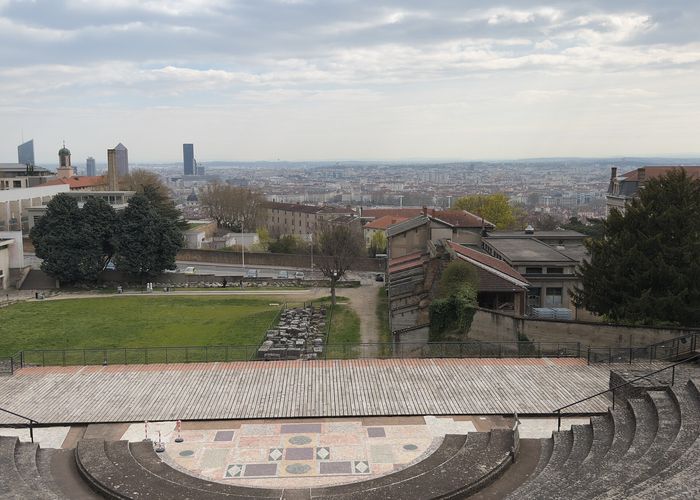
The basilica dates from 1872–1884, built on a vow after the war of 1870, and the north tower gives a hundred and eighty degrees, out to Mont Blanc on a clear day. Beside it stand a theatre from about 15 BC seating ten thousand, and an odeon; the ruins are free, and the funicular up from Vieux Lyon takes a normal transit ticket.
The bouchons
You spot the real ones by the Gnafron sticker on the glass, the checked cloths and a menu written on a board rather than printed in a book. Portions aren't for sharing and everything lands at once, so don't plan anything after lunch. Book a day ahead; most close Sunday and Monday.
The Festival of Lights
5 to 8 December 2026, free, across the whole centre. It began in 1852 with candles in windows, and people still put them out alongside the installations. The centre closes to traffic those evenings, hotels sell out months ahead, and you walk.
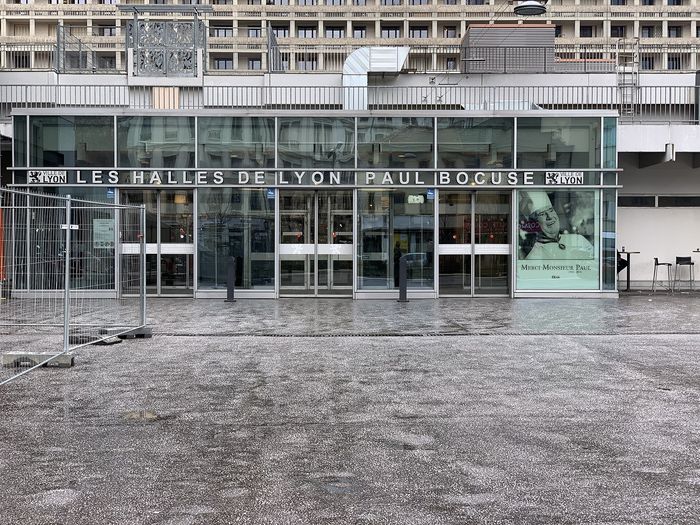
Les Halles and the Croix-Rousse
The Paul Bocuse market hall is a covered market of cheese, oyster and praline counters — you eat standing at them rather than shop for home. The Croix-Rousse hill above it was the silk quarter; the ceilings up there are four metres high because that is what a loom needed.
Beaujolais
It starts about thirty kilometres north of the city. Gamay is ninety-eight per cent of the plantings, and the ten crus — Fleurie, Morgon, Moulin-à-Vent and the rest — make wines with nothing to do with the November newcomer. Beaujolais Nouveau is released on the third Thursday of November, 19 November in 2026.


Stories from Lyon
How it actually was when we were there, and what was worth it.

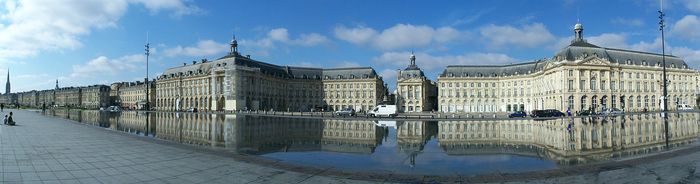
Lyon or Bordeaux for a long weekend, and how to pick one
→Both sit two hours from Paris by train and both sell themselves on food and drink. The difference is where that content actually is — inside the city or outside it.
Two things you probably did not know
Cinema was invented in Lyon, not Paris. In 1895 the Lumiere brothers filmed Workers Leaving the Factory at their father's works, the first film ever shot; the building still stands and holds a museum.
Old Lyon is threaded with traboules, covered passages through the courtyards of buildings, used by silk workers to carry cloth out of the rain. There are over four hundred, and around forty are open to walk through.
Ready for Lyon?
Within reach from here
Places sorted by straight-line distance from Lyon — day trips or weekends.

France
→From Paris the TGV reaches Lyon, Bordeaux and Strasbourg in about two hours — France is chosen by direction, not by city

Italy
→The cities on the high-speed line are an hour or two apart; the coast, Matera and the Tuscan hills lie off it

Spain
→A country where dinner is at ten and the city wakes up as everywhere else turns the lights off
All 277 places we write about sit on one page — narrow them down by continent, country, price or what you are travelling for.
Front row for the next trip
Leave your email and we'll let you know when a new destination or story goes up.