

Getting around London
London is paid for with a bank card tapped at both ends of the journey, and from then on the system does the sums: the daily cap, the one-hour bus hop and the cheaper night fare.
- Paying
- A contactless card or phone
- Daily cap
- Zones 1–2 €10
- Buses
- €2 a ride
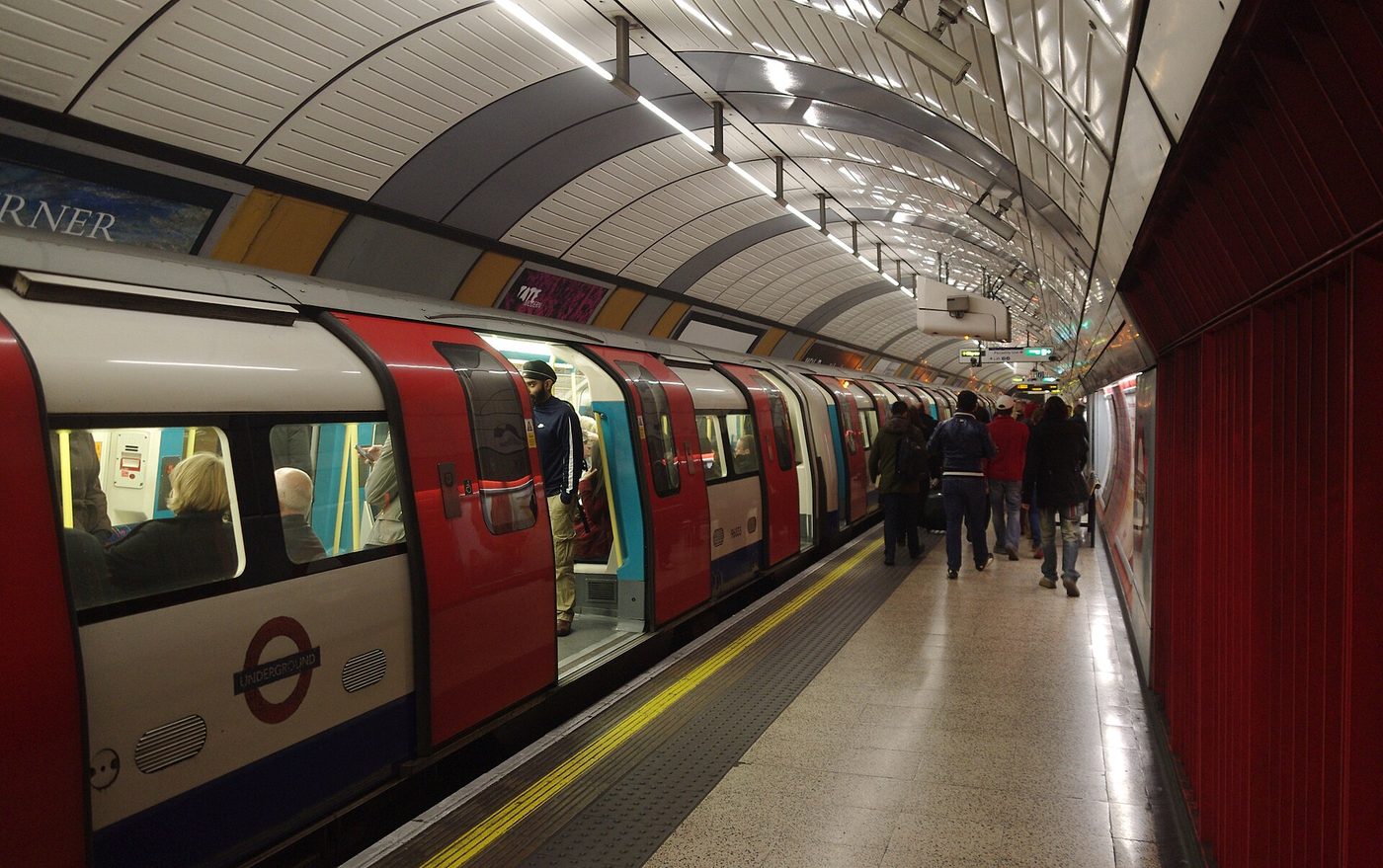
You never buy a ticket in London: you tap a contactless card or a phone at the barrier, tap again at the exit, and the system charges no more than the €10 daily cap for zones 1–2, however many journeys you make. The first question is therefore which kind of train to take rather than which ticket to buy, because the Tube, the Elizabeth line, the Overground and the DLR are four separate railways that share one map and one fare system.
One card, two taps
Touch in and touch out on the Tube, the Elizabeth line, the Overground and the DLR. Use the same plastic card or the same phone every time, because the daily total is counted per card and a second wallet starts it again from zero. Higher peak fares apply Monday to Friday between 06:30 and 09:30 and between 16:00 and 19:00, and everything else is cheaper off-peak.
If you land at Heathrow, remember that every Tube or Elizabeth line journey to or from the airport that starts, ends or passes through zone 1 is charged the full peak fare at any hour. If you stay a whole week and ride every day, the weekly cap of €52 (Monday to Sunday) beats seven daily ones.

Four railways on one map
The Tube is the oldest and deepest of the four, with lines named and coloured, and in busy zone 1 it is the one you will use most. The Elizabeth line is the newer, faster cross-city railway, opened in May 2022. It calls at Paddington, Bond Street, Tottenham Court Road, Farringdon, Liverpool Street, Whitechapel and Canary Wharf, so it is the short, quick answer when you have to cross the whole sprawling city.
The Overground runs mostly outside the crowded centre, in zone 2 and beyond, and since 2024 each of its six lines has its own name and colour. The DLR is the small, quiet driverless railway east of Bank, and it is the way to Greenwich. Read the map as a diagram, not a scale plan: two stations on the same line can sit ten minutes apart on foot, so check the short walk on your phone before you go underground.

Slower, cheap and with a view
A single bus or tram journey costs €2, and the Hopper fare lets you change onto as many buses and trams as you like within an hour of touching in, for that same fare. The daily cap for buses and trams alone is €6.10, and buses take no cash, so the card is the only way on.
A bus is the right choice when two points are close on the map but far apart on the Tube. Most lines run out of the centre like spokes, and make you go into zone 1 and out again. Sit upstairs at the front of a tall double-decker and the free sightseeing comes with the fare.
After dark
The Night Tube runs on Friday and Saturday nights on the Central, Jubilee, Northern, Piccadilly and Victoria lines and on the Overground's Windrush line, at off-peak fares, with the daily cap still counting. Night buses cover the other nights and every quieter corner the Tube doesn't reach.
If you are going out in Shoreditch or Soho, plan your way home before the last regular train, and if it is not a Friday or Saturday, count on a night bus.
On the water and on two wheels
Uber Boat by Thames Clippers runs along the winding river between Putney and Woolwich and takes the same contactless card, but at its own fares and outside the daily cap. From Cutty Sark to Westminster the boat takes about 45 minutes. It is the only ride in the city that is transport and sightseeing at once.
Santander Cycles has around 800 docking stations, many of them beside the green parks, across inner and central London, and a single ride costs from €1.94. If you have a short hop or a route through the parks, a bike pays off; in the dense, fast traffic around the City, leave it.
From the airports
Heathrow has three railways. The Elizabeth line runs to Paddington, Bond Street, Tottenham Court Road, Farringdon and Liverpool Street. The Heathrow Express takes 15 minutes to Paddington from Terminals 2 and 3 and six minutes longer from Terminal 5. Terminal 4 is reached by a free change onto the Elizabeth line. The Piccadilly line is the slowest, about 50 minutes to Piccadilly Circus. Which of them pays off is argued on the costs page.
From Gatwick the Gatwick Express reaches Victoria in about 30 minutes, and from Stansted the Stansted Express runs to Liverpool Street in about 45 minutes. For Luton you take Thameslink to Luton Airport Parkway, and the DART shuttle covers the last stretch to the terminal.
Heathrow Express
- Heathrow Express
- 15 min to Paddington
- Piccadilly line
- about 50 min
- Gatwick Express
- about 30 min to Victoria
- Stansted Express
- about 45 min to Liverpool Street
Private transfer
- a driver meets you at arrivals
- booked ahead, late flights too
- costs more than public transport

Don't
In central London a vehicle pays the congestion charge of €21 a day, and a car that fails the emissions standard also pays the ULEZ charge of €15 a day. If you arrive by car, don't drive it round the city: keep it for a day trip, and pick it up at the station.


Where to next


Nomadinho scores out of 100, the same ones behind “Where to go”.
If you like London
Three places with the closest scores, from any country.


Before you go
Short answers to what people ask most before setting out.
Do I need an Oyster card for London?
No. A contactless card or phone works the same way, stops at the €10 daily cap for zones 1–2 on its own and needs nothing bought. Just use the same device all day.
Do London buses take cash?
No. Buses take no cash; you pay by card or phone, €2 a ride, with changes onto buses and trams within an hour for the same fare.
Does the London Tube run at night?
On Fridays and Saturdays on the Central, Jubilee, Northern, Piccadilly and Victoria lines, with night buses on the other nights; the fare is off-peak.
Ready for London?
Front row for the next trip
Leave your email and we'll let you know when a new destination or story goes up.