

Luxor
A town divided by a river: the east bank for the living and the temples, the west for the dead and the tombs
- When to go
- October 28° · 0 rainy days
- Per day
- €€price 2 of 5
- How many days
- 2days
- For you
- 6 questions →
- Nearest airport
- 7 km Luxor
- Right now

Luxor is done in two days and by bank: the west bank with the Valley of the Kings in the morning, because there is no shade there, and Karnak and Luxor Temple on the east in the afternoon and evening, when they are lit. Coming from Hurghada for a day you see both, in a fourteen-hour day with eight of them on the road; staying the night you see the same and the sunset too.
The west bank is the tombs and starts at six, when the Valley of the Kings opens. The general ticket, €13, gives three tombs of your choice from the ten or so open that day; Tutankhamun, Ramesses VI and Seti I are paid separately. Of the three, Seti I is the one worth it, at €34: a tomb 137 metres long, with reliefs in fifteen of its seventeen rooms, usually regarded as the finest in the Valley. Hatshepsut's temple and the Colossi of Memnon are on the same road; the whole thing is four hours with a driver who waits, and done by noon because after that there is no air.

Karnak is not a temple but a city of temples, which pharaohs kept adding to from the Middle Kingdom to the Ptolemies, for almost two thousand years. It is open from six to five, so it comes after lunch and you stay until closing. Luxor Temple in the town centre is smaller, linked to Karnak by the 2.7-kilometre avenue of sphinxes opened in 2021, and open until eight in the evening — best after sunset, under floodlights, when it is also coolest.
A dawn balloon over the west bank is the one touristy thing in town we would recommend to anyone, at a price that is negotiated and drops out of season. The cruise to Aswan leaves from here and takes three or four nights; without the boat, the choice is a train of three to four hours or a driver who stops at Edfu and Kom Ombo on the way.
Guides for Luxor
Shorter, practical pages for one concrete question each — how many days, how much money, where to sleep, where to escape the city.

Luxor in 2 days
→Two days in which the west bank starts at seven because there is no shade, and Karnak waits until three in the…


What to see in Luxor
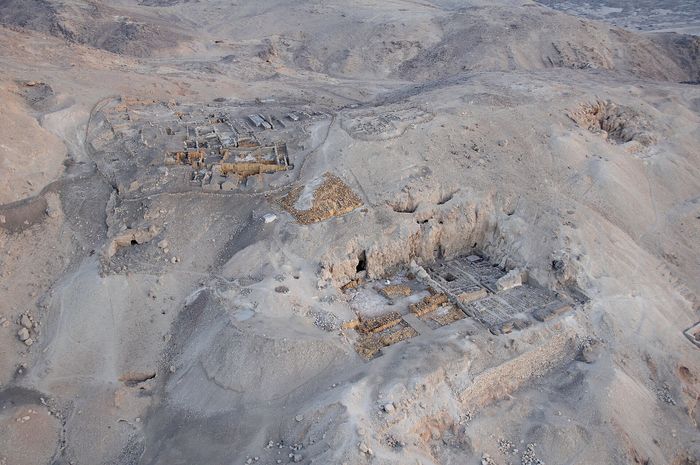
The Valley of the Kings
Sixty-five tombs and chambers in a dry valley, of which ten or so open in rotation. Phone photography inside is free, without flash, and the guide may not enter with you — he explains outside, then you go in alone.
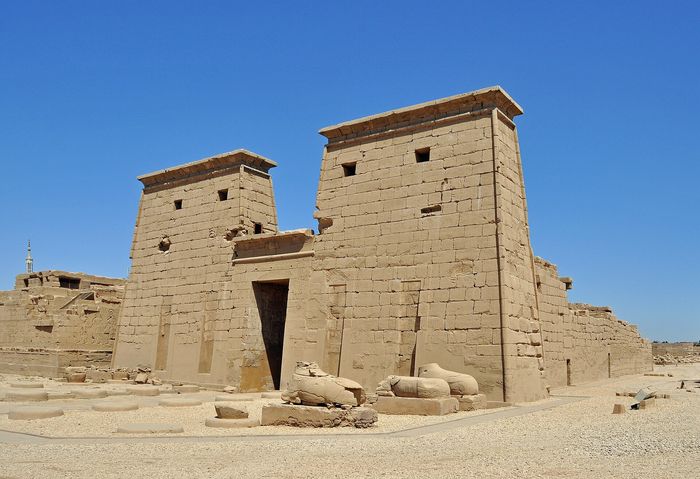
Karnak
A hall of 134 columns in sixteen rows, the twelve in the middle 21 metres tall each, needs an hour on its own. The sacred lake and Hatshepsut's obelisk, the second-tallest ancient obelisk still standing, come at the end of the visit, and that is when the light is best.
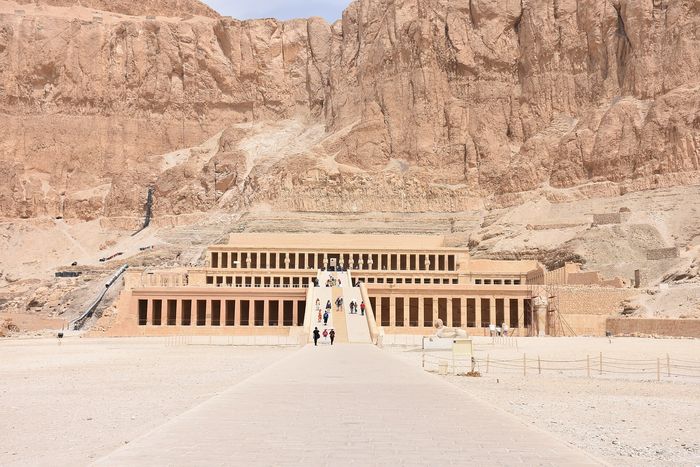
Hatshepsut's temple
Three terraces cut into the cliff at Deir el-Bahari, the temple of a woman who ruled as pharaoh and whose images her successor Thutmose III had erased. There is no shade on any metre of it, so it comes straight after the Valley, before ten.
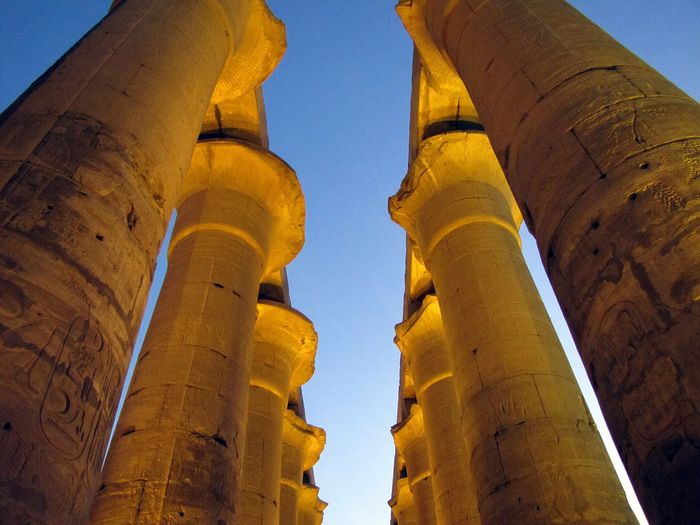
Luxor Temple at night
The colonnade of Amenhotep III under floodlights. The Abu el-Haggag mosque sits on top of the temple, because it was built when the temple was buried halfway — and you can see that on the façade.
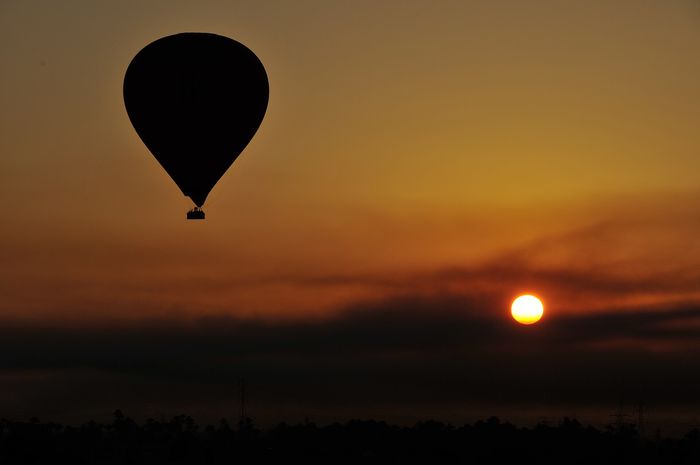
A dawn balloon
Hotel pickup around half past four, a flight of 45 minutes to an hour above the Valley of the Kings and Hatshepsut's temple. Cancelled in wind, so book it for the first morning and keep the second in reserve; do not count on it in summer — in 2026 flights were suspended from June to the end of August because of the heat.
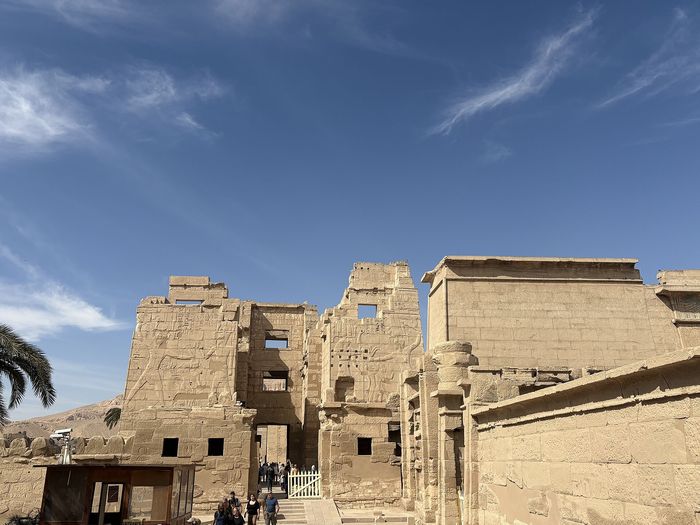
Medinet Habu
The temple of Ramesses III on the west bank, with more than seven thousand square metres of reliefs that still hold colour, and fewer people because it is not on the standard tour. Done after the Valley, if there is energy left.


Two things you probably did not know
Luxor stands on the site of Thebes, capital of Egypt during the New Kingdom. There are so many monuments in and around it that it is sometimes said a third of the world's ancient heritage lies along this stretch.
Howard Carter found Tutankhamun's tomb in 1922 almost untouched, because rubble from a later tomb built above it had buried the entrance. Over five thousand objects came out of it and cataloguing took ten years.
Ready for Luxor?
Within reach from here
Places sorted by straight-line distance from Luxor — day trips or weekends.

Egypt
→Two countries under one name: the Nile with its temples, which needs a plan, and the Red Sea, which needs only a charter — few people do both in one trip

Tunisia
→Ten towns in a line, from the capital to the sand at Tozeur — in the order they're actually travelled, not listed

Morocco
→The north by train, the south by road, and in July you leave Marrakech for the coast

Turkey
→Istanbul, then one direction: Cappadocia by plane, Ephesus and Pamukkale by train, or the Lycian coast by bus
All 277 places we write about sit on one page — narrow them down by continent, country, price or what you are travelling for.

Within reach from here: Aswan, Hurghada and Sharm el-Sheikh
See how much of that actually suits you — or pin Luxor if you have been.
Front row for the next trip
Leave your email and we'll let you know when a new destination or story goes up.