

Luxor in 2 days
Two days in which the west bank starts at seven because there is no shade, and Karnak waits until three in the afternoon, with a balloon or Medinet Habu for the second morning.
- How long
- 2 days
- Getting around
- A driver by the day for the west bank
- Rhythm
- Out at seven
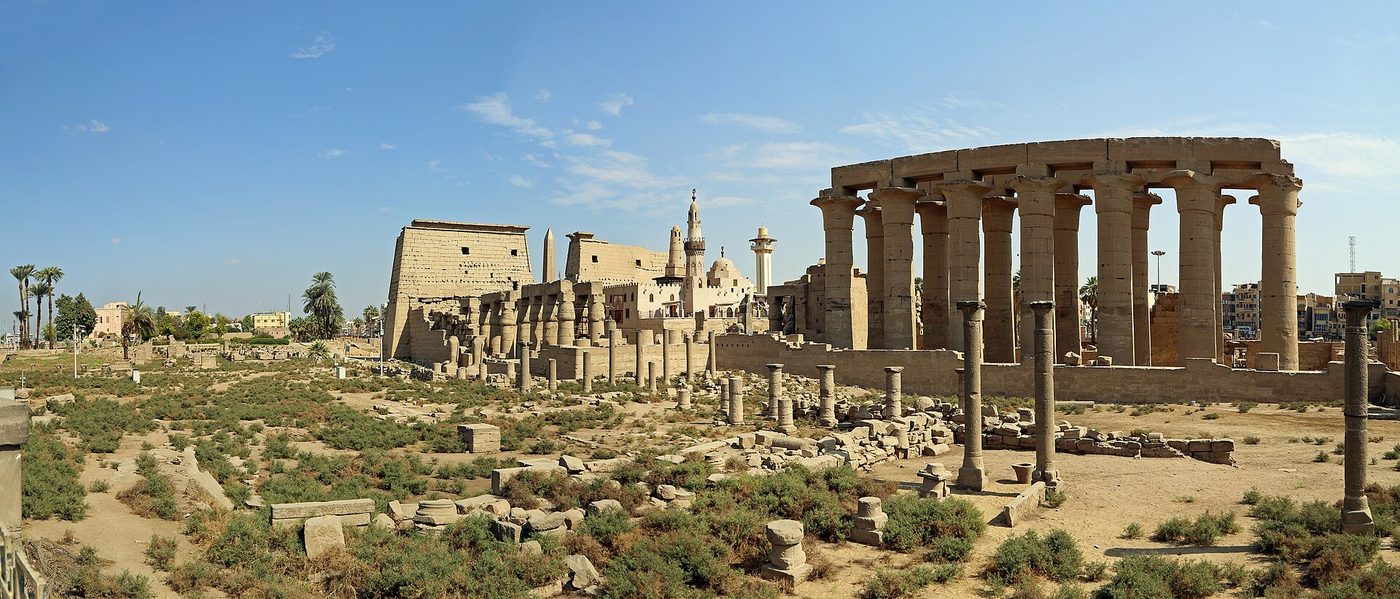
Luxor in two days runs on one simple rule, tombs in the morning and temples in the afternoon. The bare west bank has not a metre of shade and is finished by noon, while Karnak comes after three, and Luxor Temple comes in the evening under floodlights. If the wind allows, the second morning belongs to a balloon, and if it does not, you can spend it at Medinet Habu.
The west bank in the morning, Karnak in the afternoon
The driver collects you from the hotel and takes you over the bridge, or you cross by ferry and continue by taxi. The first stop is the Colossi of Memnon by the road, ten minutes and free.
The Valley of the Kings opens at 6.00, so at 07:15 you are in early: a ticket for three tombs from the ten or so open is €13, and Seti I is paid separately, €34, which is the supplement to pay for. Tutankhamun's tomb is small, with the mummy and a painted burial chamber, because the treasure is in the Grand Museum. A little tram runs from the car park to the entrance.
Hatshepsut's temple has three terraces in the cliff and no shade, so you go before ten, and with the climb it takes an hour.
Medinet Habu or the Ramesseum come next if you have energy left, with reliefs that still hold colour and almost nobody around. If you do not, skip the alabaster workshops on the road unless you want to buy.
Back across the river for lunch and an hour's rest, because between one and three it is too hot to be outside.
Karnak has the hall of 134 columns, the obelisks and the sacred lake. The light falls low, so you have two hours until closing, with tickets by card at the gate.
Walk along the Corniche or the avenue of sphinxes to the centre and have dinner by the river.
Official ticket
- Basic ticket
- €13, three tombs
- Seti I
- €34 extra
- Tutankhamun
- small tomb, the mummy
Through a partner
- options with a guide or audio guide
- usually costs more than the official ticket

A balloon at dawn, Luxor Temple at night
The transfer from the hotel to the west bank takes you to the balloon, a flight of 45 minutes to an hour above the Valley, Hatshepsut's temple and the fields by the river, with landing around seven. It is cancelled in wind, so book it for the first possible morning and keep the second in reserve.
Have breakfast, and if you did not fly, go to the Valley of the Queens, where the general ticket covers the tombs of Titi, Khaemwaset and Amunherkhepshef with painted reliefs, or to Medinet Habu if you skipped it yesterday. Nefertari's tomb, which carries a supplement of its own, has been closed since 2024 with no reopening date announced.
The Luxor Museum is a small, air-conditioned collection with statues from the cache under Luxor Temple, and it takes an hour.
Lunch and rest come next, then the souk in the centre or the pool in the afternoon.
Luxor Temple is for the hour before sunset and after, when the floodlights light the colonnade of Amenhotep III, and the Abu el-Haggag mosque above the temple shows how deeply it was buried. Allow two hours.
The avenue of sphinxes towards Karnak is 2.7 kilometres long under lights, so walk as far as you like and have dinner in the centre.
On your own
- Pick-up
- 04:45 from the hotel
- Landing
- around seven
- Cancelled
- in wind
With a guide
- transport arranged
- a guide on site
- costs more than going alone

Three things that wreck the plan
- The west bank after ten. The tombs sit in a windless valley, and in summer it is forty degrees after ten in a shade that does not exist, so if you start at nine you see one tomb and give up.
- A guide inside the tomb. A guide is not allowed in and you do not need one, because the explanation is heard outside and then you go in alone. Be wary of a guide who says he can go in.
- All three supplements. Seti I yes, but Tutankhamun no if the budget is tight, because the basic ticket with Ramesses IV, Ramesses IX and Merenptah already shows what the Valley has to offer.
Where to next
Day trips from Luxor
→Dendera with its painted ceiling, Abydos with the carved reliefs of Seti I, Edfu and Kom Ombo on the road to Aswan, and Hurghada for the sea, four trips from Luxor ordered by driving time.

Aswan · 181 km
→A town on the Nile where the river has granite islands and cataracts, the people are Nubian and the temples were moved from where they were drowned

How well does Luxor suit you?
→Six questions: a score for this place and others like it.
Nomadinho scores out of 100, the same ones behind “Where to go”.
If you like Luxor
Three places with the closest scores, from any country.


Before you go
Short answers to what people ask most before setting out.
How many days does Luxor need?
Two: the west bank and Karnak on the first day, then a balloon or the Valley of the Queens and Luxor Temple on the second. A third day goes to Dendera and Abydos with a driver. From Hurghada in a day you see only half, with fourteen hours of travel.
Which tombs to choose in the Valley of the Kings?
With the basic ticket you see Ramesses IV, Ramesses IX and Merenptah, or whichever tombs are open that day, and the guide knows which. The Seti I supplement is worth paying, because the tomb is usually regarded as the finest in the Valley. Tutankhamun's is bought for the name: the mummy is there, but the treasure is in the Grand Museum.
Is the balloon worth it?
It is, if you can get up before dawn: a flight of 45 minutes to an hour above the Valley at first light. It is cancelled in wind, so book it for the first morning and keep the second in reserve.
Ready for Luxor?
Front row for the next trip
Leave your email and we'll let you know when a new destination or story goes up.