

Abu Simbel
Two temples cut out of the rock and moved 65 metres uphill so the lake would not swallow them — still aligned so the sun reaches the far wall twice a year
- When to go
- September 33° · 0 rainy days
- Per day
- €€€price 3 of 5
- How many days
- 1days
- For you
- 6 questions →
- Nearest airport
- 3 km Abu Simbel
- Right now

Abu Simbel is two temples of Ramesses II above Lake Nasser, 300 kilometres south of Aswan by road, seen either on a day trip or with a night in the village. The day trip is a night drive and two hours on a plateau without shade; a night there gives you the same temples without the groups.
Two days a year change the plan: on 22 February and 22 October the dawn sun travels the length of the Great Temple into the sanctuary, entry is €20 instead of €13, and the queue forms before sunrise. The day before and the day after, the light reaches almost as far with far fewer people — if the date itself does not matter, go on the 21st or the 23rd.

Anyone who does not want the night drive has two options: a flight from Aswan, which replaces seven to eight hours of road there and back, or a night in the village of Abu Simbel, which has a handful of hotels. One ticket covers both temples and is paid by card, not cash.
What to see in Abu Simbel
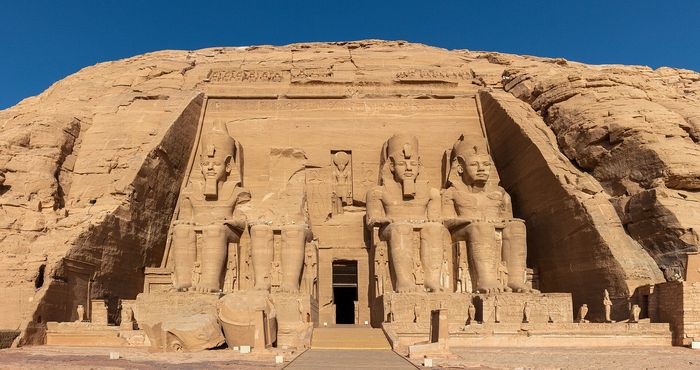
The Great Temple of Ramesses II
Four seated colossi, each twenty metres high; an earthquake soon after it was built brought down the head and torso of one, and it was left that way. Inside are the reliefs of the battle of Kadesh, with Ramesses shooting at the Hittites from his chariot, and at the far end a sanctuary with four statues — Ra-Horakhty, Ramesses, Amun-Ra and Ptah, god of the underworld, the one the sun never touches.
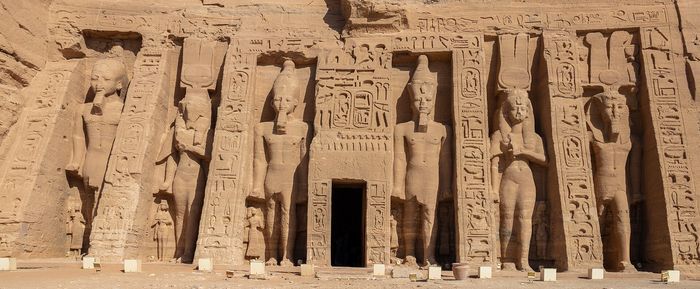
The temple of Nefertari
About a hundred metres north-east, dedicated to the queen and the goddess Hathor. The façade has six statues over ten metres high — four of Ramesses and two of Nefertari as tall as he is, a rarity in Egyptian art; on the Great Temple the queen does not reach the pharaoh's knees.
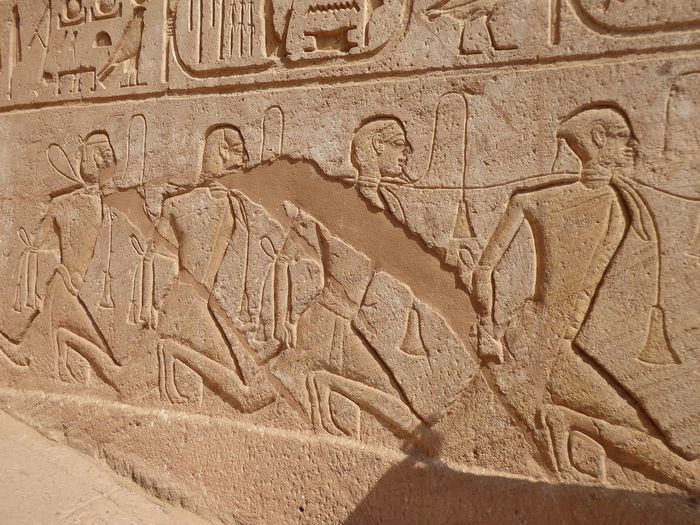
The artificial hill
In 1965–1968 the temples were cut into blocks and reassembled 208 metres further from the river, and the rock behind them is a hill of 300,000 tonnes of fill over concrete domes. From outside you cannot tell, which is why it is worth knowing before you go in.
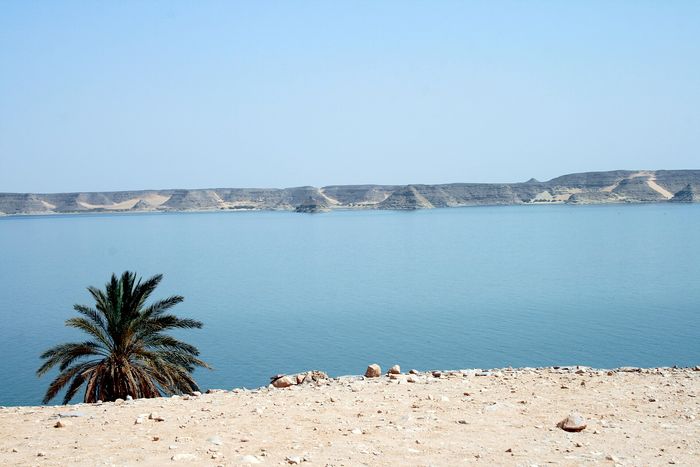
Lake Nasser
The lake behind the High Dam, the reason the temples were moved. A walk along the water after the visit, while the groups head for the buses, gives ten minutes of quiet the day trip otherwise lacks.
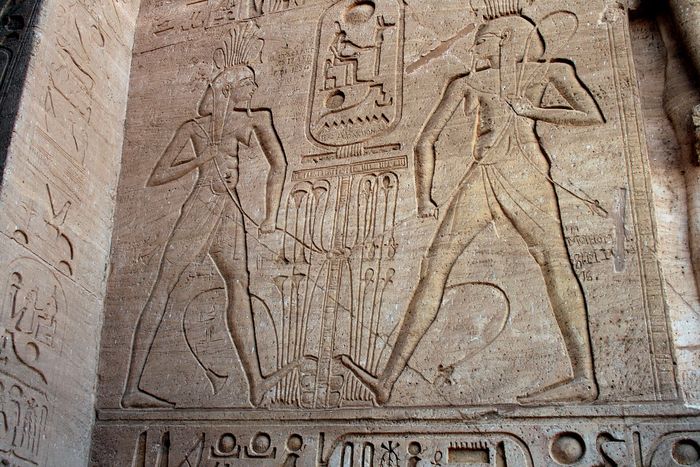
The morning after a night there
The site opens at six and the minibuses from Aswan arrive around eight: sleep in the village and you have two hours with the temples almost to yourself, in light falling from the east straight onto the façade.
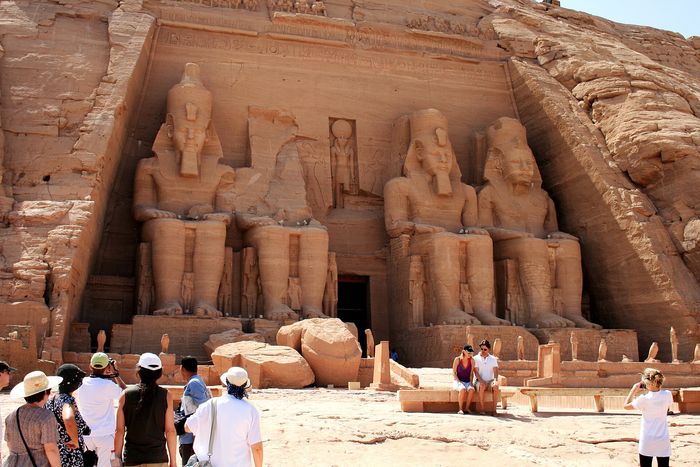
The four a.m. start
Most minibuses from Aswan leave around four and drive three and a half to four hours through the desert, with one stop, to arrive before the midday heat. Bring breakfast and water.


Two things you probably did not know
In the sixties the temples at Abu Simbel were cut into over a thousand blocks and moved sixty metres higher so Lake Nasser would not drown them. The work took four years and fifty countries paid for it through UNESCO.
Twice a year, in February and October, the morning sun reaches into the temple and lights three of the four statues at the back. The statue of the god of the underworld stays in shadow. It still works after the move, one day off.
Ready for Abu Simbel?
Within reach from here
Places sorted by straight-line distance from Abu Simbel — day trips or weekends.

Egypt
→Two countries under one name: the Nile with its temples, which needs a plan, and the Red Sea, which needs only a charter — few people do both in one trip

Tunisia
→Ten towns in a line, from the capital to the sand at Tozeur — in the order they're actually travelled, not listed

Morocco
→The north by train, the south by road, and in July you leave Marrakech for the coast

Turkey
→Istanbul, then one direction: Cappadocia by plane, Ephesus and Pamukkale by train, or the Lycian coast by bus
All 277 places we write about sit on one page — narrow them down by continent, country, price or what you are travelling for.
Front row for the next trip
Leave your email and we'll let you know when a new destination or story goes up.