

What to eat in Mostar
Burek for breakfast, ćevapi in somun for lunch, trout by the river at night, with džezva coffee and baklava in between.
- Ćevapi
- €4–8
- Burek
- €2–3
- Baklava
- €1.50–2.50
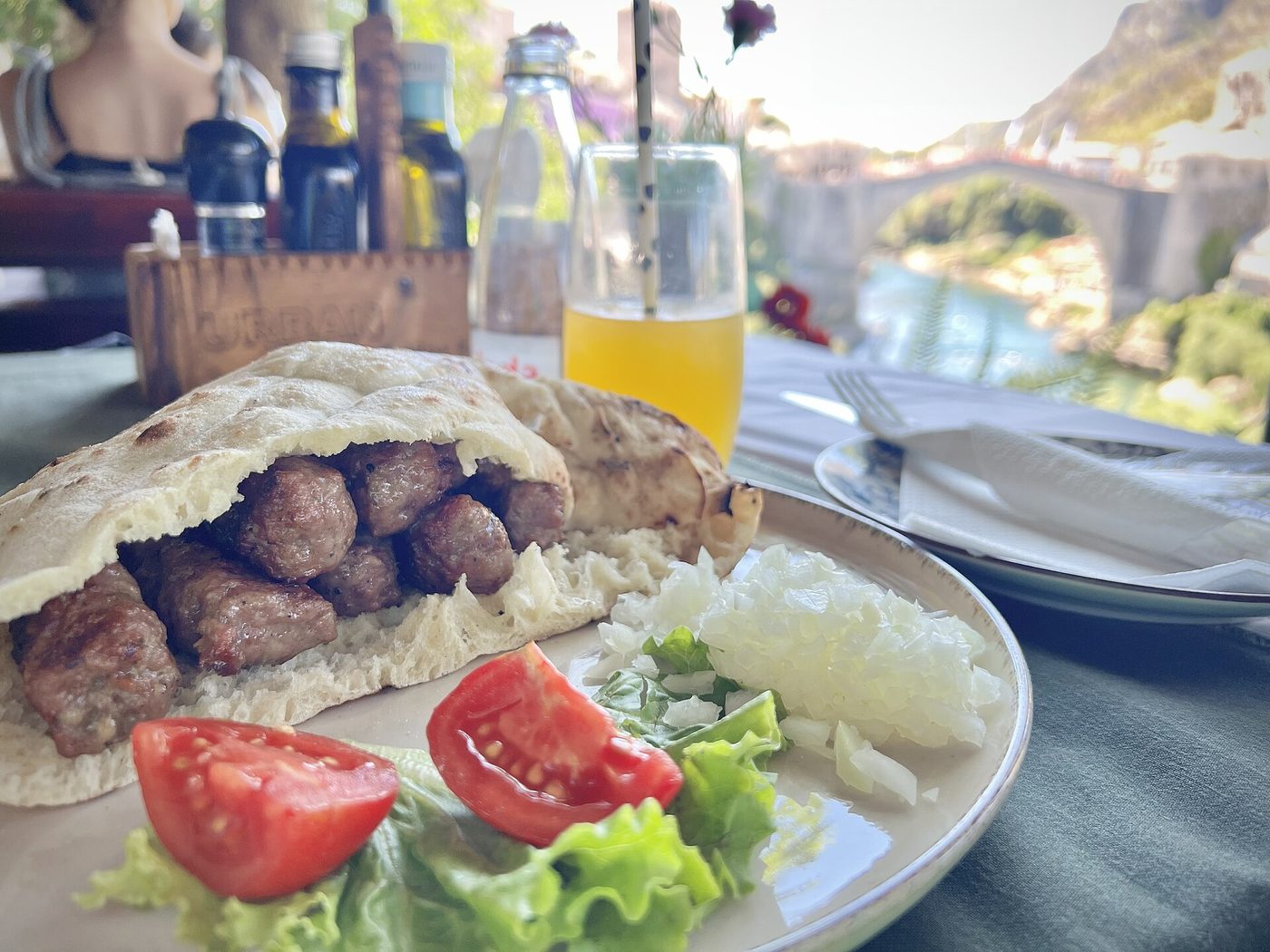
Mostar eats by the clock. Burek comes first, warm from a bakery before the day heats up, ćevapi follow late in the morning while the grill still has no queue, and the evening belongs to fish on a terrace once the coaches have gone back to the coast. Eat in that order and the town makes sense, because each hour of the day has its own plate.
Breakfast from the bakery
Burek is the breakfast of the Old Town, a pie of thin pastry that is sold by the slice for €2–3. A bakery near the entrance to the bazaar sells it from 7 am, so you can have one in your hand on Kujundžiluk before the first tour group arrives. Order the one with meat, and keep a napkin ready.
Buregdžinica Donja Mahala is the other name worth knowing, a shop that sells burek by the slice, although the guides give no street for it. One slice is enough to carry you through the walk to the museum in the Tara tower. If the morning will be long, buy a second one for the pocket.
Ćevapi in somun
Ćevapi arrive in somun, a soft flatbread, with raw onion and a spoon of kajmak, and a portion costs €4–8. Tima-Irma stands in the Old Town beside Kujundžiluk and takes cash only, so keep banknotes in the pocket.
The verdict on timing is easy. Go in the morning, before the first coaches pull in around 10 or 11, because by lunchtime the bazaar belongs to day trippers and the grill belongs to a queue. Choose the grill at Tima-Irma over a long sit-down lunch, and keep the sit-down meal for the evening.
A food tour with a local guide: several tastings in one walk.
Begova soup and the bazaar kitchen
Saray is an aščinica in the Old Town, a canteen of the old kind that serves begova čorba and set meals, so it suits a lunch that has to be quick. Šadrvan stands near the bridge and cooks classic Bosnian dishes, and in season it is wise to reserve a table. Sarma and japrak, the stuffed cabbage and vine leaves, belong to the same family of dishes.
Trout by the river
Hindin Han sits on the east bank, south of the bridge, and its trout costs €8–10. The terraces hang over the water in the evening, which is when the place earns its price, because the coaches are long gone and the light on the stone turns soft. It is dearer than the bazaar, so treat it as the one proper dinner of the trip and walk back across the bridge afterwards.
Sweets, coffee and Herzegovinian wine
Baklava costs €1.50–2.50 and tufahija, a poached apple filled with walnuts, costs €2.50–3.50. Hurmašice, the syrupy cakes, belong to the same shelf. The coffee is brewed in a džezva and costs €1–2 (Bosnian coffee), and it is slow by design, so order it only when there is time to sit. Herzegovina has its own wines, žilavka for white and blatina for red, and rakija is the local spirit. The table below lists the places named on this page.
Places change their menus; opening hours and closing days are not given.


Where to next
The best time to visit Mostar
→May, June and September for walking and Kravice, summer for the heat and the jumps, winter for rain, an empty bridge and short days at Kravice.

Sarajevo · 71 km
→Baščaršija and the City Hall on one stretch, a tram to the source of the Bosna and a cable car to the Olympic track above the city

How well does Mostar suit you?
→Six questions: a score for this place and others like it.
Nomadinho scores out of 100, the same ones behind “Where to go”.
If you like Mostar
Three places with the closest scores, from any country.


Ready for Mostar?
Front row for the next trip
Leave your email and we'll let you know when a new destination or story goes up.