

- Published
- 18 July 2026
- Reading
- 6 min read
- Where
- Luxor and Aswan, Egypt
- Prices checked
- 13. Oct 2026.
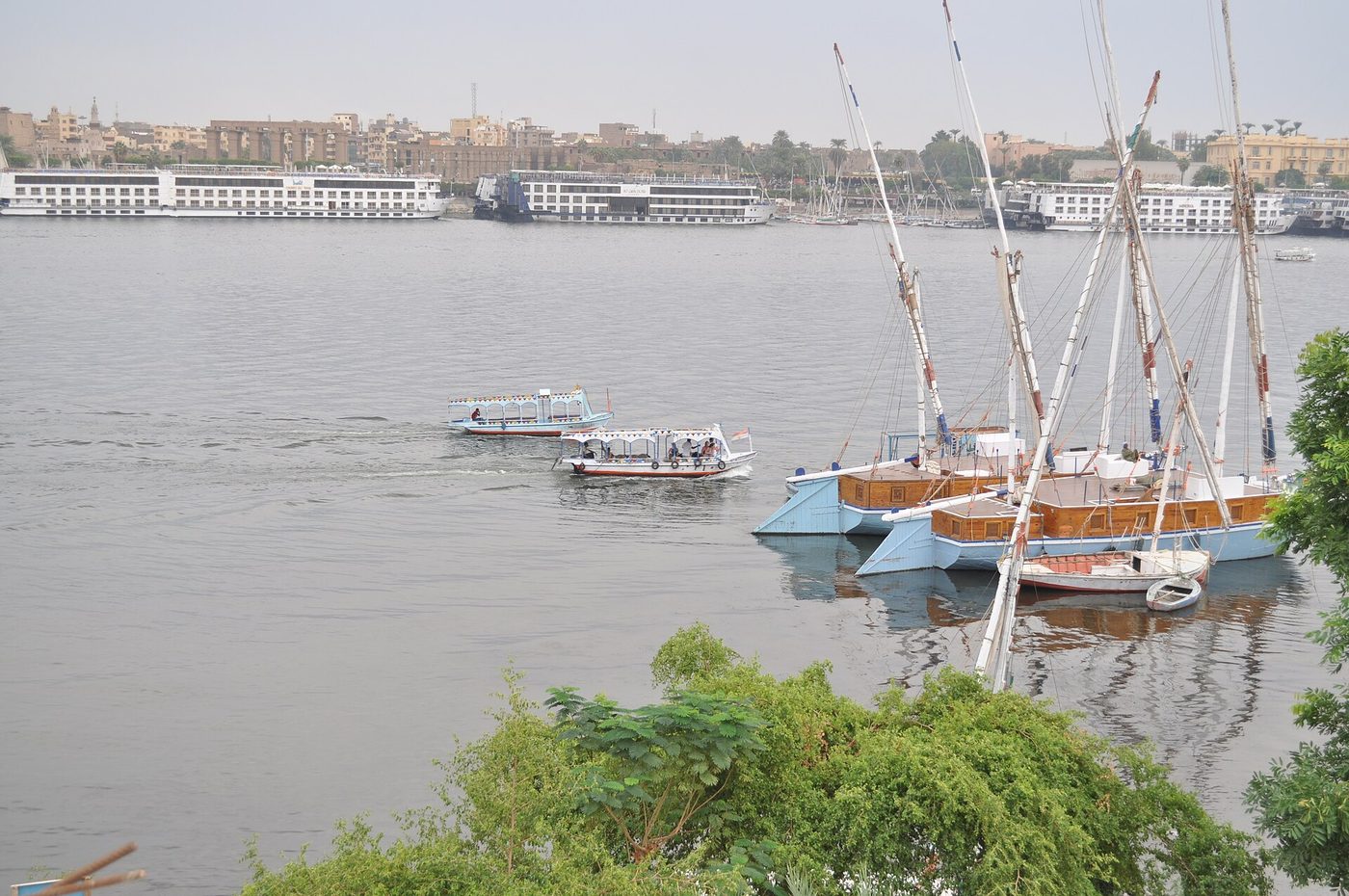
A cruise, a train ticket and a hired driver cover the same 242 km at very different prices and speeds. Here is what each one buys, and who should pick which.
A Nile cruise sells a schedule more than a view. Luxor to Aswan is 242 km by road, with Edfu and Kom Ombo on the way and Philae waiting in Aswan itself, and the boat, the train and a hired driver each handle that stretch differently. A driver chooses the hour and the order of the temples, while a boat chooses them for you. The price and the pace of the days follow from that single difference.


What a cruise is
A cruise ship is a floating hotel that sails while you sleep. Most itineraries take four nights from Luxor to Aswan, or three in the opposite direction, and the days run in a fixed order: Karnak and Luxor Temple on the east bank, the west bank the next morning, then Edfu by horse carriage from a dock about 3 km from the temple, and Kom Ombo in the afternoon or evening. Between Luxor and Edfu the boats queue at the lock in Esna, and the wait grows when a convoy arrives. Tickets, drinks and tips are not always in the price, and excursions such as the sound and light show at Karnak cost extra, so read the package before comparing it. Four nights run €663–891 per person in a private double.
On your own
- Included
- accommodation, meals, visits
With a guide
- transport arranged
- a guide on site
- costs more than going alone
What the train and a driver give
The train is the plainest option and the most honest about time. The day express takes three to four hours and often runs late, and a ticket costs from €34. The Egyptian railways website sells only to Egyptians, so a foreigner buys through an agency or at the foreigners' counter in the station, with sales opening about two weeks ahead. A driver covers the distance in 3 hours 20 minutes without stops, at from €33 per person one way. Add Edfu and Kom Ombo at roughly an hour and a half each and the day passes six hours. Entry is €9.20 at Edfu and €7.55 at Kom Ombo, where the same ticket opens the Crocodile Museum.
What each version costs
Difference — the boat includes lodging and food, the train and driver only transport
Check the same room on both sites: price and cancellation terms can differ.
The felucca
The felucca is the slow third option, a sailing boat with no engine that never travels at night. It anchors near the bank around sunset, and passengers sleep on mattresses on deck under an awning, with blankets in winter. Meals are cooked on board, and there is no toilet, though a support boat sometimes follows. One night reaches Kom Ombo and two reach Edfu, and the pace depends on the wind, so the trip stretches when it drops. It never goes on to Luxor, and the way back is by road. It costs more than the train and less than a luxury cruise, which suits travellers who want the river itself and can sleep anywhere. A dahabiya, a small sailing boat with real cabins and a handful of guests, sits between the felucca and the ship.

Families and first-time visitors should take the boat, because one bill and no packing cover everything from Karnak to Philae, and three or four nights are enough. Couples who dislike crowds or want to pick the hour should hire a driver with stops at Edfu and Kom Ombo, since the cost is close to the train and the day is theirs. Anyone who only needs to reach Aswan should take the train, booked through an agency before the day. Luxor to Aswan is the usual direction, while Aswan to Luxor is a night shorter and cheaper.

Egypt, in brief
What now
If this sounds like your trip, start here.
Aswan
→A town on the Nile where the river has granite islands and cataracts, the people are Nubian and the temples were moved from where they were drowned

Egypt
→Two countries under one name: the Nile with its temples, which needs a plan, and the Red Sea, which needs only a charter — few people do both in one trip

Egypt in 2026: the base tickets have held in euros, the extras have not
→Headlines about tickets that have tripled are counting in pounds.

Giza without the hassle: the plateau after the new gate and the electric buses
→Getting around between the pyramids was always the real chore at Giza.

Hurghada or Sharm el-Sheikh: where the difference really lies
→Two resorts on the same sea that look identical in a brochure. There are four differences, and all four show on the first day.
Front row for the next trip
Leave your email and we'll let you know when a new destination or story goes up.