

- Published
- 17 November 2026
- Reading
- 5 min read
- Where
- Gran Canaria, Spain
- Prices checked
- 17. Nov 2026.
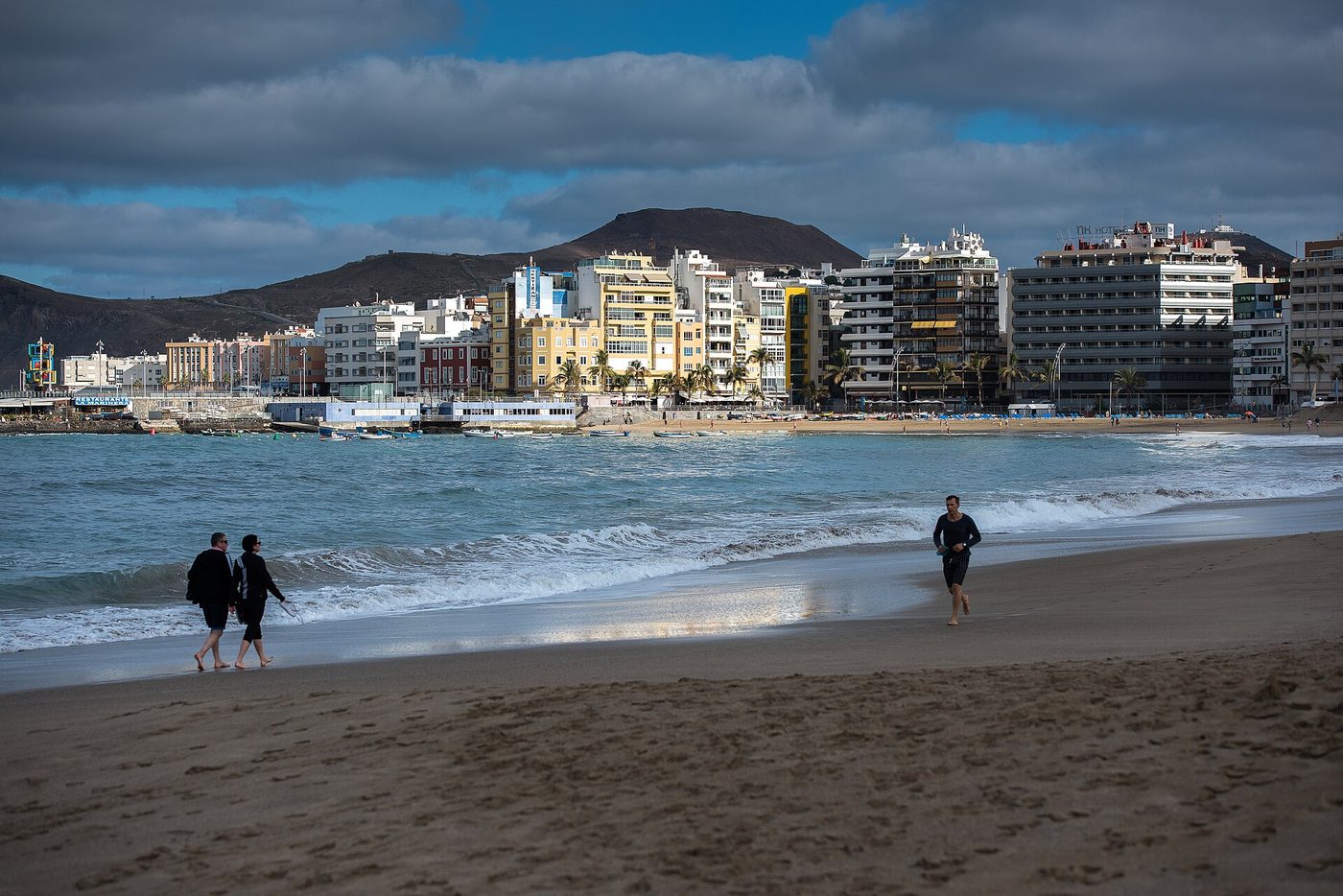
Gran Canaria in winter, month by month: air and sea temperatures, why the south gets the sun and the north gets the city, what to do inland, and which flag to obey on the beach.
The island sells itself as an eternal summer, and the sea quietly disagrees. January here is pleasant and sunny on the south coast, but it is not a swimming holiday for everyone, and the evenings call for a jacket. Pick the south for sun, around Maspalomas and Playa del Inglés, and keep Las Palmas for the city and the beach of Las Canteras.
Winter by the numbers
The figures below come from the 1991–2020 averages and describe the airport on the east coast, so read them as a guide to the island and not as a forecast for your beach. Air, daily high and night low: December 22.4 / 16.5 °C; January 21.1 / 15.2 °C; February 21.4 / 15.3 °C; March 22.2 / 15.8 °C. The nights are what surprises first-timers, because a day in short sleeves ends with an evening that needs a layer.
The sea is cooler than the postcards, and it cools further as winter goes on. Sea temperature by month: December 20.6 °C; January 19.4 °C; February 18.8 °C; March 18.8 °C. December is the warmest month for swimming and February is the coolest, while the sun runs the other way and grows stronger towards spring. Sunshine per day: December and January 6 hours, February 7, March 7.5. Rainy days are few, but the north gets them more often. So December suits those who want to swim, and February or March suits those who want long sunny afternoons on a towel. Pack layers, add a windbreaker for the north and for the drive into the hills, and keep a T-shirt in the beach bag for after sunset.
South for sun, north for the city
The south coast is the sunniest and driest part of the island, and the resort at Maspalomas is a few degrees warmer than Las Palmas. Playa del Inglés sits next to it, a long beach town with hotels, apartments and a promenade, built for people who want to lie down and not think about the weather. Those who choose the south get the best odds of a dry day, though the sea is just as cool as in the north.
Las Palmas on the north-east coast is cloudier and damper from October to March, and the island's climate sources describe the north as cool and humid. That is no reason to skip it. Las Canteras is a city beach with a natural reef called La Barra that keeps the water calm, and the old quarter of Vegueta, with the Plaza de Santa Ana, is in the same city. A week split between the two coasts works well: a few days in the city, then the rest in the south.
The dunes of Maspalomas
The dunes are a nature reserve of about 400 hectares that looks like a desert beside the Atlantic, and they hold four ecosystems: dunes, beach, lagoon and palm grove. Entry is free and the reserve is open 24 hours. The first thing you notice is the quiet once you step away from the road. The best time to go is when the sun is not at its peak, because the shadows on the sand ridges show best then, and there are guided tours and camel rides.
- Walk only on the marked paths: the zone is protected, and the Guardia Civil and park agents patrol it.
- The Faro de Maspalomas, the lighthouse, is the usual western entrance, and it leads towards the lagoon and the palm grove.
- Protected means off the path is off limits, however harmless the sand looks.
On your own
- Entry
- free, open 24 hours
- Reserve
- about 400 hectares
- Paths
- marked paths only
With a guide
- transport arranged
- a guide on site
- costs more than going alone
When it is not a beach day
Inland the island changes quickly. Roque Nublo, the rock that stands over the village of Tejeda, needs a booking: entry is regulated and the permit is free. Access rule: booking required 9 am to 4 pm, a group of 60 enters on every full hour; the booking is free; park at Cruz de los Llanos, then the Global shuttle bus. Bring a windbreaker, because the interior is cold, and the high ground around Pico de las Nieves, the highest point at 1,949 m, reaches only about 10 °C at midday. Cruz de Tejeda and the village itself make a gentler stop on the same road.

Teror is a good choice for a wet or windy day in the north, a town of wooden balconies and a cobbled Calle Real around the Basilica of Nuestra Señora del Pino, whose building began in 1767. The Sunday market runs around it: every Sunday of the year, around the basilica (over 100 stalls). Parking fills fast on market days, so arrive early. Vegueta in Las Palmas has the museum of Columbus's voyages, the Casa de Colón, and the cathedral of Santa Ana. When it rains, Palmitos Park near Maspalomas is one option, and a day ticket for an adult costs €39.
On your own
- Booking
- required, 9 am to 4 pm
- Group
- 60 people on every full hour
- Parking
- Cruz de los Llanos, then Global bus
With a guide
- transport arranged
- a guide on site
- costs more than going alone
On your own
- Market
- every Sunday around the basilica
- Stalls
- over 100
With a guide
- transport arranged
- a guide on site
- costs more than going alone
Official ticket
- Adult
- €39
Through a partner
- options with a guide or audio guide
- usually costs more than the official ticket
Sea, flags and carnival
Watch the flag before you swim. The Canary government advises staying out of the water on any beach with a red flag, and where the waves are big or the currents strong. In February 2026 swells reached 4 to 5 m on the exposed north and west coasts, and Las Canteras lies on the north. On a calm day the sea is fine for a swim at a cool 19 to 20 degrees, so bring a towel and a quick change of clothes.
Las Palmas also holds its carnival in winter. Dates and theme for 2027: 22 January to 28 February 2027, theme “music”.
Where to sleep
Sleep in the south if you want to wake up to the dunes and the beach, in a resort with a pool and a short walk to the sand. Sleep in Las Palmas if you prefer a city with restaurants, a promenade along Las Canteras and walks in the old quarter. The neighbouring island of Tenerife is reachable by ferry from Agaete or Las Palmas if a week on one island feels short.


Between the dunes, the hills and the reef at Las Canteras, a week here fills up faster than the forecast suggests.
Check the same room on both sites: price and cancellation terms can differ.
Check the same room on both sites: price and cancellation terms can differ.
Spain, in brief
What now
If this sounds like your trip, start here.
Gran Canaria
→Dunes and beaches in the south, a city with a long urban beach in the north and mountains in the middle, around 21 °C in winter
Food on Gran Canaria: papas arrugadas, gofio and ron miel
→Salted potatoes, toasted grain flour and honey rum: what the island eats
Getting around Gran Canaria: buses, hire cars and the ferry
→One bus from the airport to the beach, and into the mountains with a booking or a car

Spain
→A country where dinner is at ten and the city wakes up as everywhere else turns the lights off

Is Valencia a cheaper Barcelona? Where it is, and where not
→Three Gaudí tickets in Barcelona cost more than the whole of old Valencia put together.

Pintxos for beginners: how to eat bar by bar in San Sebastian
→Pintxos are not tapas: nothing arrives with your drink, and every bite is ordered and paid for on its own.

Gran Canaria, Tenerife and Seville from this story
See which of them suits you, then pin what you have already done.
Front row for the next trip
Leave your email and we'll let you know when a new destination or story goes up.