

Food on Gran Canaria: papas arrugadas, gofio and ron miel
Salted potatoes, toasted grain flour and honey rum: what the island eats
- Try first
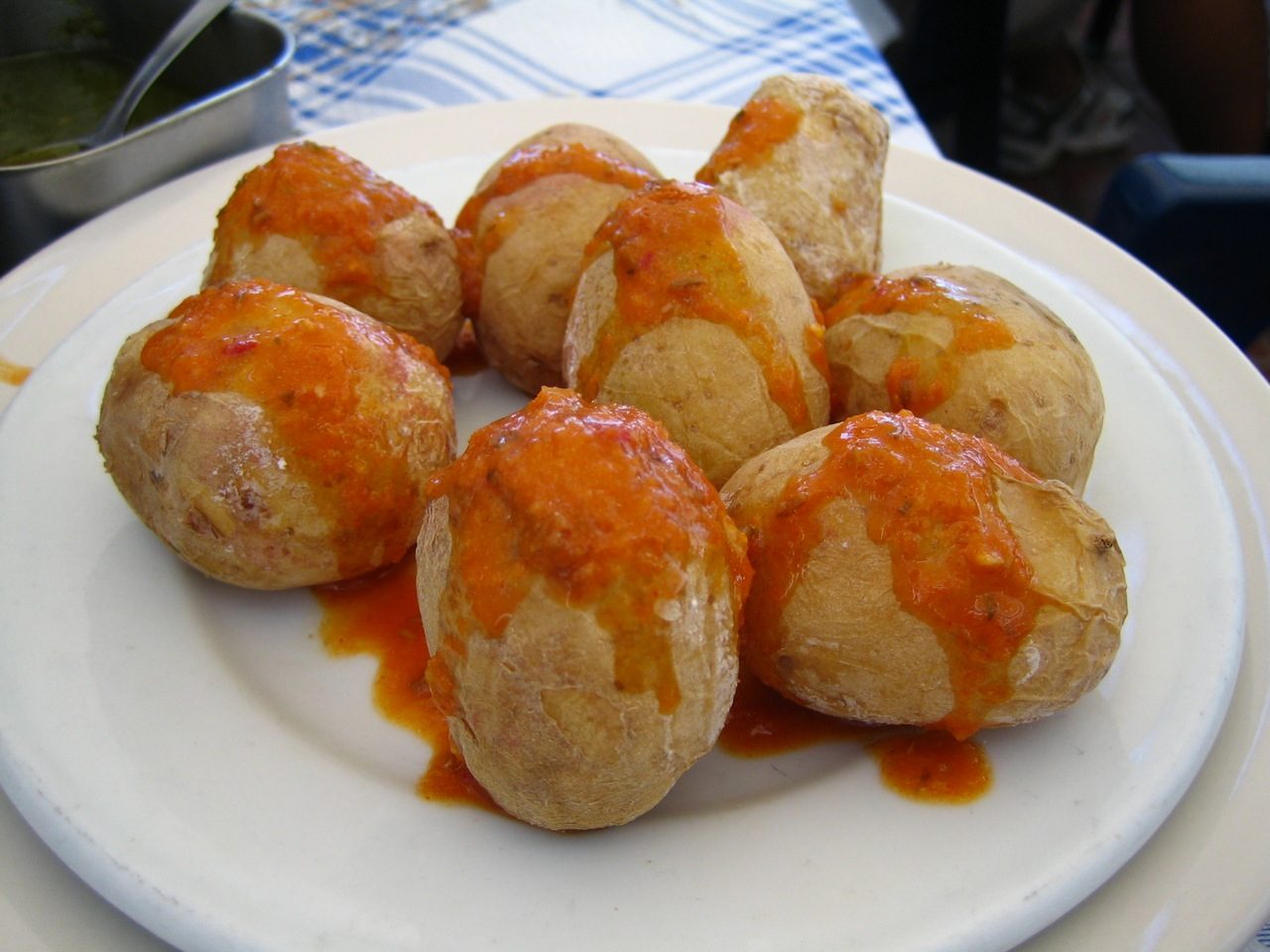
- Papas arrugadas with red and green mojo
- For fish
- Puerto de Mogán and Arguineguín
- In the mountains
- Tejeda and Artenara
Gran Canaria eats simply, and the menu follows the map. Fish comes from the coast and sits on the table beside salted potatoes, rabbit and thick stews belong to the mountains, and the sweet end of the meal is almonds, honey and a rum made from the same island. Order by region and the list of dishes sorts itself out.
Papas arrugadas and mojo
Papas arrugadas are small potatoes boiled in salt until the skins wrinkle. They come to the table with mojo, a sauce that arrives in two colours: mojo rojo, the red one, and mojo verde, the green. Both come in a small dish beside the potatoes.
You will meet them almost everywhere on the island, as a starter, as a side to fish or as the whole order when you only want a snack. The practical rule is to ask for both mojos, taste each one on its own and then choose which goes with the main dish.
Fish from the sea, gofio from the flour
The fish to look for is vieja, cherne, sama or caballa, often served with papas and mojo. The harbour at Puerto de Mogán and Arguineguín in the south are the places to go for it, and the beach promenade of Las Canteras in Las Palmas has sea restaurants as well.
Gofio is the other staple, a flour of toasted grain. Gofio escaldón is the dish made from it: the flour stirred into a fish broth with onion. For gofio and pella de gofio, go to the market in Vegueta, the old quarter of Las Palmas.
Rabbit and rancho canario
Once the road climbs towards Tejeda and Artenara, the menu changes from fish to meat. Conejo en salmorejo is rabbit left in a marinade of vinegar, garlic and cumin, and the family restaurants up there are where it is found.
Rancho canario is the stew that goes with it, a thick soup with meat, vegetables and either pasta or chickpeas. It is a main course in itself.
Sweet things and ron miel
Bienmesabe is almonds, honey and egg made into a sweet, and frangollo is another local sweet. Miel de palma, palm honey, is poured over cheese. The end of dinner on the island often means ron miel, rum with honey.
The best-known ron miel comes from Arehucas in Arucas. The distillery can be visited for €10, with a tasting, and the visit lasts about an hour, needs no booking and is free for children. It opens Monday to Thursday from 9:30 to 14:00 and on Friday from 9:30 to 18:00, and it is closed on public holidays. Beer on the island is Dorada or Tropical, and the local wines come from Guía.
Where to try each dish
The table below pairs each dish with the part of the island where it is easiest to find.


Where to next
Getting around Gran Canaria: buses, hire cars and the ferry
→One bus from the airport to the beach, and into the mountains with a booking or a car

Tenerife · 99 km
→One island, two climates: beaches in the south, the Teide volcano in the middle and a green north
How well does Gran Canaria suit you?
→Six questions: a score for this place and others like it.
Nomadinho scores out of 100, the same ones behind “Where to go”.
If you like Gran Canaria
Three places with the closest scores, from any country.


Before you go
Short answers to what people ask most before setting out.
What are papas arrugadas?
They are small potatoes boiled in very salty water until the skin wrinkles. They are eaten with mojo, a red or green sauce.
What is ron miel?
Ron miel is rum with honey, drunk after dinner. The best-known one comes from the Arehucas distillery in Arucas.
How much does lunch cost on Gran Canaria?
The average menú del día across the Canary Islands is €13.50, so that is a fair guide for the archipelago, not only for Gran Canaria.
Ready for Gran Canaria?
Front row for the next trip
Leave your email and we'll let you know when a new destination or story goes up.