

Cologne Carnival: five days, one big parade, and the rules for each
- Published
- 28 October 2026
- Reading
- 5 min read
- Where
- Cologne, Germany
- Prices checked
- 28. Oct 2026.
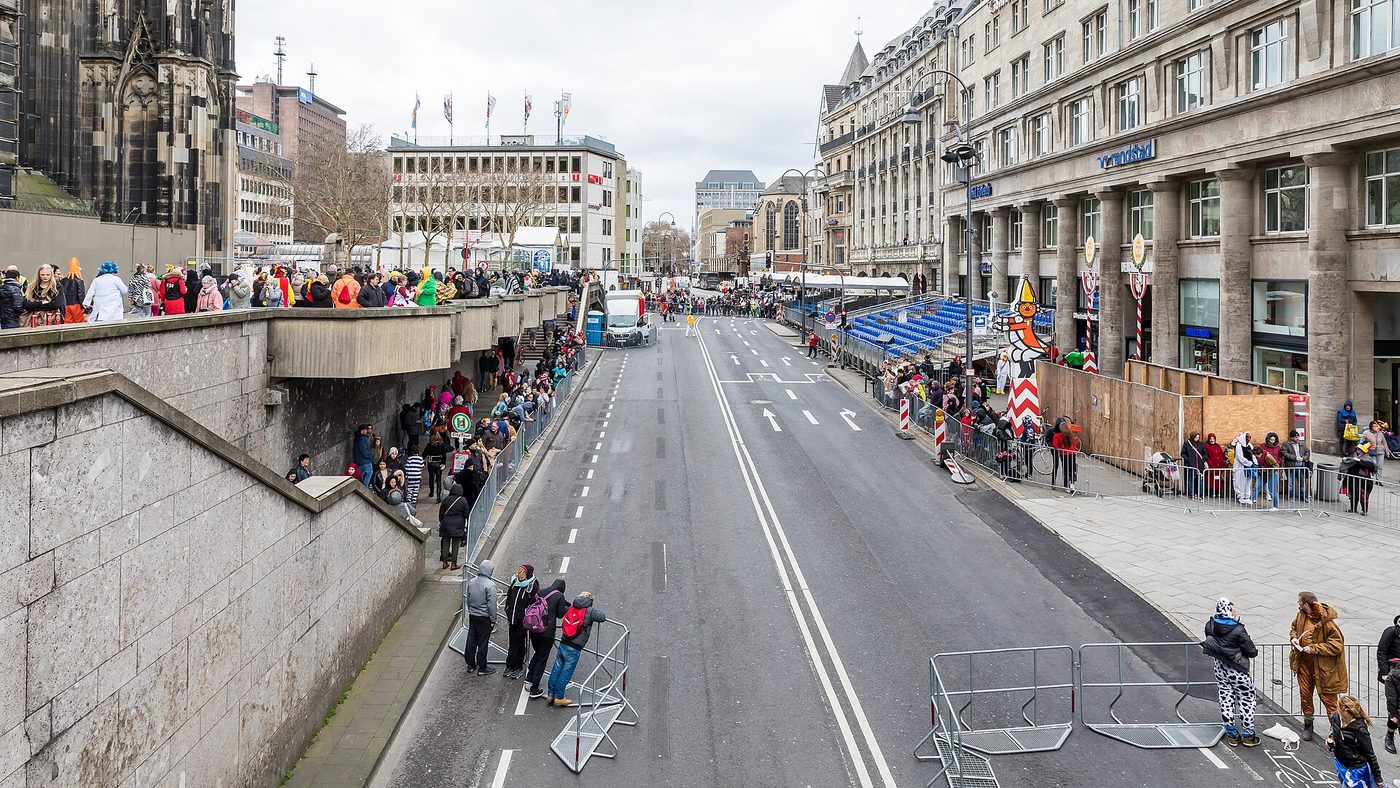
Cologne Carnival fills five days on the street, and the big parade is only the middle of them. Here are the dates, the rules for glass and closed streets, the stands, the customs and what to eat.
Ask what happens at Karneval in Köln and most people answer Rosenmontag, the Monday parade. The street party, which Cologne calls Fastelovend, runs Thursday 4 to Tuesday 9 February 2027, from Weiberfastnacht, the Women's Carnival Thursday, to Veilchendienstag. The schedule for the coming year is not published yet, so the hours, routes and closures below come from the 2026 edition and are written in the past tense. Dates are the part you can trust today, and the rest should be treated as a pattern.
Five days, not one
The season itself opens on Wednesday 11 November 2026, months before anything closes a street. The street days start with Weiberfastnacht and end with Veilchendienstag, and each carries its own event. The Geisterzug, the ghost parade, comes on the Saturday before Weiberfastnacht, the family parade on Sunday, Rosenmontag on Monday and the burning of the Nubbel on Tuesday night. The motto of the coming season, announced at the end of the 2026 parade, is “Morje es, wat do drus mähs”. So the idea that Cologne Carnival is a single Monday leaves out four days of it.
Weiberfastnacht and the Altstadt
The first street day belongs to the Altstadt, the old town on the river, and to Zülpicher Straße in the Kwartier Latäng. Around Alter Markt and Heumarkt the 2026 closures ran like this: closed as needed from about 7 a.m. to about 6 p.m.; Deutzer Brücke toward the centre from about 8 a.m. (2026 edition). Zülpicher Straße had its own rules: closures start around 7 a.m. and lift between 2 and 3 a.m. (2026 edition).
Glass is the rule to know before you go. The Altstadt glass ban in 2026: from 8 a.m. on Weiberfastnacht until 8 a.m. the next morning (2026 edition). The penalty was up to €60. Plastic cups and cans stayed allowed, so a drink poured into a plastic cup makes the day easier. If the crowd gets too thick, a Rhine cruise is one way out of it.
The Sunday and Monday parades
Sunday belongs to the Schull- un Veedelszöch, a family parade in costumes made by schools and clubs, on a route similar to the one on Monday. Start in 2026: 11:11 a.m. (2026 edition). The Veedelszöch, the neighbourhood parades, run through the weekend and on Tuesday: Riehl and Wahn on Saturday, Rodenkirchen and Longerich on Sunday, Mülheim, Deutz, Ehrenfeld and Nippes on Tuesday. The main event, the Rosenmontagszug, falls on Monday 8 February 2027, with about 12,000 participants and a running time of about three and a half hours in 2026. Rosenmontagszug start in 2026: 10 a.m. (2026 edition).
Stands, tickets and what is free
A seat along the route costs a ticket. The covered and open stands are sold by the Festkomitee, the organising committee, and by the carnival societies, and the presale starts in November. The prices for the coming year are not out, and the best seats go first, so book as early as the presale allows. Those who miss a seat can watch the parade on WDR and Das Erste.
- Sunday and Monday in 2026, closures in the centre: most of the centre closed from 6 a.m. on Sunday and 5:30 a.m. on Monday; Deutzer Brücke from 7 and 6 a.m. (2026 edition).
- Deutzer Brücke is shut to vehicles and open to pedestrians. A one-day ticket for zone 1b is €9.60.
- Altstadt and Südstadt: the city's 2026 statement described the party as moving there, with extra toilets and glass containers.
- Severinsviertel: glass is not banned, and the request there is to avoid it.

Customs and what to eat
The greeting is Alaaf, never Helau, which is unwelcome in Cologne. From the floats come Kamelle, sweets, and sometimes flowers. Small bouquets called Strüßjer are given with a Bützje, a kiss on the cheek with the other person's consent. The Dreigestirn, the carnival trio of Prinz, Bauer and Jungfrau, rules the days, and the Jungfrau is played by a man. On Tuesday night the Nubbel, a straw doll that carries everyone's sins, is burned. For the food, Früh am Dom, Am Hof, listed a 0.2 litre Kölsch at €2.50 and a Halve Hahn at €7.80 on an ordinary day, which says nothing about Carnival prices.

Where to sleep
Rooms near the cathedral and the station disappear first, and the Altstadt is close behind. Look for a bed as soon as your dates are fixed, and treat a room at the edge of the centre as a fair trade for a quiet night. The page on where to sleep sorts the districts.


Give Rosenmontag your single day, and leave the Altstadt on Weiberfastnacht to anyone who wants a crowd.
Check the same room on both sites: price and cancellation terms can differ.
Germany, in brief
What now
If this sounds like your trip, start here.
Cologne
→You see the cathedral from the platform, before you even leave the station

Cologne in 2 days
→Day one is on foot from the cathedral to the Rhine, day two is a tram ride to the Romans and the chocolate.

Day trips from Cologne
→One regional train and one ticket: Bonn and Brühl for half a day, Düsseldorf for half a day, Aachen for a full day.
Where to stay in Cologne
→Cologne is compact, so the area is chosen by the evening you want: the stone of the old town, the cafés of the Belgian Quarter or quiet across the Rhine.

What Cologne costs
→Since 1 July 2026 sightseeing inside the cathedral is paid, while the outside, the Domplatte and the bridge stay free.
What to eat in Cologne
→A rye roll with cheese beside the beer, blood sausage with apple compote for lunch, all in a brewhouse that pours only its own beer.
The best time to visit Cologne
→May and September for walking, February for carnival, while the Christmas markets and summer events fill the hotels.
Getting around Cologne
→By S-Bahn from the airport to the main station, on foot through the centre, then by tram or cable car once you cross the Rhine or leave the Altstadt.

Germany
→A country with no single centre but a dozen, each convinced it is the main one

Why Berlin is still a cheap weekend
→Berlin has stopped being cheap on paper, and a weekend there still comes out light, because the things you fly in for charge no entry.

Berlin or Munich, and what actually separates them
→Berlin and Munich share a country and behave like two countries, and the gap between them has little to do with beauty.

Oktoberfest without the romance: the beer, the tent, the bed
→This is how the Oktoberfest really works, with the dates, the price of a litre by tent and the reservation rules that decide whether you sit.
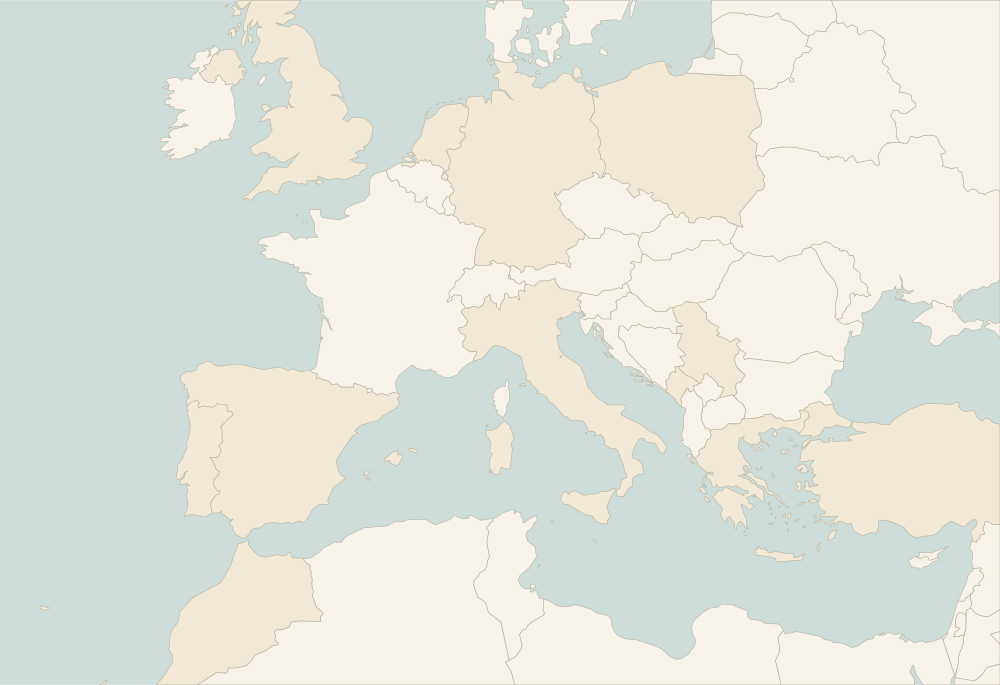
Cologne, Frankfurt and Heidelberg from this story
See which of them suits you, then pin what you have already done.
Front row for the next trip
Leave your email and we'll let you know when a new destination or story goes up.