
Oktoberfest without the romance: the beer, the tent, the bed
- Published
- 9 August 2026
- Reading
- 5 min read
- Where
- Munich, Germany
- Prices checked
- 15. Sep 2026.

Getting onto the ground costs nothing; everything after it costs more than expected. This is how the system works, with dates, per-tent prices and the booking rules.
Oktoberfest holds the Theresienwiese from 19 September to 4 October. Getting onto the main ground and into the tents is free, and that is the last free thing about it. Everything after — the litre, the table, a bed in the city — runs on rules that don't show up in photographs and are best learned before the flight is booked.
Dates and hours
The festival has run sixteen days since 1994, stretching to seventeen or eighteen when the first Sunday falls before 3 October, German Unity Day. Tents open at 10am on weekdays and 9am at weekends and holidays, and close at 11.30pm; the big tents pour until 10.30pm, the small ones until 11pm. Only the Käfer and the Weinzelt may stay open until one in the morning, with last orders at half past midnight. On the first day no beer flows until the first keg is tapped at noon in the Schottenhamel, and Tuesdays are family days: until seven in the evening rides and stalls charge less for children and families.
What a litre costs
A litre does not cost the same in every tent, and the city publishes the prices for each edition in advance. The gap between the cheapest and the dearest tent is still too small to choose a seat by — you choose by where there is room.
How they actually work
The first rule is that there is no central office and no single phone number for reservations. Each tent runs its own service with its own rules, and it all goes directly through them; most open bookings for the current edition by April or May at the latest. Second rule: only a whole table can be booked, for eight to ten people, and you don't pay for the seat but for food and drink vouchers (Verzehrgutscheine), bought in advance and spent on the day. On average they cover two litres and half a chicken per person, which is a fair measure of one afternoon at a table.
The third rule is the one worth knowing: a tent cannot be fully reserved. On weekdays a quarter of the seats must stay free for people who turn up unannounced, and on Saturdays, Sundays and holidays until three in the afternoon as much as 40 per cent, then a quarter again. At weekends and on 3 October the landlords may also hand a further ten per cent of seats to Munich residents.

Finding a bed in those weeks
During Oktoberfest rooms in central Munich cost more than double the rest of the season, so the real question is whether to sleep in the city at all.
The other option is to sleep outside Munich and come in by train. A Bayern-Ticket at €34, plus €10 for each extra traveller up to five, covers regional trains across Bavaria — from nine in the morning on weekdays, from midnight at weekends — and stays valid until three the next morning. Augsburg, Ingolstadt and Regensburg all sit inside that ring. The ticket therefore covers the ride back after the tents close at 11.30pm; what it does not cover is the last train, so check the timetable before you sit down at a table.
The Frühlingsfest and the Oide Wiesn
The Frühlingsfest is the same ground and the same system, only in April and May and with two big tents, the Bayernland and the Hippodrom. A litre there is €13.50–14.50, so cheaper than in September. If what you want is a tent, a band and a fairground without fighting for a table, this is the rational choice.


One last thing, because it is usually framed wrongly: Oktoberfest is not a beer festival but a folk fair at which beer is drunk, and the biggest mistake is arriving for one day and trying to 'do' it. With two days, spend one on the ground in the morning and the other on the city — and if one of them is a Sunday, make that the city day: the tents are fullest at weekends, and the Pinakotheken are cheapest on Sundays. That is the difference between a trip and an anecdote.
Germany, in brief
What now
If this sounds like your trip, start here.
- Entry to the Wiesn is free — nothing after that is, so budget for the stein and the bed.
- With kids aim for the family Tuesdays: noon to seven, with cheaper rides.
- Watch the hours: tents pour until 22.30 and the last beer goes at 23.30; only Käfer and Weinzelt run later.
Munich
→The Bavarian capital, behaving as if the rest of Germany were abroad

Munich in 2 days
→The market on Saturday, the galleries on Sunday, a Monday without the Pinakotheken — two days in Munich…
What to eat in Munich
→What gets ordered in Munich, what it costs in the best-known beer hall, and what you carry into a beer garden…

The best time to visit Munich
→Munich's weather rarely spoils a plan; Oktoberfest and the big trade fairs spoil the price of a room.

Germany
→A country with no single centre but a dozen, each convinced it is the main one

Why Berlin is still a cheap weekend
→It isn't cheap because everything is priced low, but because a whole day can pass without a single ticket…

Berlin or Munich, and what actually separates them
→Two cities in one country that behave like two different countries. The question isn't which is prettier, but…

Hamburg with the rain and the tide built into the plan
→A city where you plan by the water rather than the sights: the water that falls, and the water that rises and…
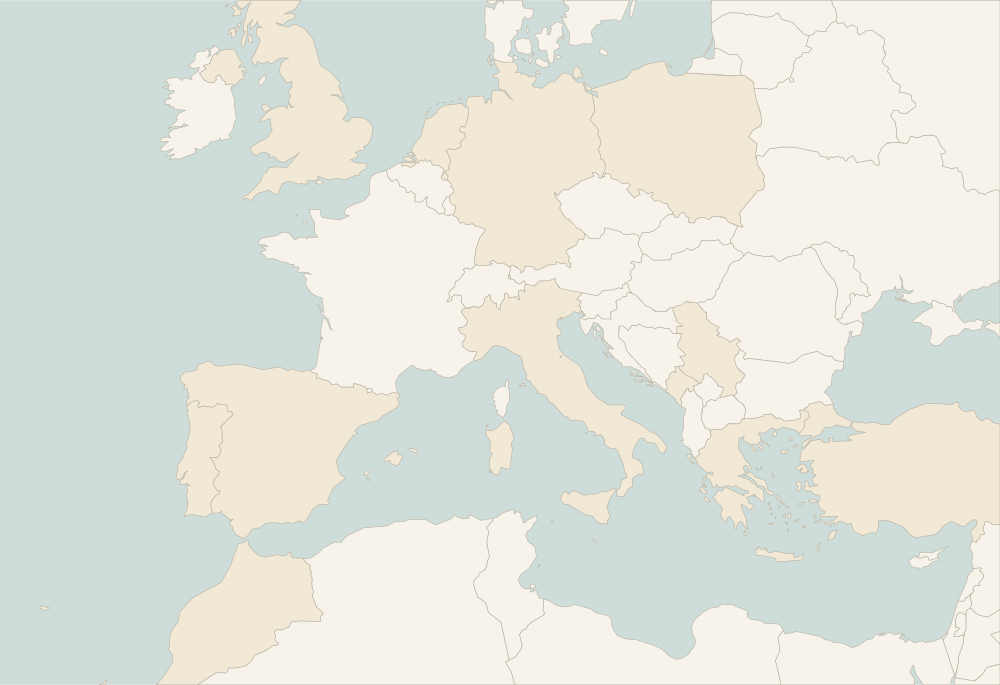
Munich, Nuremberg and Heidelberg from this story
See which of them suits you, then pin what you have already done.
Front row for the next trip
Leave your email and we'll let you know when a new destination or story goes up.