

The best time to visit Gjirokastër
May, June and September for stone and climbing, summer for mornings and evenings, winter for rain and closed guesthouses.
- Best months
- May, June, September
- July and August
- Hot on the castle ridge
- November
- The wettest month, stone gets slippery
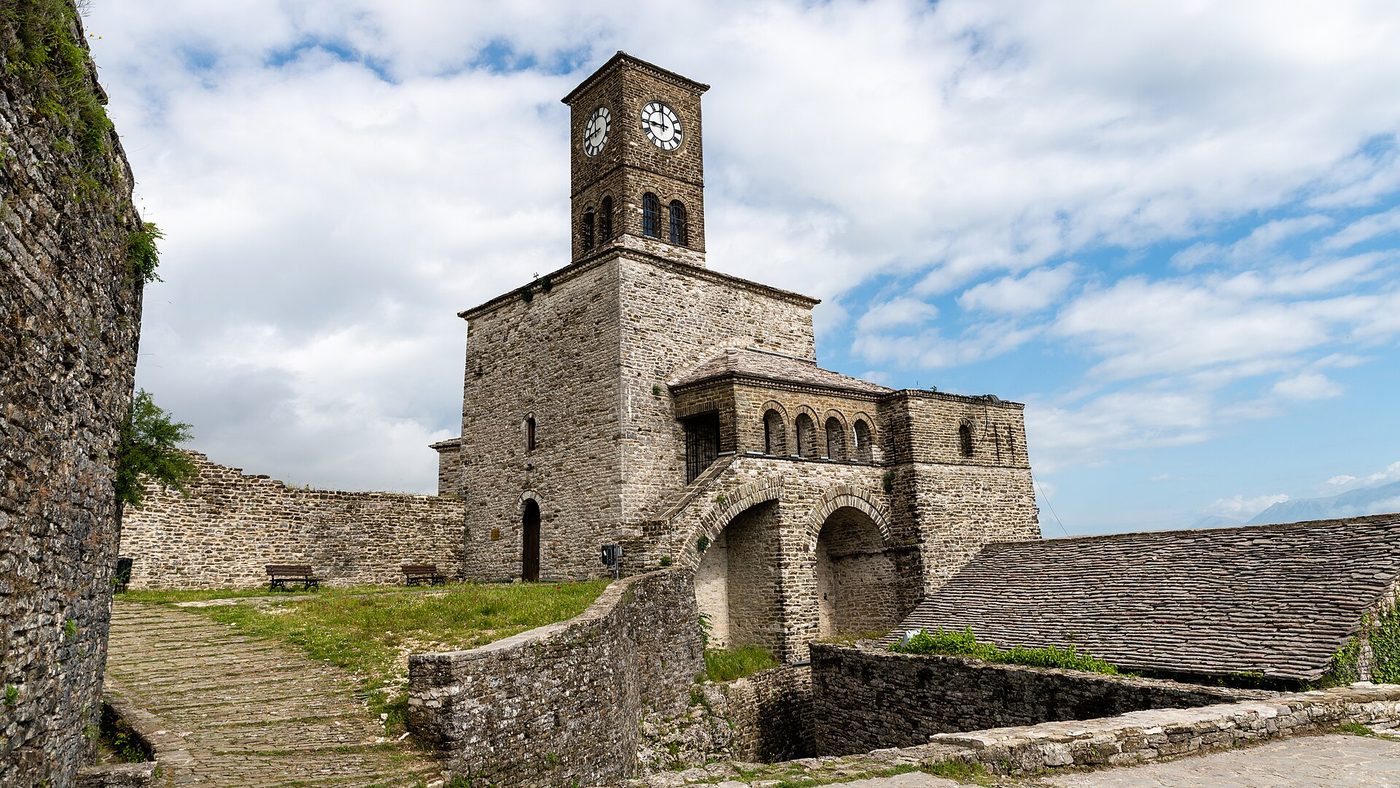
Pick the month by the stone, and leave the sea out of it. Gjirokastër is steep limestone, so the question is whether the cobbles are dry and the climb is bearable, and that points to May, June and September. July and August are possible with early starts, and November is the month to avoid unless rain suits you.
Through the year
Heat on the ridge
July and August are hot on the exposed ridge of the castle, where stone holds the sun and there is little shade to hide in. July averages a high of 31 °C, with little rain, so the days are dry and bright. The advice for the castle holds all summer: be at the gate before nine, when the stone has not yet taken the sun. Go to the castle early or late. Give the middle of the day to the houses and a long lunch in the bazaar.
Resort Kërculla, a four-star hotel with a pool on the hill above the old town, is the summer advantage, a place to cool off between a morning of stone and an evening in the lanes. A taxi takes you down to the bazaar. The Blue Eye is the other answer to the heat. It is a cold spring where swimming is forbidden, so you stand at the edge and look.
hostel, dorm bed, per night

Spring and autumn
May, June and September are the months that visitors with a choice go for, since the ridge is warm and not punishing and the days are long enough for the castle, two houses and the tunnel. Early autumn keeps the warmth without the July glare. Evenings suit the bazaar, when the lanes cool and the castle is lit above them. If a trip to the coast is part of the plan, these months also suit Sarandë and Butrint, because a full day on the road does not leave you wrung out by the heat.
October is still pleasant but wetter, so carry a light waterproof. In every one of these months plan Zekate House before 4 pm. The house has no electric light, and the visit depends on daylight.

Rain and closed guesthouses
Rain arrives in November, the wettest month, with 299 mm and 13 wet days. December and January stay damp and cool, so the rain does not stop when the year turns. The limestone turns slick on the steep lanes. Shoes with grip stop being advice and become equipment, and a descent from the castle takes longer than the climb did.
Many guesthouses close or cut their hours from November to March, and heating is the question to ask before you book. A winter stay works as a short, quiet visit to the stone, and the verdict is simple: book a bed that is confirmed open, and plan the castle and the houses around the dry hours of each day, rather than around the clock. Take the tunnel early in the day, because the visit needs registration on the spot and a guide to lead the way, and a wet afternoon is a poor time to wait for either.


Where to next
Getting around Gjirokastër
→From Tirana by bus in about four hours, around town on foot and uphill, and to the Blue Eye by taxi.

Berat · 72 km
→The town of a thousand windows on the Osum: white Ottoman quarters, an inhabited castle and a stone bridge, in a day or two

How well does Gjirokastër suit you?
→Six questions: a score for this place and others like it.
Nomadinho scores out of 100, the same ones behind “Where to go”.
If you like Gjirokastër
Three places with the closest scores, from any country.


Ready for Gjirokastër?
Front row for the next trip
Leave your email and we'll let you know when a new destination or story goes up.