

The best time to visit Albarracín
Spring and autumn for walking, winter for snow and quiet, Good Friday and the September fiestas for those who like a crowd.
- Coldest
- January, mean 2.9 °C
- Warmest
- July, mean 23.0 °C
- Fiestas
- around 8–14 September
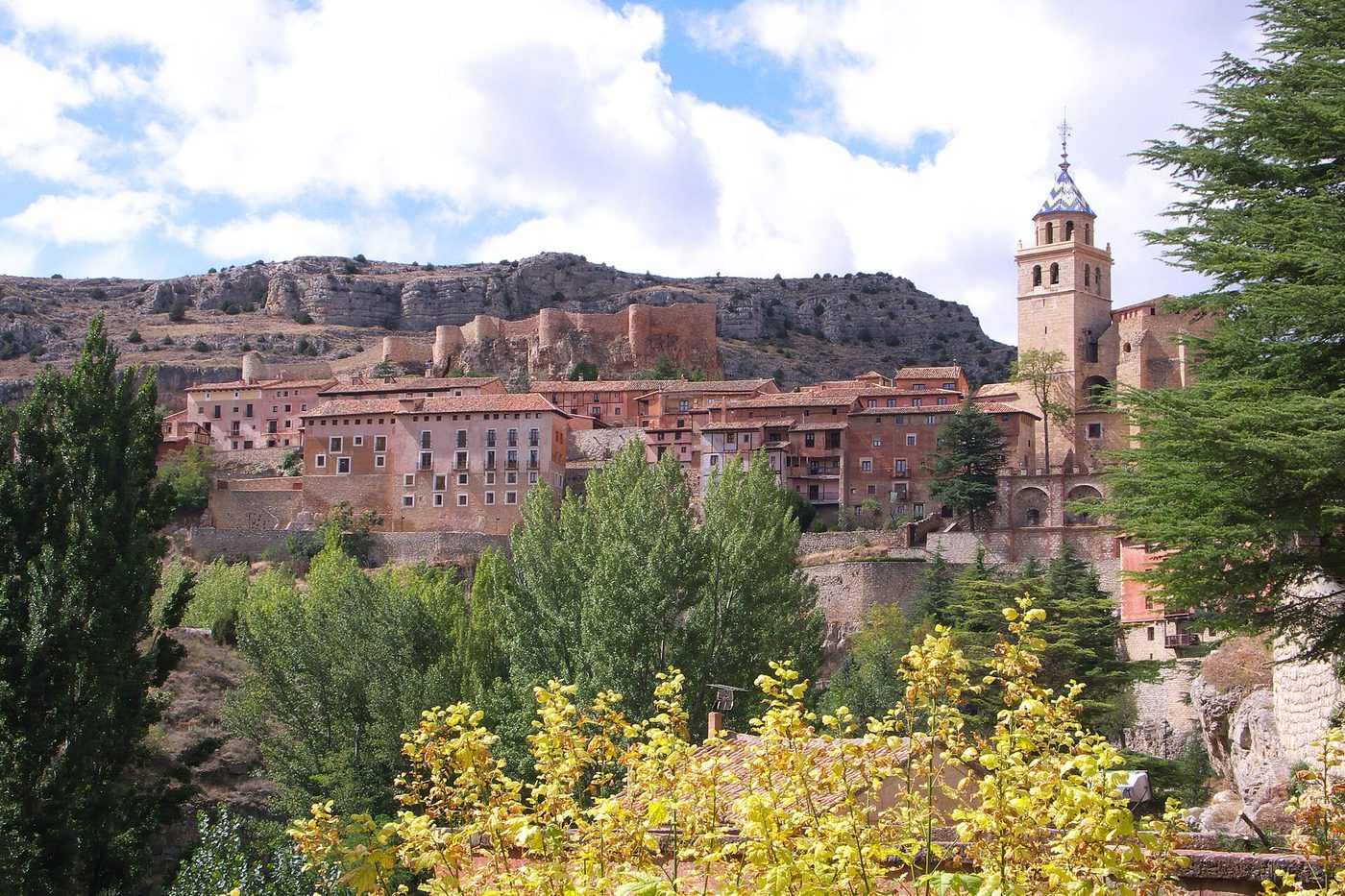
In Albarracín the month matters less than the altitude. At about 1,170 m the winter is a real one and the summer is mild, so the season you pick shapes the trip more than it would on the coast. Three dates change the town completely: Good Friday, the September fiestas and Christmas. Outside them the old streets belong to a few visitors and a lot of red stone.
Through the year
Cold and quiet
January averages 2.9 °C and February 5.5 °C, with five or six rainy days a month. Cobbles and steps turn slippery, so shoes with grip matter more than a heavy coat. Snow is the reward. When white lies over the roofs and the hillside above the walls, the town looks like a Swiss postcard, about two hours from Valencia.
The Christmas programme runs from 6 December to 5 January and entry is free. The lights go on on 6 December, a Christmas market fills Plaza Mayor, the San Silvestre race winds through the medieval streets on 31 December, and the Three Kings parade arrives on the square on 5 January. In January the town also lights its bonfires for the feast of San Antón, an old custom that suits a cold evening on the square.
Check the same room on both sites: price and cancellation terms can differ.
Spring and autumn
March, April and May average 7.0, 9.3 and 13.8 °C, which is walking weather once the morning chill lifts. April has the most rain, with eleven wet days, and March has ten. September, at 16.3 °C, and October, at 12.8 °C, are the other half of the good season, and the weekdays of both are quiet. These months suit the trail to the rock paintings at Navazo, which takes 35 minutes, and the longer paths of the pine woods around it.

Warmest, but not scorching
June averages 18.5 °C, July 23.0 °C and August 22.2 °C, and July brings only three rainy days. Those are the warmest months in the town, yet the average hides the midday heat on bare stone, where there is little shade. Plan the old streets for early morning or evening, and keep the pine woods of Rodeno for the cooler hours of the day.
Three dates that change the town
Semana Santa runs from Palm Sunday to Easter Sunday. On Good Friday at noon the ceremony known as Romper la Hora takes place on Plaza Mayor, and the square fills long before it starts. The old town is pedestrian, there is no regular public transport that week, car parks wait at the entrances and a shuttle runs at the busiest hours. Rooms in the town and the villages around it sell out months ahead, so book early or come on another weekend.
The fiestas patronales fall around the second week of September, roughly from the 8th to the 14th. Riders on horseback bring cows down the cobbles to Plaza Mayor, the square is fenced with boards to make an arena, and orchestras play until dawn. The procession of the Santísimo Cristo de la Vega closes the week on the 14th. It is a good week for anyone who wants noise, and a poor one for anyone who wants an empty street.
The third date is Christmas, described above under winter. Of the three, it is the gentlest: free entry, a market and a parade, with none of the pressure on beds that Easter brings.
Where to next
Day trips from Albarracín
→Rock art in Rodeno for half a day, the Toba bridge for a longer walk, Teruel and its Mudéjar towers for a full day.

Cuenca · 70 km
→Houses hanging over a gorge, an hour by train from Madrid

How well does Albarracín suit you?
→Six questions: a score for this place and others like it.
Nomadinho scores out of 100, the same ones behind “Where to go”.
If you like Albarracín
Three places with the closest scores, from any country.


Ready for Albarracín?
Front row for the next trip
Leave your email and we'll let you know when a new destination or story goes up.