

The best time to visit Nairobi
Dry months for the park, January–February for cheaper Mara entry, and two rainy seasons to plan around.
- Driest
- June–September and January–February
- Long rains
- mid-March to mid-May
- Short rains
- November and early December
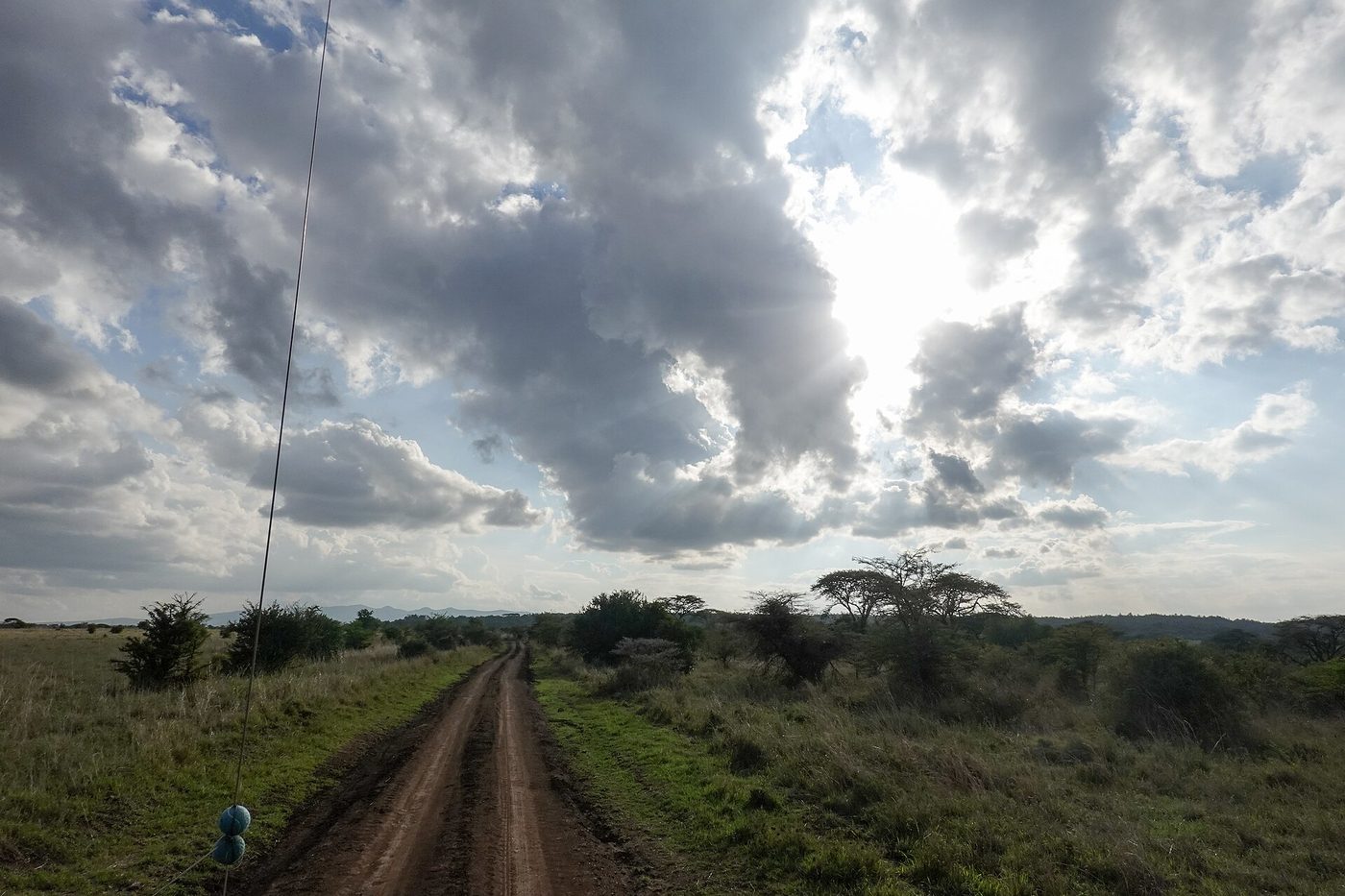
Nairobi is cold only at night, and the myth that a city near the equator must be hot, or that a high one must be freezing, falls apart at 1,795 m. The temperature hardly moves through the year, so the month is chosen by the rain and by the price of the Mara entry that follows it.
Through the year
If you can only choose one month, make it February: it is dry, warm and Mara entry is still at the lower rate.
June–September and January–February
The park is at its best for animals in the dry months, when they gather around the permanent water and are easy to find. July is the coolest month, with nights around 12 °C, while the average daytime high peaks at 28 °C between December and March. Days stay between 24 and 28 °C, so one jacket covers the evenings and nothing else is needed.
The wildebeest migration in Kenya runs from July to October, with the peak in August and September and no fixed date. Mara entry is €86 from January to June and €173 from July to December, so the month decides the bill as much as the weather does.
Check the same room on both sites: price and cancellation terms can differ.

Mid-March to mid-May
The heavy rains last until the middle of May, and in the city they come as afternoon downpours and not as grey days. April and November are almost tied as the wettest months at the airport weather station, while at Dagoretti April is clearly ahead. The city turns green and the park does too, although animals are harder to find.
Inside Nairobi National Park the black cotton soil turns slippery, some tracks get slick and a 4x4 is the sensible choice. The road to the Mara is slower as well, since its last stretch is dirt. Mara entry stays at the lower rate until the end of June.

November and December
The short rains run from late November to the middle or end of December and arrive as afternoon showers. Migratory birds return to the park at that time, which is a reason in itself for a visit in those weeks. December starts mild and gets crowded around the holidays.
In November the airport station records nearly as much rain as in April. Carry a light waterproof and plan the outdoor part of the day before lunch.

Which month for which reason
Three decisions follow from the data. For animals in the park, choose July to October or January and February. For the bill, choose January and February, when Mara entry is €86. For Nairobi as the night before a safari, almost any month works, and the only thing the season changes is an afternoon shower.


Both sites fill in your nearest airport for you; change it in one click.
Where to next
Getting around Nairobi
→From the airport by Uber, around the city by app or with a guide, and to the Mara by air from a different airport.

Masai Mara · 108 km
→The Kenyan end of the Serengeti ecosystem, with one of the highest lion densities in Africa, and an entry fee that doubles from July to December, though the herds leave in October

How well does Nairobi suit you?
→Six questions: a score for this place and others like it.
Nomadinho scores out of 100, the same ones behind “Where to go”.
If you like Nairobi
Three places with the closest scores, from any country.


Before you go
Short answers to what people ask most before setting out.
What is the best month for Nairobi?
The dry months, June to September and January to February, suit the park best. For the lowest Mara entry, January and February are the choice.
When does it rain in Nairobi?
The long rains run from mid-March to mid-May and the short ones from late November into December. Rain mostly falls in the afternoon.
Is Nairobi cold?
At 1,795 m the days are mild at 24 to 28 °C, and only the nights in July fall to about 12 °C. One jacket is enough.
Ready for Nairobi?
Front row for the next trip
Leave your email and we'll let you know when a new destination or story goes up.