

Positano in 2 days
The first day runs down the one real street to the sea, the second goes up by bus and back down a trail of 1,700 steps.
- Day one
- The church
- Day two
- The Path of the Gods, 4 h from Bomerano
- Footwear
- Closed shoes with grip
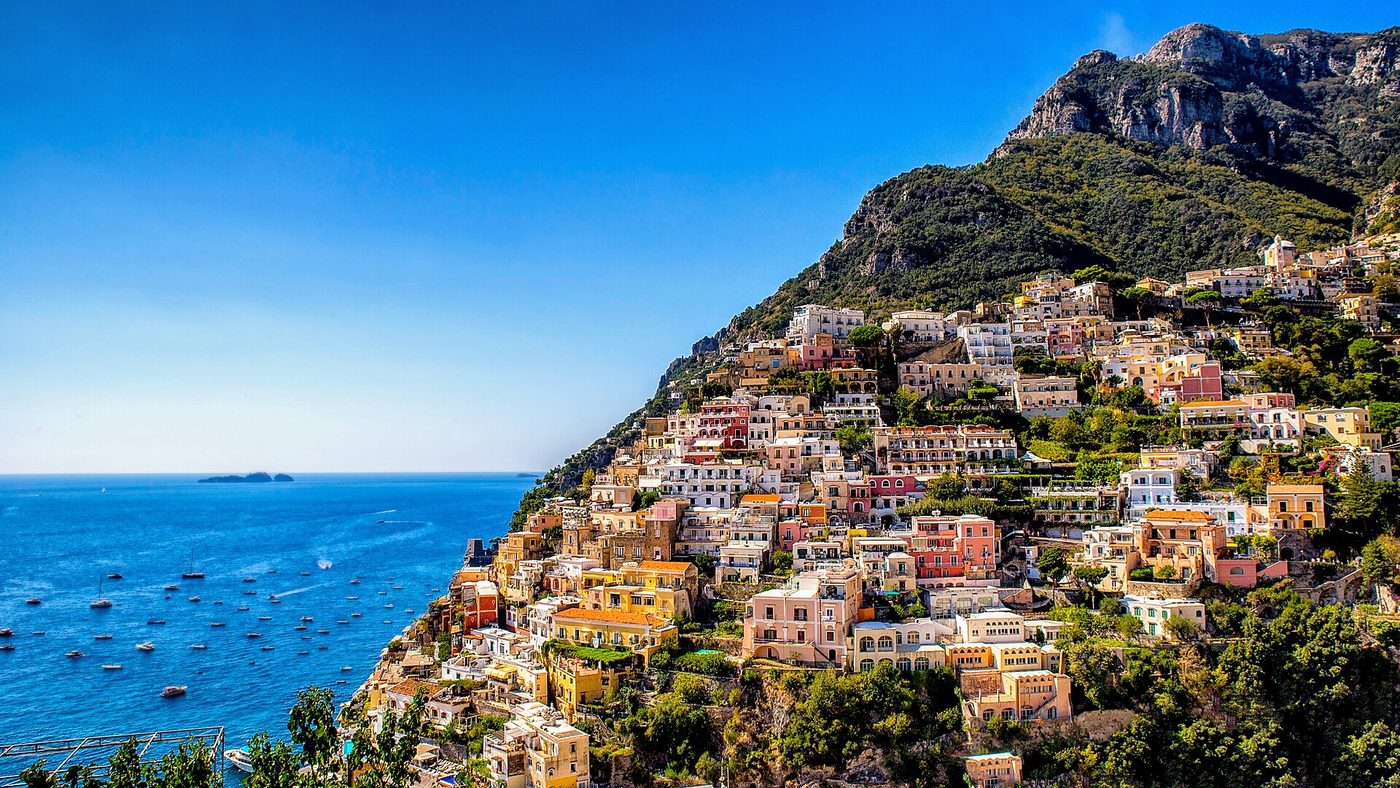
Two days fit Positano just right: the first runs downhill, from the church to the sea and by boat to Amalfi, and the second goes up by bus to Bomerano and back on foot, down the 1,700 steps of the Path of the Gods. If you want the hour-by-hour plan, it follows for both days.
Day one, down by the sea
If you arrive by ferry or bus, the first move is down the one real, narrow street to the centre, because everything else is steep stairs. The Santa Maria Assunta church sits right on the square, open daily 9:30–12, 16–20 and free to enter. Its majolica dome is easy to recognise from every corner of town afterwards.

A few minutes from the church is Spiaggia Grande, the main beach, where the public stretch is free and a sunbed and umbrella at one of the lidos run free (public part) · sunbeds €35–60. If you want a quieter beach, walk or take a boat on to Fornillo, where sunbeds are cheaper, free.

In the afternoon boats run along the coast from the pier, and Amalfi is about twenty minutes away, enough time for dinner there and a return on the same boat in the evening. If you are staying in Positano, start day two early, since the bus to the trailhead runs in the morning.
On your own
- From
- Positano pier
- Crossing
- about twenty minutes
With a guide
- transport arranged
- a guide on site
- costs more than going alone
Day two, the Path of the Gods
Trail no. 02, the Sentiero degli Dei, starts at Bomerano, a hamlet of Agerola that the SITA bus reaches via Sorrento. A day ticket covering the whole line is €10, and the Monti Lattari park reckons 4 h down to Positano, so if you start early you reach the bottom before the worst of the afternoon heat.
The trail follows the narrow ridge, with the coast and the sea below, to the village of Nocelle, the last stop before the descent, and that is where the steepest stretch begins. About 1,700 steep steps down follow, roughly an hour, so wear closed shoes with good grip. The trail ends back in Positano itself, close to where your day began.
On your own
- Start
- Bomerano, by SITA bus
- Day ticket
- €10 for the whole line
- Walking
- 4 h to Positano
- Descent
- about 1,700 steps
With a guide
- transport arranged
- a guide on site
- costs more than going alone


Where to next
Day trips from Positano
→Amalfi in half a day all year, the Path of the Gods on foot, Capri by boat in season, and Pompeii in two journeys.

Amalfi · 10 km
→A former maritime republic around its cathedral, and a base for the rest of the coast

How well does Positano suit you?
→Six questions: a score for this place and others like it.
Nomadinho scores out of 100, the same ones behind “Where to go”.
If you like Positano
Three places with the closest scores, from any country.


Before you go
Short answers to what people ask most before setting out.
Can the Path of the Gods be walked the other way, uphill from Positano?
It can, but it is harder, because the last hour would then be 1,700 steps up instead of down, which is why it is walked from Bomerano.
How many days does Positano really need?
Two: one down by the sea, one up on the trail. Any less and the trail drops out, leaving just a walk to the beach.
Ready for Positano?
Front row for the next trip
Leave your email and we'll let you know when a new destination or story goes up.