Palermo
The capital of Sicily: Norman churches, three old markets and a train to the airport
- When to go
- October 21° · 11 rainy days
- Per day
- €€€price 3 of 5
- How many days
- 2–3days
- For you
- 6 questions →
- Nearest airport
- 25 km Palermo · 80 km Trapani
- Right now

Palermo takes two to three days, or four to five with Monreale, Cefalù and Mondello added. The city was founded in 734 BC as a Phoenician settlement, and the later centuries left Norman churches with Arab ceilings, the Baroque Quattro Canti and three markets that still work in the middle of town.
The walk starts on the train. The Trinacria Express runs from the airport to Palermo Centrale in about 1 h, and the ticket is €5.80. From the station you walk to the Quattro Canti, an octagonal square where Via Maqueda crosses Corso Vittorio Emanuele. Four old districts meet here, Kalsa, Seralcadi, Albergheria and Castellammare. The fountains at street level stand for the seasons, above them are the Spanish kings, and at the top the city's patron saints. The square and the neighbouring Piazza Pretoria charge no entry.
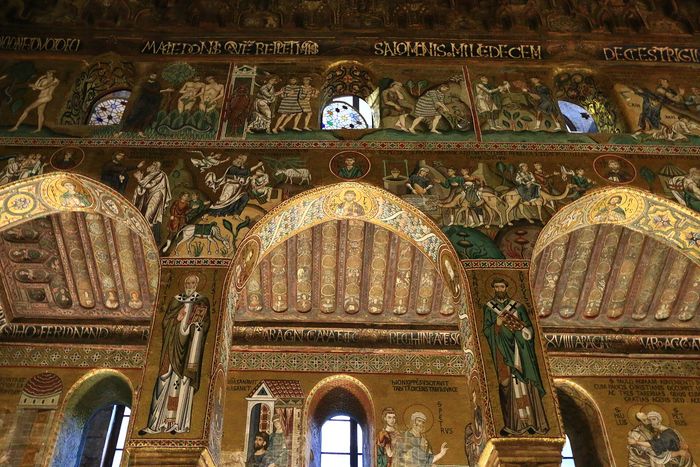
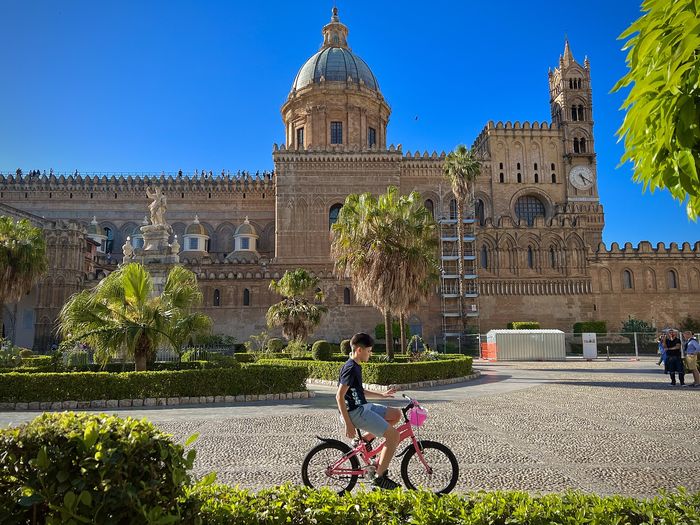
From the crossing you head for Norman Palermo. Roger II commissioned the Palatine Chapel, inside the Palazzo dei Normanni, in 1132; its gold mosaics date from the 1140s onwards, and the wooden muqarnas ceiling is Islamic work. The ticket is €19 and includes the Royal Apartments, which are shut on Tuesdays and Thursdays, so this part of the plan stays off those days. The cathedral dates from 1185, and holds the tombs of Roger II and Frederick II. Entry: free (nave); €10 Monumental Area (treasury, crypt, royal tombs, roofs). The chapel, the cathedral, Monreale and Cefalù are together on the UNESCO list since 2015.
The Teatro Massimo opened in 1897 as the third-largest opera house in Europe, closed in 1974 and reopened only in 1997. The last scenes of The Godfather Part III were shot here. The guided tour takes 40 min and costs €14, and booking is recommended.
What remains is the market and the catacombs. Ballarò market, in the Albergheria district, most likely began under Arab rule, and entry is not limited. The Capuchin Catacombs, by contrast, keep hours: daily 9–17.30 (last entry 17.10), entry €5. For everything else — districts, beaches, day trips — this guide has its own pages.
Guides for Palermo
Shorter, practical pages for one concrete question each — how many days, how much money, where to sleep, where to escape the city.

Palermo in 3 days
→Kalsa and the cathedral on day one, the Palatine Chapel and the opera on day two, the market and the oratory on day…

Day trips from Palermo
→Mondello for the sea, Monreale for the mosaics, Cefalù for a whole day — and all three are reached by public transport.

Where to stay in Palermo
→The Kalsa by the palaces, the Albergheria next to the market, the Politeama by the bus to the sea.

What Palermo costs
→Three tickets and the day trips break the bill, and the squares, the market and the street save it.

What to eat in Palermo
→Arancina, panelle, pani ca meusa and sfincione from the hand, then pasta con le sarde and cannolo at a table.

The best time to visit Palermo
→Spring and early autumn for sightseeing, summer for the sea — but with heat and a packed Mondello.

Getting around Palermo
→The train from the airport to Palermo Centrale, then on foot through the centre and by AMAT bus to Monreale and…

The neighbourhoods of Palermo
→Ballarò in the Albergheria, Vucciria in Castellammare and Il Capo in the Seralcadi: three markets, and each is a…

Beaches in Palermo
→Mondello for sand and Liberty villas, Sferracavallo for the fishing village and rocks, Addaura for coves under Monte…
What to see in Palermo
Palatine Chapel
The royal chapel in the Palazzo dei Normanni. Byzantine mosaics, Norman architecture and a wooden muqarnas ceiling are joined in one small church. Entry €19; hours Mon–Sat 8.15–17.40 (last entry 17.00); Sun & holidays 8.15–13.00 (last entry 12.15).
€19
The Cathedral
Built on the site of a Byzantine basilica and remodelled several times, so Norman, Gothic, Baroque and Neoclassical layers stand side by side. The tombs are porphyry. Entry: free (nave); €10 Monumental Area (treasury, crypt, royal tombs, roofs).
free (nave); €10 Monumental Area (treasury, crypt, royal tombs, roofs)
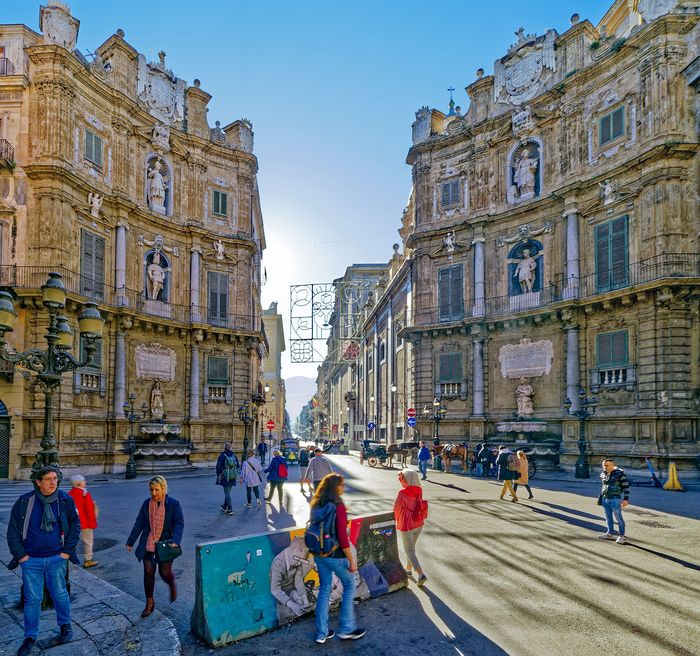
Quattro Canti
Planned in 1608–1620, with fountains from 1630 and, above them, Spanish kings and four female saints. Piazza Pretoria is next to it. No ticket needed.
free
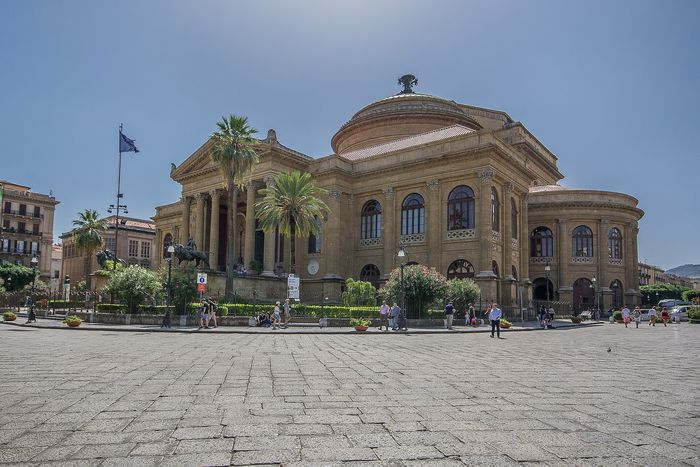
Teatro Massimo
It has 1,387 seats. The guided tour takes 40 min, a ticket is €14, and the hours are daily 9.30–19 (last tour 18.20).
€14 · 40 min · booking: recommended
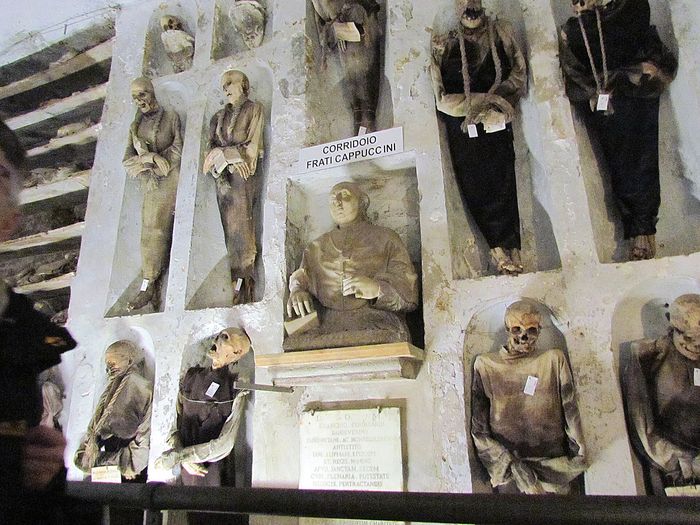
Capuchin Catacombs
The Capuchin friars made them in 1599 out of existing caves. Rosalia Lombardo, a girl who died in 1920, is still among the bodies on display. Entry €5, hours daily 9–17.30 (last entry 17.10); no booking needed.
€5
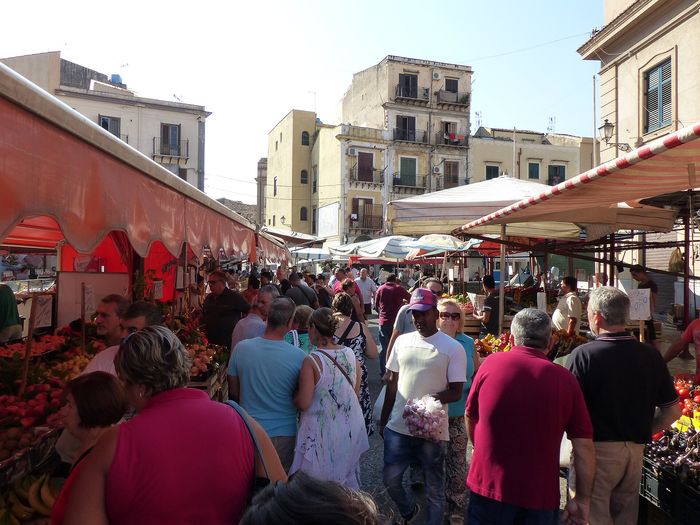
Ballarò market
One of the three historic markets, in the middle of the Albergheria district. It most likely began under Arab rule, and entry is not limited: food and goods are paid for separately.
free (entry); food and goods paid separately


Ready for Palermo?
Within reach from here
Places sorted by straight-line distance from Palermo — day trips or weekends.

Italy
→The cities on the high-speed line are an hour or two apart; the coast, Matera and the Tuscan hills lie off it

France
→From Paris the TGV reaches Lyon, Bordeaux and Strasbourg in about two hours — France is chosen by direction, not by city

Spain
→A country where dinner is at ten and the city wakes up as everywhere else turns the lights off
All 277 places we write about sit on one page — narrow them down by continent, country, price or what you are travelling for.
Front row for the next trip
Leave your email and we'll let you know when a new destination or story goes up.