

Nymphenburg Palace Munich: Which Ticket, What Is Open in Summer and Winter
A summer residence with a park, three tickets and a winter without the park pavilions
- Ticket
- €10 palace
- Under 18
- free into the palace and museums
- Open
- palace and Marstallmuseum
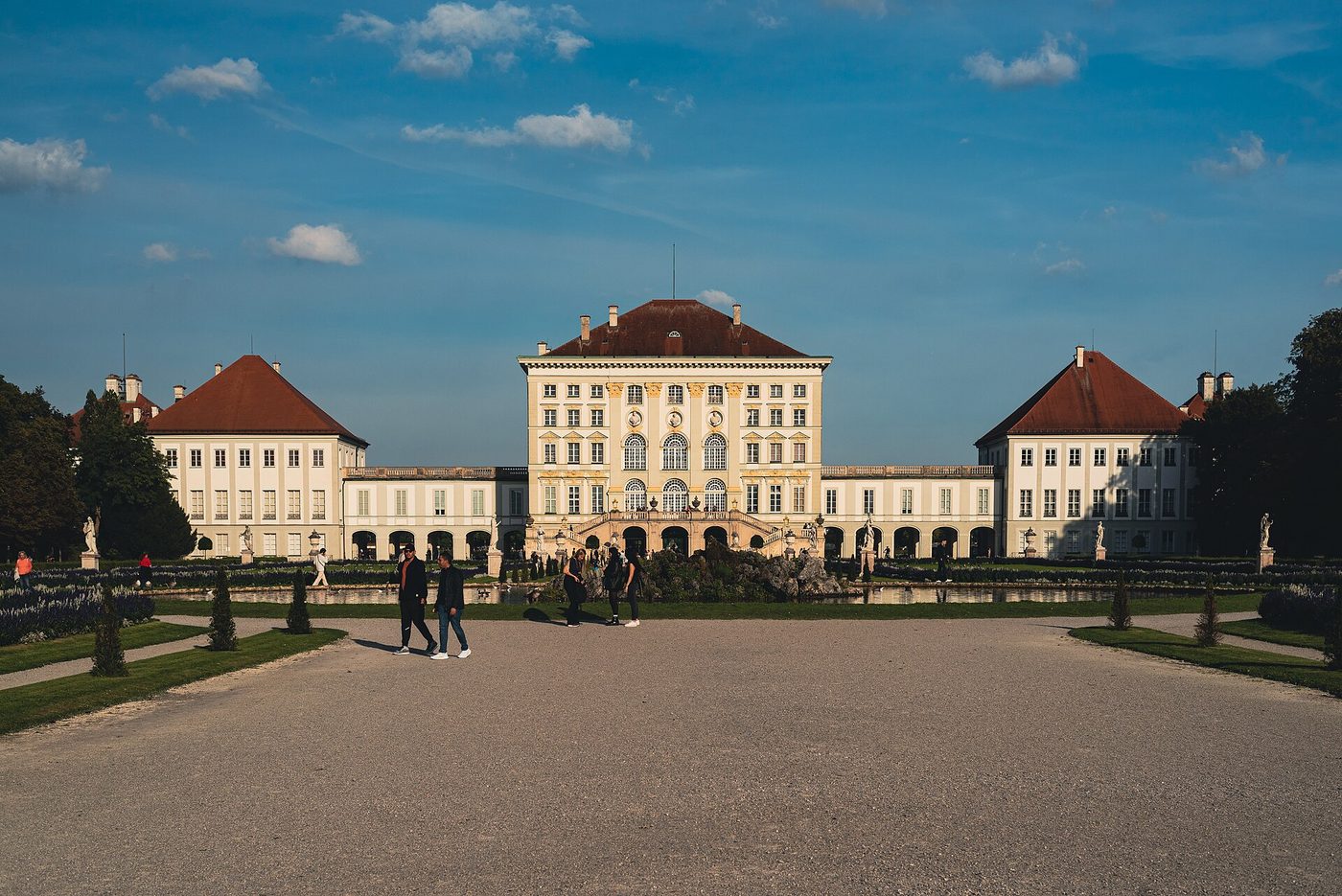
Nymphenburg has three tickets and two seasons, and the real decision is how many of the four park pavilions you want. From 16 October they are shut until the end of March, so a winter visit means the palace, the Marstallmuseum and a walk through the grounds, while in summer the same park adds the four pavilions to the list.
Which Nymphenburg ticket to buy
A palace ticket costs €10 and opens the rooms for visitors. The Marstallmuseum, which shares its building with the Nymphenburg Porcelain Museum, costs €8 on its own. Both are available all year. The four garden pavilions, Amalienburg, Badenburg, Pagodenburg and Magdalenenklause, sell as one ticket at €6, and only between 1 April and 15 October.
Gesamtkarte bundles these, and it comes in two versions. In summer it covers the palace, the Marstall and the pavilions for €20. In winter it covers the palace and the Marstall for €16. If you plan both museums, one ticket is simpler than two. Under-18s go in free, reduced tickets exist, and a Serbian passport changes nothing about the price.
Prices are from the 2026 price list, and reduced tickets exist. Under-18s go in free, and the park has no admission fee. The lacquer cabinet in the Electress's apartment is closed for restoration, expected until the end of 2027.
On your own
- Marstall
- €8
- Gesamtkarte, summer
- €20
- Gesamtkarte, winter
- €16
- Under 18
- free
With a guide
- transport arranged
- a guide on site
- costs more than going alone
What is open
You need no ticket for the park at any time of year. What changes with the season is everything inside it, and winter shortens the palace day, so the museums belong to the morning and the grounds to what is left of the afternoon. Opening times: palace and Marstallmuseum: 1 April to 15 October daily 9 am–6 pm, 16 October to March 10 am–4 pm; Parkburgen only 1 April to 15 October (9 am–6 pm); last entry 30 minutes before closing, and the last entry is half an hour before closing.
From 16 October to the end of March the pavilions and the palace chapel are closed, and the fountains are switched off. A winter walk still works along the canal and across the lawns, but the baroque garden loses its water. The palace is also shut on a few dates: 24, 25 and 31 December 2026, 1 January 2027 and on Shrove Tuesday (9 February 2027).
Through the palace and the park, in order
Enter at the main gate and go into the palace first, then cross to the Marstallmuseum, which counts on the same Gesamtkarte. The palace was commissioned in 1664 as a gift to Henrietta Adelaide of Savoy. Inside, the centrepiece is a large central hall with a frescoed ceiling, and the rest of the rooms can be taken at whatever pace the day allows. There is no official route, so this is one way of doing it.
After the museums, turn to the park, which is the second largest in Munich after the English Garden. The main axis is baroque, with canals and basins running away from the palace, and the western side is an English landscape garden, so the walk changes character as you go. In summer the pavilions come next. Amalienburg is a hunting lodge with a Hall of Mirrors, Badenburg stands on the Great Lake and was built for bathing, and Pagodenburg sits to the north. Magdalenenklause is a hermitage built to look like a ruin, and the Temple of Apollo, a round colonnade of ten columns, closes the list.
Tram 17 to the gate
Tram 17 runs from the centre, with stops at the Hauptbahnhof and Karlsplatz, to the Schloss Nymphenburg stop. From the stop you walk through the park gate and onto the main axis, and Nymphenburg lies in the western district of Neuhausen-Nymphenburg.

If you only have two hours
Two hours is enough for the palace and the main axis of the park, provided you accept that the rest waits for another visit. The Marstall and the pavilions are the easiest things to drop, and the following order keeps the main axis of the grounds.
- Buy the palace ticket only, and go straight to the central hall.
- Skip the Marstallmuseum unless the porcelain is the reason you came.
- Walk the canal from the palace to the Great Lake, and stay on the main axis.
- In summer add Amalienburg for the Hall of Mirrors, and nothing else.

Where to next

Munich Residenz: Which Ticket, What to See and When Last Entry Is
→A Wittelsbach palace with three tickets and one reason to go in

Nuremberg · 151 km
→A city that twice became the stage of German history, both times against its will

How well does Munich suit you?
→Six questions: a score for this place and others like it.
Nomadinho scores out of 100, the same ones behind “Where to go”.
If you like Munich
Three places with the closest scores, from any country.


Before you go
Short answers to what people ask most before setting out.
Is the Gesamtkarte worth it?
Yes, if you want more than the palace. In summer it combines the palace, the Marstall and the pavilions for €20, and in winter the palace and the Marstall for €16. One ticket replaces two separate purchases.
Can you walk into the park for free?
Yes. The park has no admission fee, and you pay only for the palace, the Marstall and the pavilions. That makes a stroll along the canals a good plan for a day when the interiors do not tempt you.
Is Nymphenburg open in winter?
The palace and the Marstall stay open, with shorter hours than in summer, and the grounds can be walked. The four pavilions and the palace chapel are closed from 16 October to the end of March, and the fountains do not run. Full hours are listed above.
Ready for Munich?
Front row for the next trip
Leave your email and we'll let you know when a new destination or story goes up.