

What to eat in Paris
Paris is eaten in sequence: a croissant and a baguette from the bakery, a cheap hot lunch in a bouillon or a crêperie, a market on the way, and steak and chips or onion soup in a brasserie for dinner.
- Bakery
- A croissant averages €1.22
- Bouillon
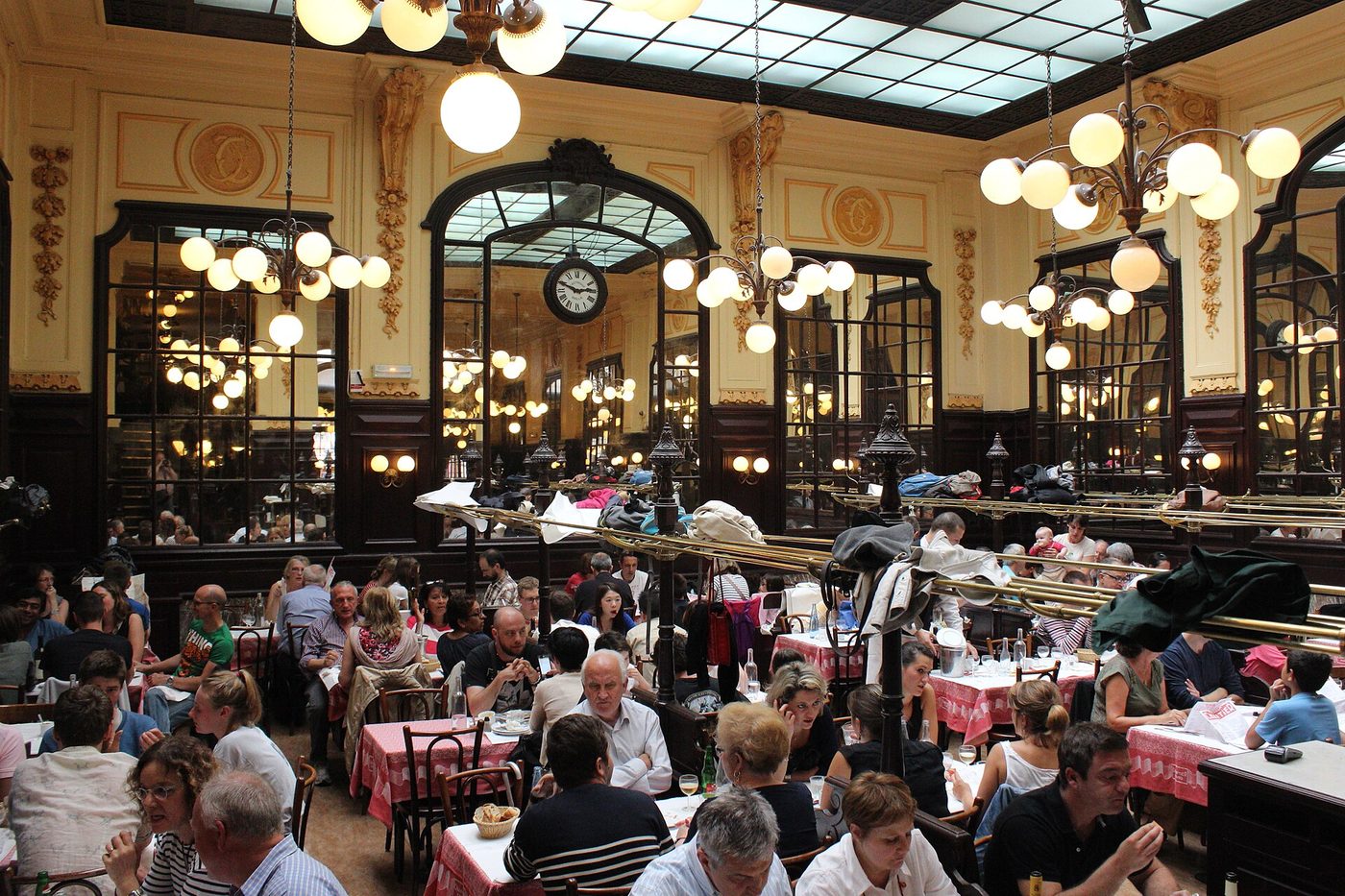
- Bouillon Chartier has served since 1896
- Crêpes
- Rue du Montparnasse
Paris is eaten dish by dish and in a fixed order. First comes a croissant that costs about €1.22 at the bakery, then a jambon-beurre eaten on a bench, then a hot lunch in a bouillon where a main course starts at €7, and finally a dinner of steak and chips or onion soup. This page says what each of those is, where to try it and what it costs, and leaves the daily totals, the set lunch menu and the tipping rules to the costs page.
Baguette, jambon-beurre, croissant
Everything starts at the boulangerie. A baguette de tradition is made there under a 1993 decree from nothing but flour, water, yeast and salt, and the traditional craft was added to UNESCO's intangible heritage list in 2022. A croissant from a bakery averages €1.22. For lunch you ask for a jambon-beurre, a split, buttered baguette filled with ham, also called a parisien, of which the French buy more than three million every day.
A food tour with a local guide: several tastings in one walk.

A hot lunch for little money
The bouillon is an old Parisian kind of restaurant from the nineteenth century that served hot meals quickly and cheaply, and a handful of them reopened after 2017. Bouillon Chartier has served since 1896, every day from 11:30 until midnight without a break, with main courses starting at €7. It has three rooms, at Grands Boulevards, Montparnasse and near Gare de l'Est, and nothing can be booked, so the queue is part of the deal and it is better to come before noon or in the late afternoon.
Steak frites and onion soup
In a brasserie the standard dinner is steak frites, a pan-fried steak, most often an entrecôte, with deep-fried chips and sometimes a béarnaise or a pepper sauce. If you order it 'saignant' it arrives rare, and since Belgium claims the dish as well, the French version is a matter of local pride rather than origin.
Onion soup is the dish of Les Halles. It took the form you know in the mid-nineteenth century at the old central market, where Au Pied de Cochon, among others, served it under a grilled cheese crust to workers at dawn and to late-night revellers leaving the cabarets. Both belong at the same table, in a brasserie or a classic bistro, where a three-course dinner averages €35 and a cheaper lunch €16.

Crêpes in Montparnasse
The small Breton crêperies around Gare Montparnasse date from the early twentieth century, when Bretons driven out by poverty arrived by train at that very station and stayed. Rue du Montparnasse still has at least seven of them, among them Chez Jeanne and Le Petit Josselin. A savoury galette complète with ham, cheese and an egg is the order for a meal, and a sweet crêpe is the dessert.
Markets and pastry
The Marché des Enfants Rouges in the Marais has stood since 1628 and is the oldest covered market in Paris. Its stalls serve hot dishes at the counter, from Japanese bento boxes to Levantine pitta. It is closed on Mondays, like the Marché d'Aligre in the 12th arrondissement, which sells fresh produce under a roof and in the street.

For something sweet there is the Paris-Brest, a round ring of choux pastry filled with praline cream and scattered with almonds. The pastry chef Louis Durand of Maisons-Laffitte devised it in 1910 for the Paris–Brest–Paris cycle race. Ladurée, founded in 1862 as a bakery on Rue Royale, turned the macaron into the double-shelled sweet with cream between the halves in 1930.


Where to next


Nomadinho scores out of 100, the same ones behind “Where to go”.
If you like Paris
Three places with the closest scores, from any country.


Before you go
Short answers to what people ask most before setting out.
How much is lunch in Paris?
A cheap restaurant meal averages €16, and at Bouillon Chartier main courses start at €7; a three-course mid-range dinner is €35.
Do I need to book at Bouillon Chartier?
No, it takes no reservations and is open every day from 11:30 until midnight, so you queue.
When are the Paris markets closed?
The Marché des Enfants Rouges and the Marché d'Aligre are closed on Mondays.
Ready for Paris?
Front row for the next trip
Leave your email and we'll let you know when a new destination or story goes up.