

What to eat in Nice
Wood-fired socca in the morning, pan bagnat and pissaladière on the walk, farcis and daube at the table.
- Socca
- wood-fired
- Pan bagnat
- bread soaked in olive oil
- Pissaladière
- onion
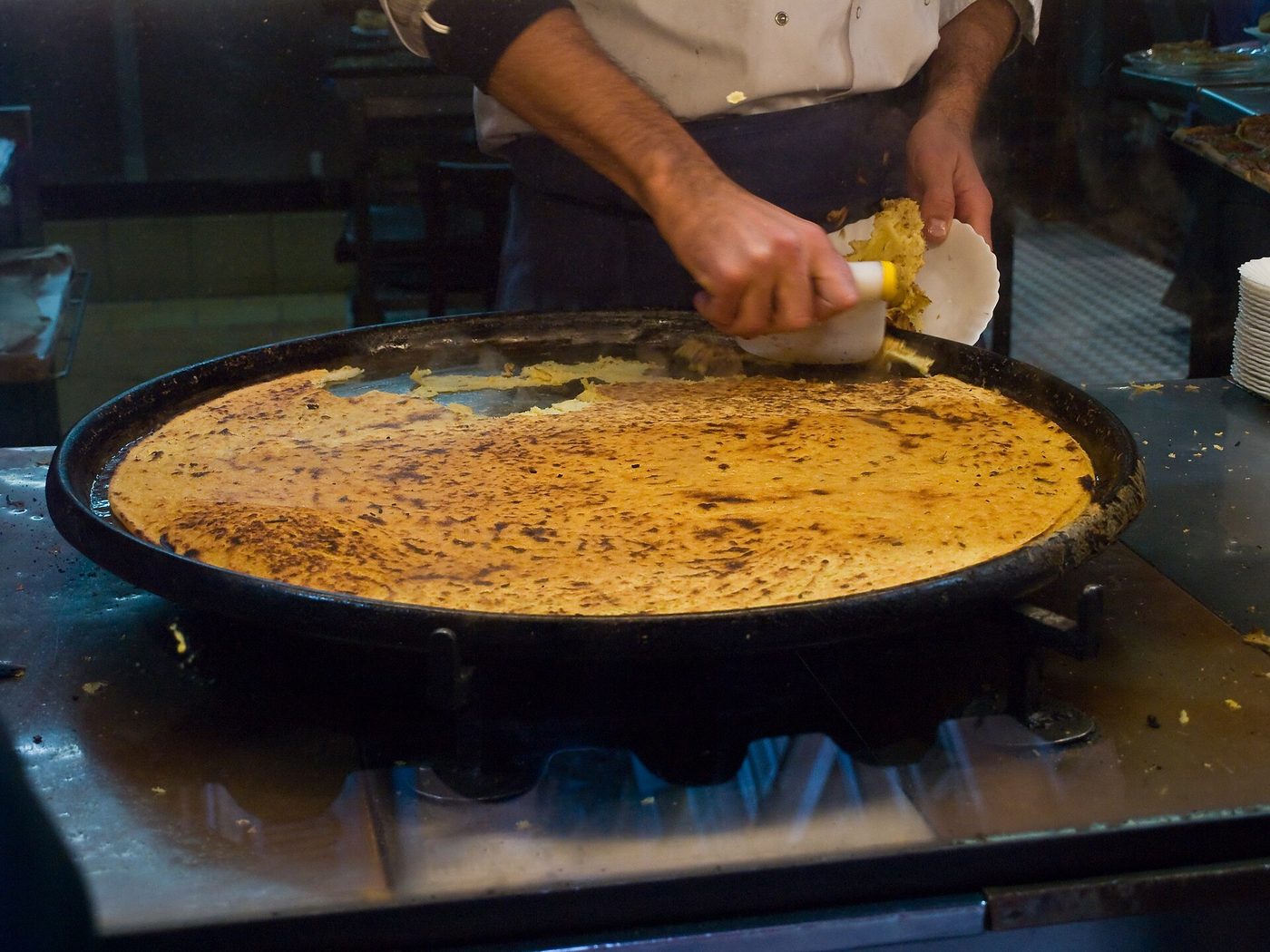
Nice eats in two ways, standing and hot from the oven or seated over something that has cooked for hours. The first belongs to the morning and the walk, and the second to the evening and to winter. The order of this guide follows that day, from socca in the morning to daube at the table.
From the stall, not the plate
Socca is a flat cake of chickpea flour, the same dish as Ligurian farinata, and it is eaten scalding, often from a wood-fired oven. Left to cool it loses half its point, so it is taken standing and at once, and the first bite is always a small act of bravery.
Chez Pipo at 13 rue Bavastro cooks on wood, and its whole menu à la carte runs €3.50–7.50. That is the range of every dish on the menu, whichever you order, and so not the price of one portion. Chez Thérésa has a stall at the Cours Saleya market and a place at 28 rue Droite, and Lou Pilha Leva at 10 rue du Collet sells socca, pan bagnat and panisse. For the morning the stall is enough, and the table can wait.
Pissaladière, pan bagnat and salade niçoise
These are the lighter dishes, and pissaladière and pan bagnat travel well on a walk. They suit a morning at the market or a bench on the seafront.
Pissaladière and tourte de blettes are the specialities at Chez Thérésa. Pan bagnat and salade niçoise are summer food in most of the old town, and the two draw on much of the same pantry, one packed into bread and the other left in the bowl.
- Pissaladière: a dough topped with caramelised onion, anchovies and black olives.
- Pan bagnat: bread soaked in olive oil and filled with vegetables, tuna and anchovies.
- Salade niçoise: raw vegetables, eggs, anchovies or tuna and olives, with no potatoes and no cooked green beans.
Farcis, daube and ravioli: at the table
Petits farcis are vegetables stuffed with meat and bread, and Acchiardo at 38 rue Droite has served them since 1927. They are a dish that rewards sitting down and taking your time. Daube and ravioli or gnocchi belong to winter, when a stew simmered for hours makes more sense than a sandwich.
L'Escalinada at 22 rue Pairolière stands at the edge of the old town, near Place Garibaldi, and cooks Niçois food: ravioli, merda de can, daube and tripe. A few traditional restaurants in the old town also put estocaficada on the winter menu. The verdict is simple: socca standing in the morning, daube seated in the evening.
The Cuisine Nissarde label
The Nice tourist office created the Cuisine Nissarde label, and it is awarded every year to restaurants that respect the traditional recipes and their proportions. The list on the office site has 27 results, among them L'Escalinada, Lu Fran Calin, La Ratapignata, Lou Balico, Lou Pelandroun, Le Tchitchou and Chez Thérésa. The label says that a restaurant follows the recipe, and nothing about how the evening will go. Niçois cooking has also been on France's national inventory of intangible heritage since 2019.
Sweets and the season
Fenocchio at 2 Place Rossetti has sold ice cream since 1966, and the flavours number over ninety. Tourte de blettes, a chard pie, comes both sweet and savoury, so it can end a lunch as easily as start one. A day in Nice can run in the order of this page: socca before noon, a pan bagnat on a bench, an ice cream on Place Rossetti and, in winter, a daube at night. At carnival in February the stalls on the Promenade sell chichi frégi.
The months are approximate; restaurants change their menus.


Where to next


Nomadinho scores out of 100, the same ones behind “Where to go”.
If you like Nice
Three places with the closest scores, from any country.


Before you go
Short answers to what people ask most before setting out.
How much does socca cost in Nice?
The price of a single portion is set by each stall. At Chez Pipo the whole menu à la carte runs €3.50–7.50.
What does the Cuisine Nissarde label mean?
The Nice tourist office awards it every year to restaurants that follow the traditional recipes and their proportions. Its website lists 27 of them.
Can a salade niçoise have potatoes?
The traditional recipe has none, and no cooked green beans either. It is raw vegetables, eggs, olives and anchovies or tuna.
Ready for Nice?
Front row for the next trip
Leave your email and we'll let you know when a new destination or story goes up.