

The Cotswolds
Villages built from the same yellow stone, and one serious transport problem
- When to go
- September 15° · 12 rainy days
- Per day
- €€€€price 4 of 5
- How many days
- 2–3days
- For you
- 6 questions →
- Nearest airport
- 64 km Bristol · 83 km Birmingham
- Right now

The Cotswolds isn't a place but a belt of low hills scattered with villages built from the same honey-coloured limestone. The problem is that those villages connect to the towns on the edge of the region rather than to each other. So you plan it backwards: transport and the last bus first, then the list of what you'd like to see.
Two lines come out of London Paddington. The Cotswold Line runs to Charlbury, Kingham and Moreton-in-Marsh, about an hour and thirty-five minutes out; the Golden Valley Line goes to Kemble and Stroud. Moreton is the only real base, because you step off the platform straight onto a bus. Route 801 links Cheltenham, Bourton-on-the-Water, Stow-on-the-Wold and Moreton roughly hourly and runs on Sundays too, though the last departures come much earlier.

Bibury is the hard piece of the puzzle: one bus, the 855, from Bourton via Northleach, Monday to Saturday, with the last one out of Bourton around five in the afternoon. On Sundays there is nothing at all. Castle Combe sits in a different corner entirely and is reached from Bath — eleven minutes by train to Chippenham, then twenty on the bus, four or five departures a day. Neither village forgives a missed connection.
If you have no car and no appetite for two days of timetables, a day tour from London handles four villages at once: out in the morning, about nine and a half hours, roughly £90 a head in a minibus. The same thing runs from Bath, shorter. It isn't cheaper than doing it yourself, but it is the only way to see more than two places in a single day without your own wheels.
What to see in The Cotswolds
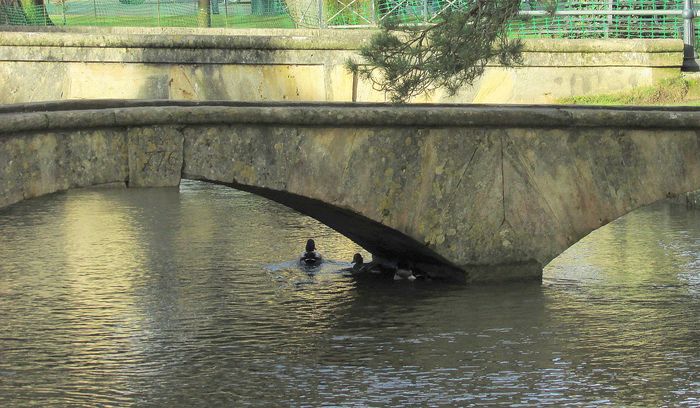
Bourton-on-the-Water
A village of low stone bridges over the River Windrush, which is why people call it the Venice of the Cotswolds. It's the most visited spot in the region and between eleven and four in summer it is dense. Arriving before ten changes it completely, and the 801 stops here.
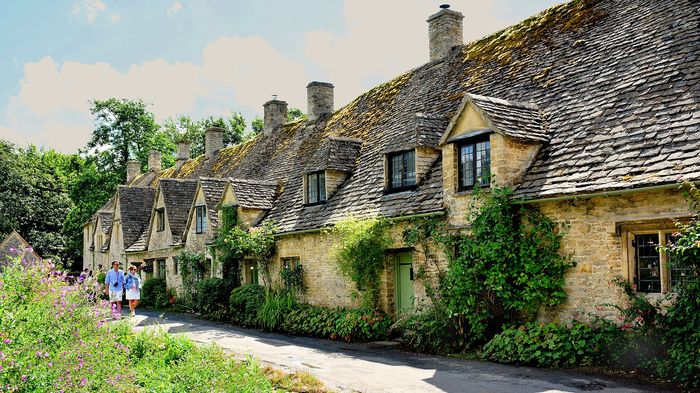
Bibury and Arlington Row
A terrace of seventeenth-century weavers' cottages, probably the most photographed row of houses in England. The village is overwhelmed: twenty thousand people have turned up over a single summer weekend, so coach restrictions have been in place since 2025, with paid parking and a ban on driving through the centre working their way through consultation.
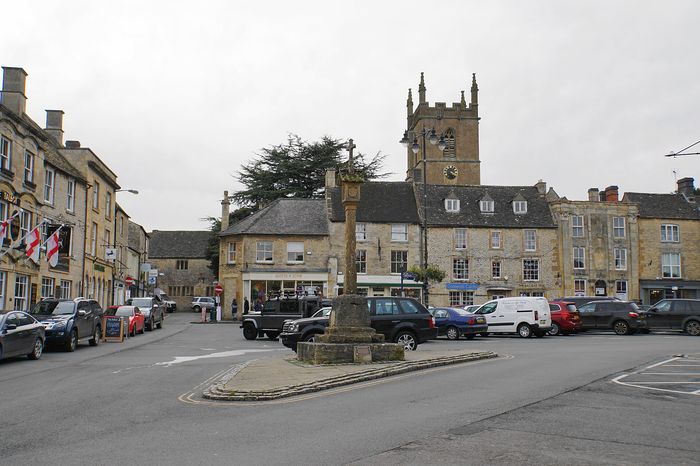
Stow-on-the-Wold
A market town at about 240 metres, the highest in the region, built around a broad square that once held the sheep fairs. The last battle of the English Civil War was fought here in 1646. The north door of St Edward's church is framed by two yew trees grown into the wall.
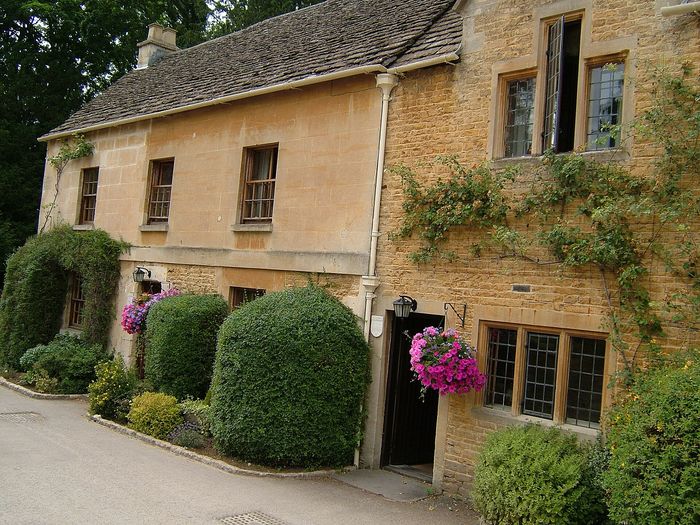
Castle Combe
The southern outlier: one street dropping to a bridge, a fifteenth-century market cross and not a single new house in the view. Which is why films get made here, from Doctor Dolittle in 1967 to War Horse. Reach it from Bath, not from the northern villages.
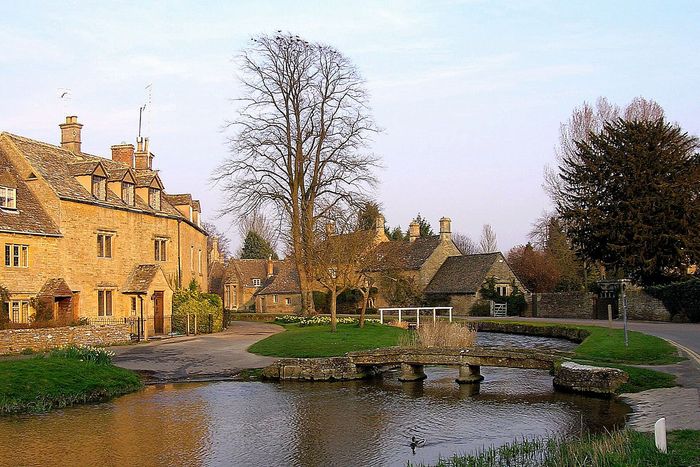
Walking between villages
The villages are better connected by footpath than by road. Bourton to Lower Slaughter is about half an hour on foot across fields beside the brook, and it's probably the best hour you'll spend here. Paths are waymarked and cross private land, which is normal in England.
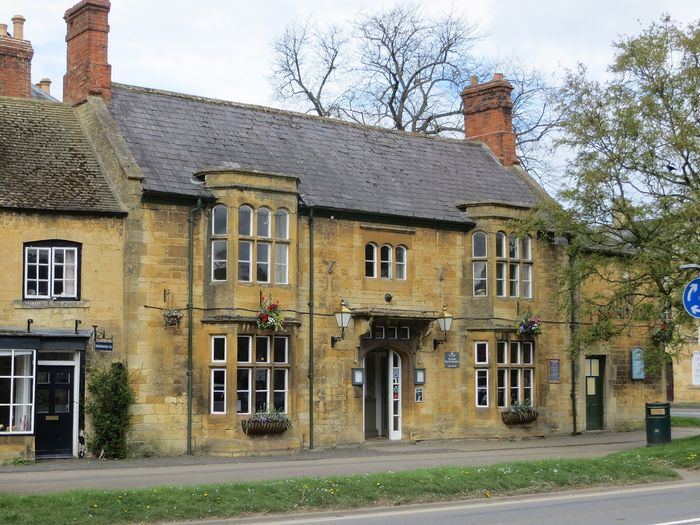
Moreton-in-Marsh
Not the prettiest place in the region, but the most useful: a station on the London line, a bus interchange, and a Tuesday market that is one of the larger ones in southern England. Sleep here and you don't depend on a car.


Two things you probably did not know
Cotswold houses are yellow because they are built from soft limestone out of the same band that runs through the whole area. The stone cuts easily when quarried and hardens in the air. That is why every village is the same colour.
The wealth of the Cotswolds came from wool in the Middle Ages, when English wool was the most sought after in Europe. The oversized churches in small villages are called wool churches, built by merchants with that money.
Ready for The Cotswolds?
Within reach from here
Places sorted by straight-line distance from The Cotswolds — day trips or weekends.


All 277 places we write about sit on one page — narrow them down by continent, country, price or what you are travelling for.
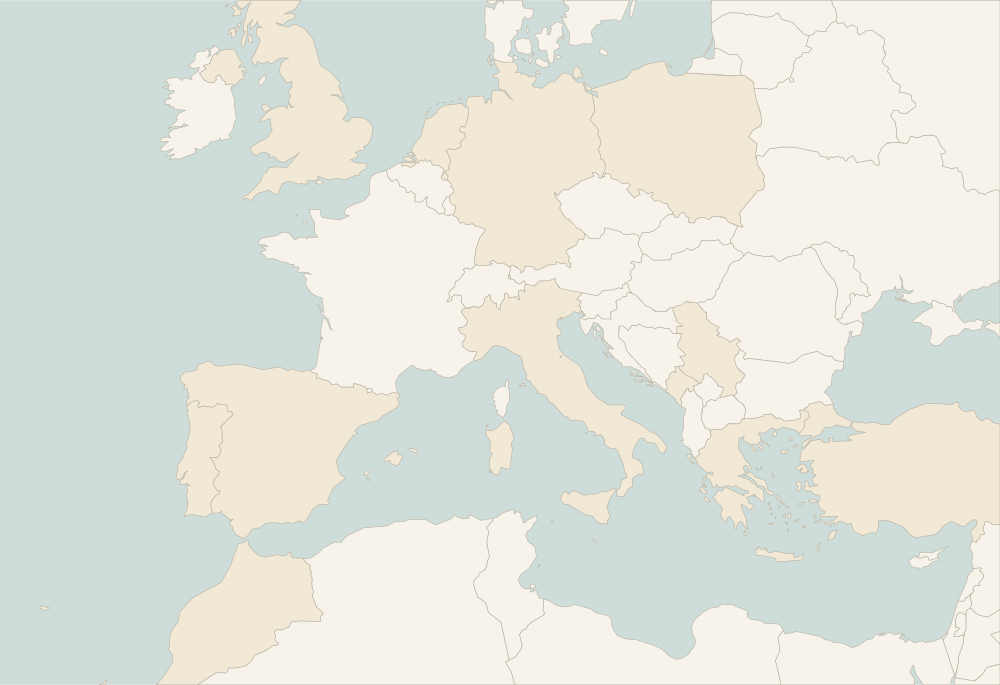
Within reach from here: Bath, Oxford and Stonehenge
See how much of that actually suits you — or pin The Cotswolds if you have been.
Front row for the next trip
Leave your email and we'll let you know when a new destination or story goes up.