

Bath
Britain's only hot spring, in a town built from a single kind of stone
- When to go
- November 8° · 13 rainy days
- Per day
- €€€€price 4 of 5
- How many days
- 1–2days
- For you
- 6 questions →
- Nearest airport
- 25 km Bristol · 68 km Cardiff
- Right now
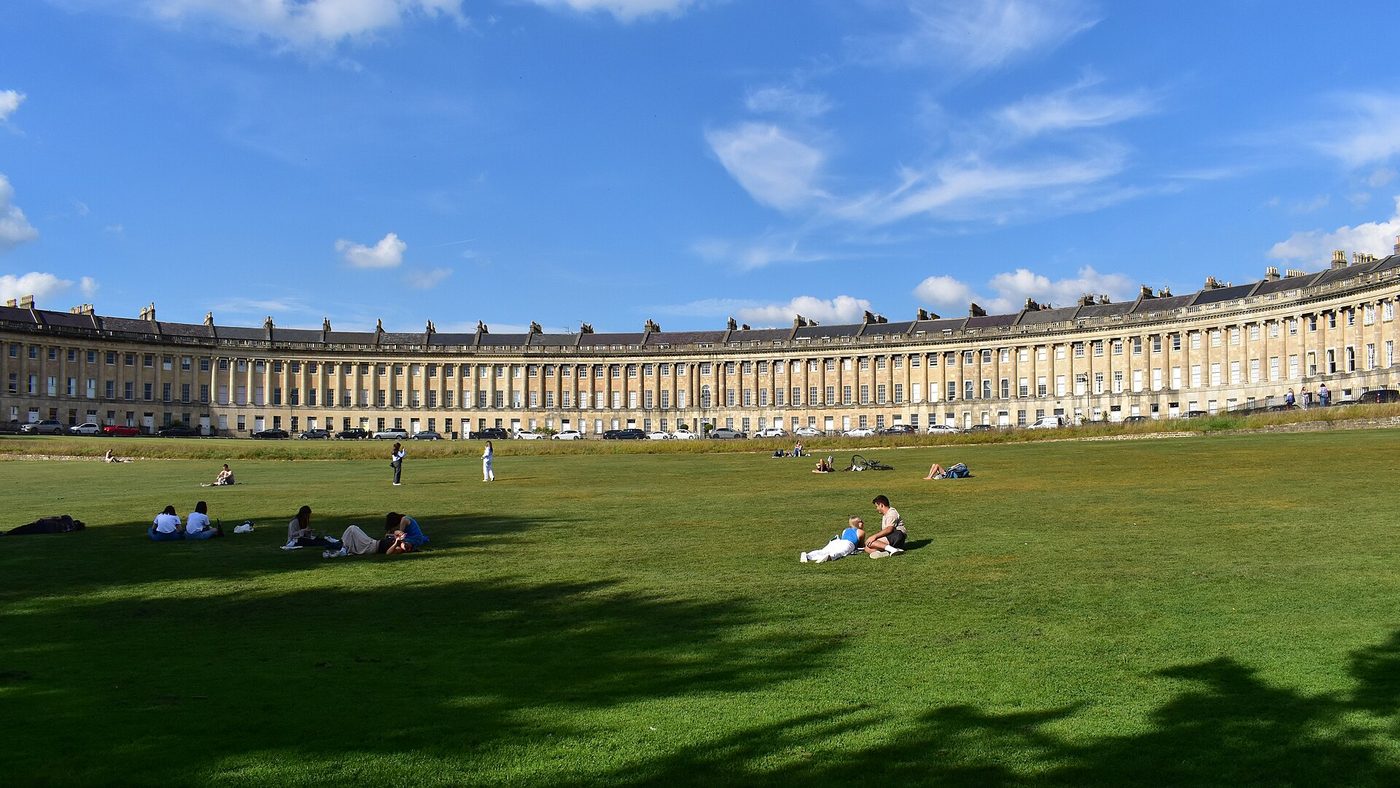
Bath exists because of one hole in the ground. It sends up about 1,170,000 litres of 46-degree water every day and is the only hot spring in Britain. The ancient Romans built a bath house over it, the Georgians built a town, and UNESCO has listed the result twice, in 1987 and again in 2021.
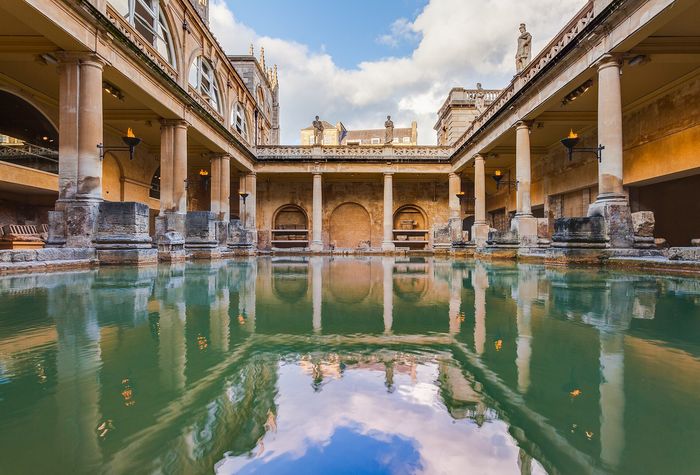
In the ancient Roman complex you only look at the water, because it carries the Naegleria fowleri amoeba. That amoeba killed a girl in 1978 after she swam in a town pool fed by the same spring, so the hot water is entered instead at Thermae Bath Spa, a modern spa two streets away. The day therefore holds two separate slots, the Baths as a museum and the spa as a swim, with different tickets and different rules, and the spa admits no one under sixteen.

The town above the baths is a single eighteenth-century design, raised in the same Bath limestone, so it keeps one colour from the river to the hill. The curved Royal Crescent is looked at from outside and costs nothing. The only way in is Number One, dressed as a Georgian home and open Tuesday to Sunday, and it is closed on Mondays except in the school holidays.
Trains from Paddington run every half hour and take about an hour and twenty, so Bath works as a day trip from London too. A second day here goes on the surroundings rather than the town. Stonehenge is 43 km south-east in a straight line, and Castle Combe, one of the villages of the southern Cotswolds, is a train to Chippenham and then a bus.
Check the same room on both sites: price and cancellation terms can differ.
Timed-entry tickets and guided tours in one place.
Both sites fill in your nearest airport for you; change it in one click.
Guides for Bath
Shorter, practical pages for one concrete question each — how many days, how much money, where to sleep, where to escape the city.

Bath in 1 day
→Two slots hold the day: the baths when they open, the spa before the pools close.

Day trips from Bath
→Bristol by train, Castle Combe and Wells by bus, Stonehenge and Avebury by car or on a tour, and which of them fit into half a day.

Where to stay in Bath
→The centre for the baths, the Crescent for quiet and a climb, Walcot for the market street, Bear Flat for the station and the viewpoint.

What Bath costs
→Three entrances make the bill and half the city is free; the tariff changes between a weekday and a weekend, and between September and November.

Bath uphill: gardens, Uranus and the path around the city
→A garden with a Palladian bridge, the house from which Uranus was found, and a ten-kilometre path around the city, all off the main axis.

What to eat in Bath
→Bath has four bread and biscuit stories and one cheese: Sally Lunn is for sitting, the Bath bun is for the pocket, and on Saturday you shop in the old station.

The best time to visit Bath
→September and spring for walking, August for evenings at the baths, late November for the Christmas market and a lower ticket.

Getting around Bath
→From the station on foot to the baths, uphill to the Crescent, by bus to the viewpoints, and the car stays at the Park & Ride.
What to see in Bath
The Roman Baths
The complex around the spring, and the one thing in town that needs two hours. An adult ticket booked ahead for a weekday is €31; weekends and walk-up tickets on the day cost more, and the tariff also moves by month. The ticket carries an entry slot, so the day is planned around it.
The Royal Crescent and the Circus
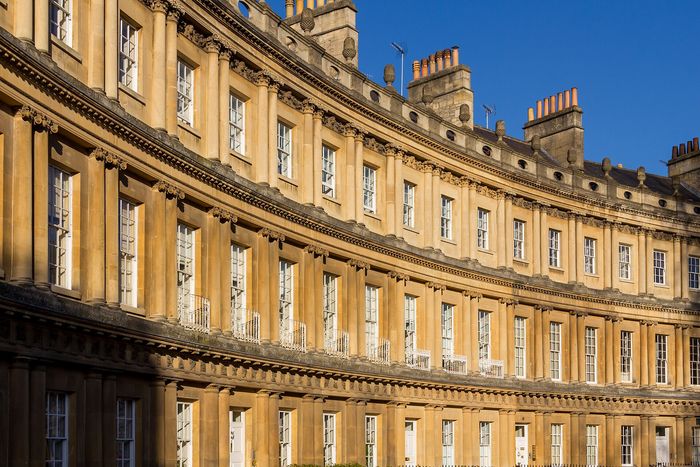
Thirty houses in a 150-metre arc with a hundred and fourteen Ionic columns, built by John Wood the Younger between 1767 and 1774, and the circular Circus designed by his father. Number One is €19, with last entry an hour before closing.
Thermae Bath Spa
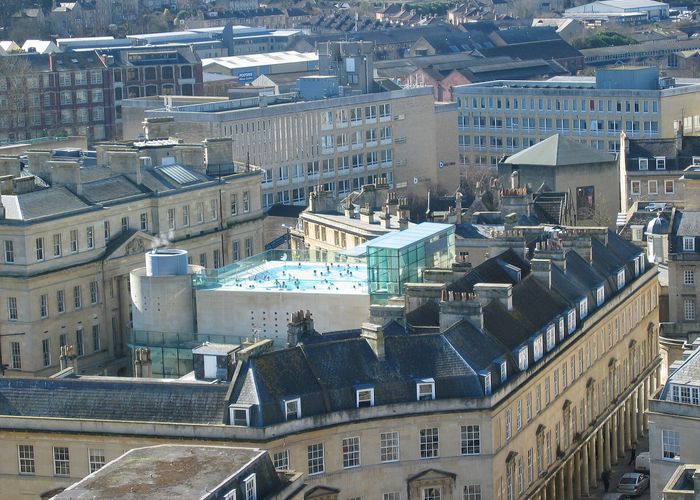
A two-hour session is €51 on a weekday and €57 at the weekend, with the open-air rooftop pool, the Minerva Bath and the steam rooms; towel and robe are included.
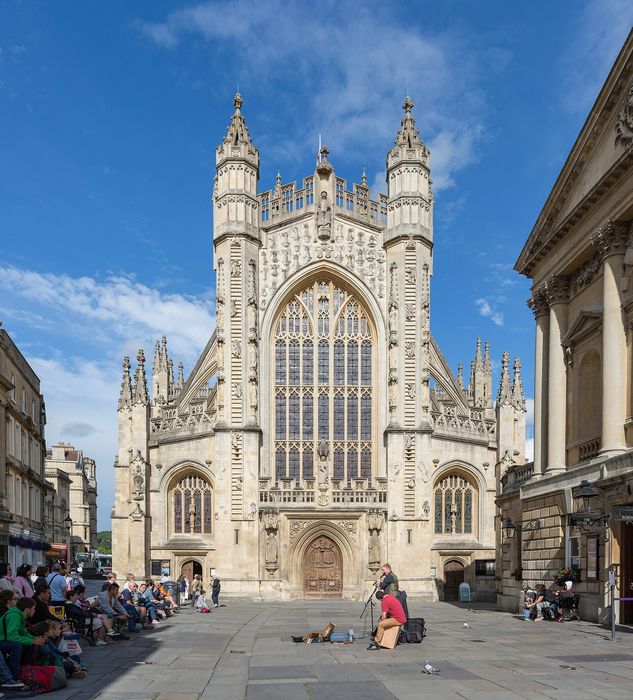
Bath Abbey
A late-Gothic church with fan vaulting, €10 for adults. It's open 10 to 5.30 on weekdays, to 6 on Saturdays, and on Sundays only from 1 to 3.30, so don't plan it for a Sunday morning. The tower tour is a separate €21 ticket and includes entry to the church.
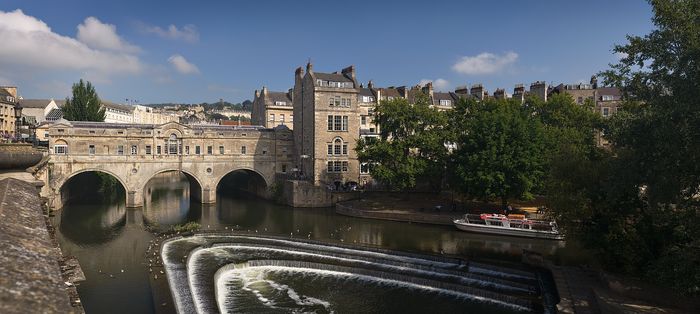
Pulteney Bridge
A 1774 bridge, one of four in the world lined with shops along its full length on both sides, with the Ponte Vecchio, the Rialto and Erfurt's Krämerbrücke. You can't tell from on it, because it looks like an ordinary shopping street, so you look at it from the bank, together with the horseshoe weir on the Avon below.
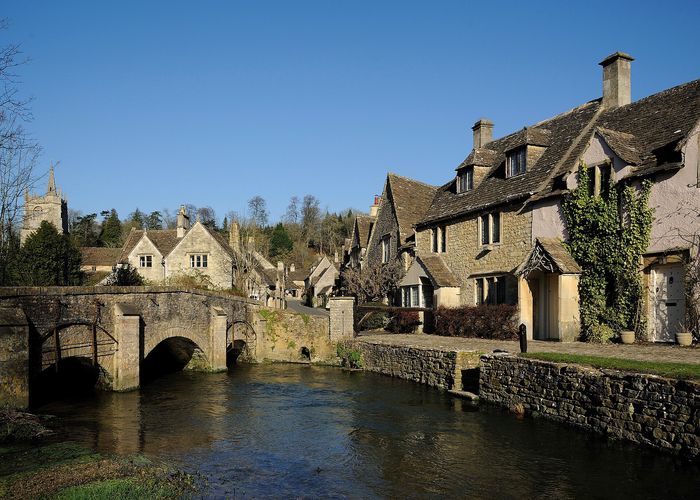
Castle Combe
A village on the southern edge of the Cotswolds that you can reach from Bath without a car. The train to Chippenham takes eleven minutes, then the 95 or 95A bus about twenty more. Monday to Saturday there are four buses a day, on Sundays only from April to August, so the day is planned back from the last one home.


Stories from Bath
How it actually was when we were there, and what was worth it.

Bath and the Cotswolds with no car: trains, buses and villages
→The Cotswold villages tie themselves to the towns on the edge of the region, and hardly at all to one another.

Bath Christmas market: a short run, so pick your day
→Bath Christmas Market is short and compact, with chalets in the historic centre beside the Abbey. This page shows how its days differ and how to combine it with the city.
Nomadinho scores out of 100, the same ones behind “Where to go”.
If you like Bath
Three places with the closest scores, from any country.


Two things you probably did not know
The thermal water at Bath fell as rain thousands of years ago, sank two kilometres down and was heated by the earth before returning to the surface. Over a million litres a day come out of the spring at 46 degrees.
Jane Austen lived in Bath for five years and set two novels there, though she disliked the place. She wrote of the relief of leaving it, and Bath now gives her a museum and an annual festival.
Before you go
Short answers to what people ask most before setting out.
Is Bath a day trip from London?
Yes. Trains from Paddington run every half hour and take about an hour and twenty. For the Baths at 9 you need a train around 7.30, and with the spa at the end you are back in London after 8pm.
How many days do you need in Bath?
One for the town, the Roman Baths and the spa. A second day goes on the surroundings: Stonehenge, 43 km south-east in a straight line, or Castle Combe in the Cotswolds.
Can you swim in the Roman Baths?
No, you only look at the water. Hot water is entered at Thermae Bath Spa, two streets away, which admits no one under sixteen. The two have separate tickets, so plan them as separate slots.
Ready for Bath?
Within reach from here
Places sorted by straight-line distance from Bath — day trips or weekends.

England
→The museums charge nothing; the train charges you for booking late

France
→From Paris the fast TGV reaches Lyon, Bordeaux and Strasbourg in about two hours, so France is chosen by direction, not by city

Netherlands
→A country its people built themselves, then spent five centuries defending from water
All 298 places we write about sit on one page — narrow them down by continent, country, price or what you are travelling for.
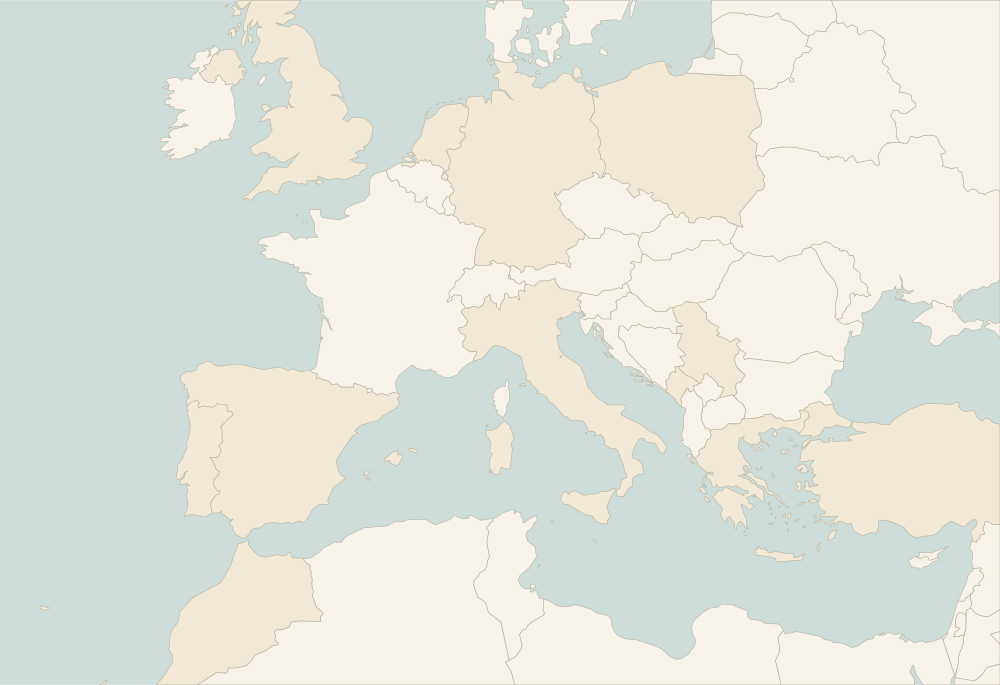
Within reach from here: Stonehenge, The Cotswolds and Oxford
See how much of that actually suits you — or pin Bath if you have been.
Front row for the next trip
Leave your email and we'll let you know when a new destination or story goes up.