

What Larnaca costs
A cheap town with a city bus at €2.70; the bill is easiest to break on diving and on trips by car
- Bus
- €2.70 (cash, daytime), €4.70 at night
- Motion card
- €2.00 per ride
- Antiquities card
- €8.50 for 1 day, €17.00 for 3
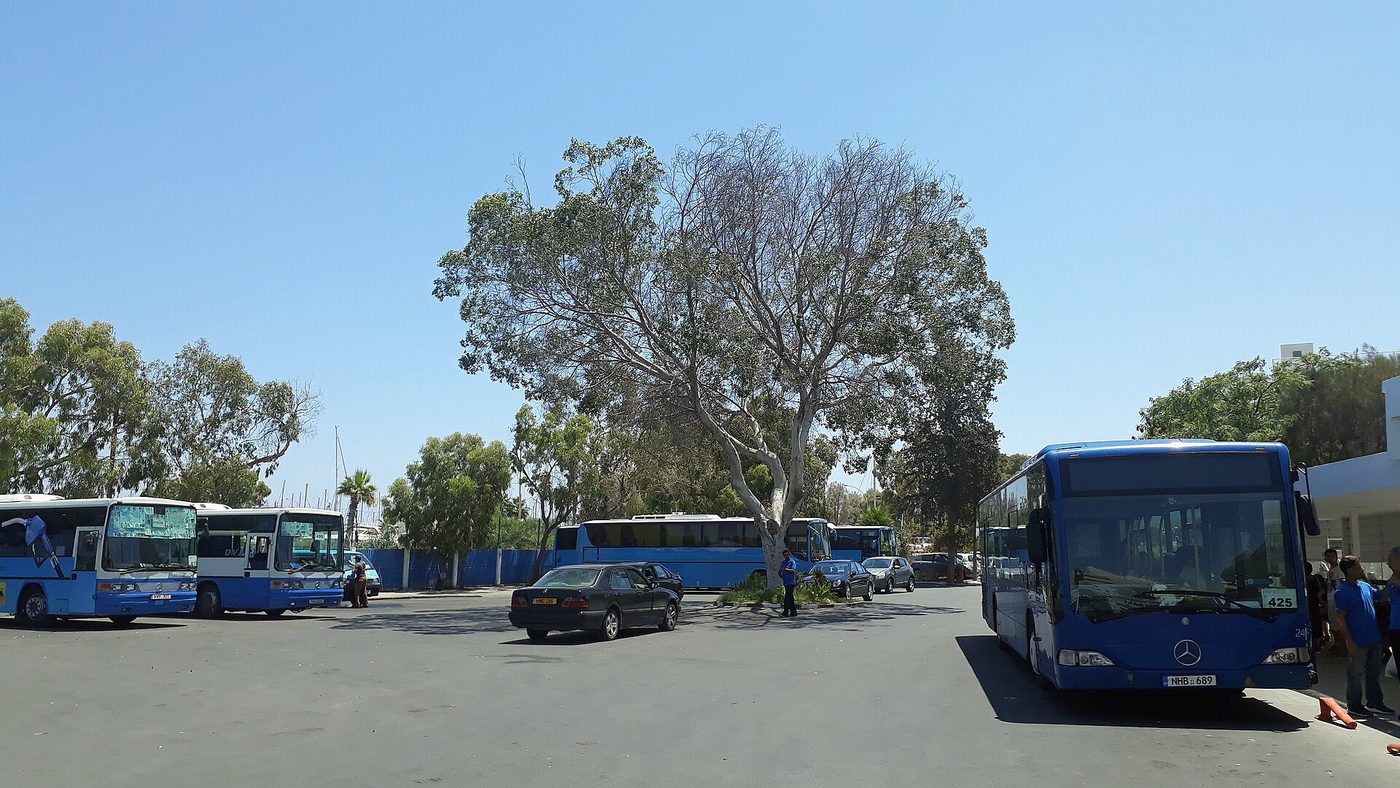
Larnaca is cheap until you start paying for movement. The airport bus, the sights in the centre and the promenade cost little or nothing, and the bill grows only when a taxi, a wreck dive or a car for a day trip enters the plan, and none of the three is compulsory. The table below sets out a daily budget, and the pages that follow show the places where the number jumps.
Everything per person, in euros.
Where the bill breaks
The first place is the bus after dark. By day the city fare is €2.70 (cash, daytime), and between 21.00 and 04.00 the cash fare becomes €4.70. A Motion card brings the daytime ride down to €2.00, though the card has to be bought first, so it pays only if you ride the bus often. Taxis add 15% between 20.30 and 06.00, and Bolt is the app that works there while Uber does not.
The second place is the Zenobia wreck, which operators sell as a snorkel cruise, a beginner dive, a dive with equipment and a full certified day, with a wide gap between the cheapest package and the dearest. The booking platforms quote the packages in dollars, and the prices vary from one operator to the next. Day trips behave in a similar way. Choirokoitia asks €2.50 at the gate, which is small, and the real cost lies in reaching it, since no bus to the site is documented.
Where you can save
Walking costs nothing, and most of the best stops in Larnaca are free to enter. The promenade, the church of Lazarus, the mosque and the lake need no ticket, and neither do the beaches, though a sunbed is paid for on the spot. Service is already in the restaurant bill by law, so a tip is a choice. Food offers the other lever, with street food at €3–6 (souvlaki pitta) and a sit-down meal at €12–25 (main course). A ticket for the fort is €2.50, and the antiquities card is worth buying only for a day that brings several paid sites.
- Walk the free stops first, since the promenade, the church, the Tekke and the lake cost nothing.
- Ride with a Motion card instead of paying cash, and keep away from the night rate.
- Buy the antiquities card only for a day with three or more paid sites, and skip it for the fort alone.


The same comparison for 146 places: hostel, hotel, getting into town and a day pass. Travel costs →
Where to next
What to eat in Larnaca
→Meze to share, grilled halloumi and Cypriot coffee along the promenade

Cyprus
→An island with the euro, left-hand traffic and two views of the same map, entered through Larnaca

How well does Larnaca suit you?
→Six questions: a score for this place and others like it.
Nomadinho scores out of 100, the same ones behind “Where to go”.
If you like Larnaca
Three places with the closest scores, from any country.


Before you go
Short answers to what people ask most before setting out.
How much does the bus cost in Larnaca?
The cash fare in the day is €2.70 (cash, daytime), and after 21.00 it is €4.70. With a Motion card each daytime ride is €2.00.
Is the antiquities card worth it?
It pays off only on a day with several paid sites. The card costs €8.50 for one day and €17.00 for three. The fort charges €2.50 and Choirokoitia €2.50, and with only these two entries the card does not pay back.
What costs nothing in Larnaca?
The promenade, the Salt Lake, Hala Sultan Tekke and the Church of Saint Lazarus ask for no ticket. The beaches are free too, although the sunbeds are paid for.
Ready for Larnaca?
Front row for the next trip
Leave your email and we'll let you know when a new destination or story goes up.