

Venice beyond the crowds: the sestieri, the early hours and how to arrive
- Published
- 30 September 2026
- Reading
- 5 min read
- Where
- Venice, Italy
- Prices checked
- 22. Oct 2026.
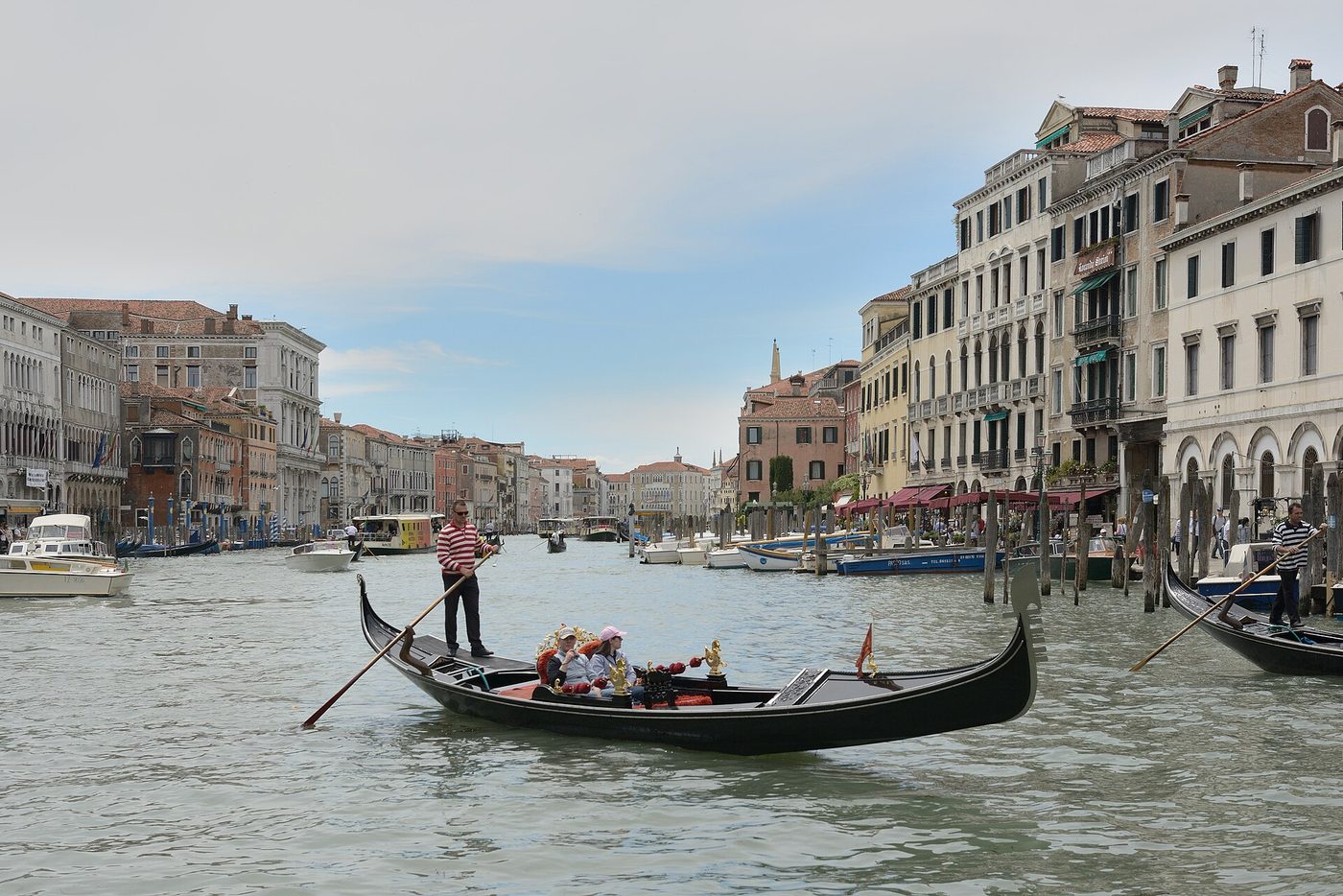
The same canals and the same bridges, but a different Venice. What changes it is the hour you set out, the quarter you choose and the bed you sleep in.
Crowds in Venice follow a pattern: they stay thick around St Mark's Square and the Rialto all day, and thin out two or three bridges further on, where the lanes narrow and the little canals empty. Venice beyond the crowds takes three things: a quarter away from San Marco, a morning before the day-trip coaches arrive and a night in the city itself.
Six sestieri, two of them best for a start
Venice divides into six sestieri: Cannaregio, Castello, Dorsoduro, San Marco, San Polo and Santa Croce. If you want a quiet walk, start in Cannaregio and Castello, north and east of the square, where long canals run under low bridges. Cannaregio is also the quarter of the Ghetto, established in 1516 as the first settlement of its kind in Europe. Dorsoduro lies across the Accademia bridge on the far bank of the Grand Canal, with the same canals and far fewer people than San Marco. A walk with no plan through all three costs nothing.

In the morning, before the groups
The fish market under the Rialto runs in the morning until midday; closed day: Monday (fish market). So a morning from Tuesday to Saturday suits a walk past the fish and vegetable stalls and across the old bridge, built in the late 16th century and still the oldest over the Grand Canal. St Mark's Basilica hours: Mon–Sat 9:30–17:15 (last entry 16:45); Sun & holidays basilica from 14:00, museum and loggia from 9:30; if you reach the square shortly before, it is far thinner than at noon, and once it fills, the side streets are waiting.

Airport, then vaporetto
From Marco Polo airport the ACTV Aerobus, line 5, runs to Piazzale Roma, the last point wheels reach; the ride takes about 25 min and the ticket is €10. From there you go on foot or by vaporetto, because the city has no cars and all traffic goes by water. A single vaporetto ride is €9.50 and time-limited, so the day pass, €25, pays off only if you plan several rides.
Bus
- Aerobus
- line 5, about 25 min, €10
- Vaporetto
- €9.50 a ride
- Day ticket
- €25
Private transfer
- a driver meets you at arrivals
- booked ahead, late flights too
- costs more than public transport

Where things stand
In 2026 Venice charged day visitors on a trial basis, on selected days from April to July and only from 8:30 to 16:00. The trial ended in late July 2026, so the fee has not applied since 27 July, while the city's governing bodies decide on any measures after 2026. Anyone who stayed overnight was exempt because they already pay the tourist tax, €3.50 (3-star)/night, up to 5 nights. The rule has changed every year, so read the official page before you travel.

Check the same room on both sites: price and cancellation terms can differ.
Italy, in brief
What now
If this sounds like your trip, start here.

Venice
→A city without a single car, built on 118 islets
Venice in 2 days
→St Mark's before eight, Cannaregio in the afternoon and a vaporetto instead of a gondola: two days that dodge the day-tripper crowd.

Day trips from Venice
→Glass, lace, Giotto's chapel and an amphitheatre: five day trips, from a ten-minute vaporetto ride to a full day by train.
Where to stay in Venice
→A room five minutes from the square or one ten minutes' walk and a vaporetto stop further: the price gap is bigger than the distance gap.

What Venice costs
→In Venice most of the daily bill goes on the bed and the vaporetto, and rarely on sights.
A spiral stair and a flooding bookshop: Venice behind the Rialto
→A spiral staircase in a courtyard, a bookshop that floods and an island of fifty people: the Venice beyond the three kilometres everyone crosses.

What to eat in Venice
→Venetian food leans on fish and salt before pasta and tomato, because the city looked at the sea for centuries, rarely inland.

The best time to visit Venice
→Venice has four seasons and a fifth, high water, which is not a disaster but a timetable.
Getting around Venice
→From the plane to the first gondola on the canal in three steps: bus, Piazzale Roma, then water or your feet, because cars can't go any further.

Mistakes everyone makes in Venice
→Five mistakes that cost time or money in Venice, and what to do instead.

Italy
→The cities on the high-speed line are an hour or two apart; the coast, Matera and the Tuscan hills lie off it

The Tuscany everyone photographs isn't in any town
→The Tuscany on the postcard has no name on the map and no entrance gate. It is a view from a road, so the real question is where you can stop the car.

Rome for a weekend: what we spent, and what we would change
→The bill from one October 2025 weekend in Rome, line by line: two people, two days, no luxuries, and the three decisions that would change it next time.

Pompeii and Herculaneum from Naples: what fits into one day
→Pompeii and Herculaneum are a train ride from Naples, while Vesuvius needs a transfer uphill, which is why the day so often gets overpacked.

Front row for the next trip
Leave your email and we'll let you know when a new destination or story goes up.