

- Published
- 30 September 2026
- Reading
- 6 min read
- Where
- Assisi, Perugia and Orvieto, Umbria
- Prices checked
- 21. Oct 2026.
How to see Umbria without a car: Assisi as the base, Perugia for half a day, Orvieto for a full one, and the station quirks that decide each day.
Umbria is the only region on the Italian peninsula with neither a coastline nor a national border, so its three famous hill towns carry the whole show, and without a car the order matters more than the list. Base yourself in Assisi, give Perugia half a day on a train ride of 19 to 25 min, and keep a full day for Orvieto, which takes 2 to 3 h one way. These three do sit on hills, and each rewards a different kind of day.
The pink stone of Subasio
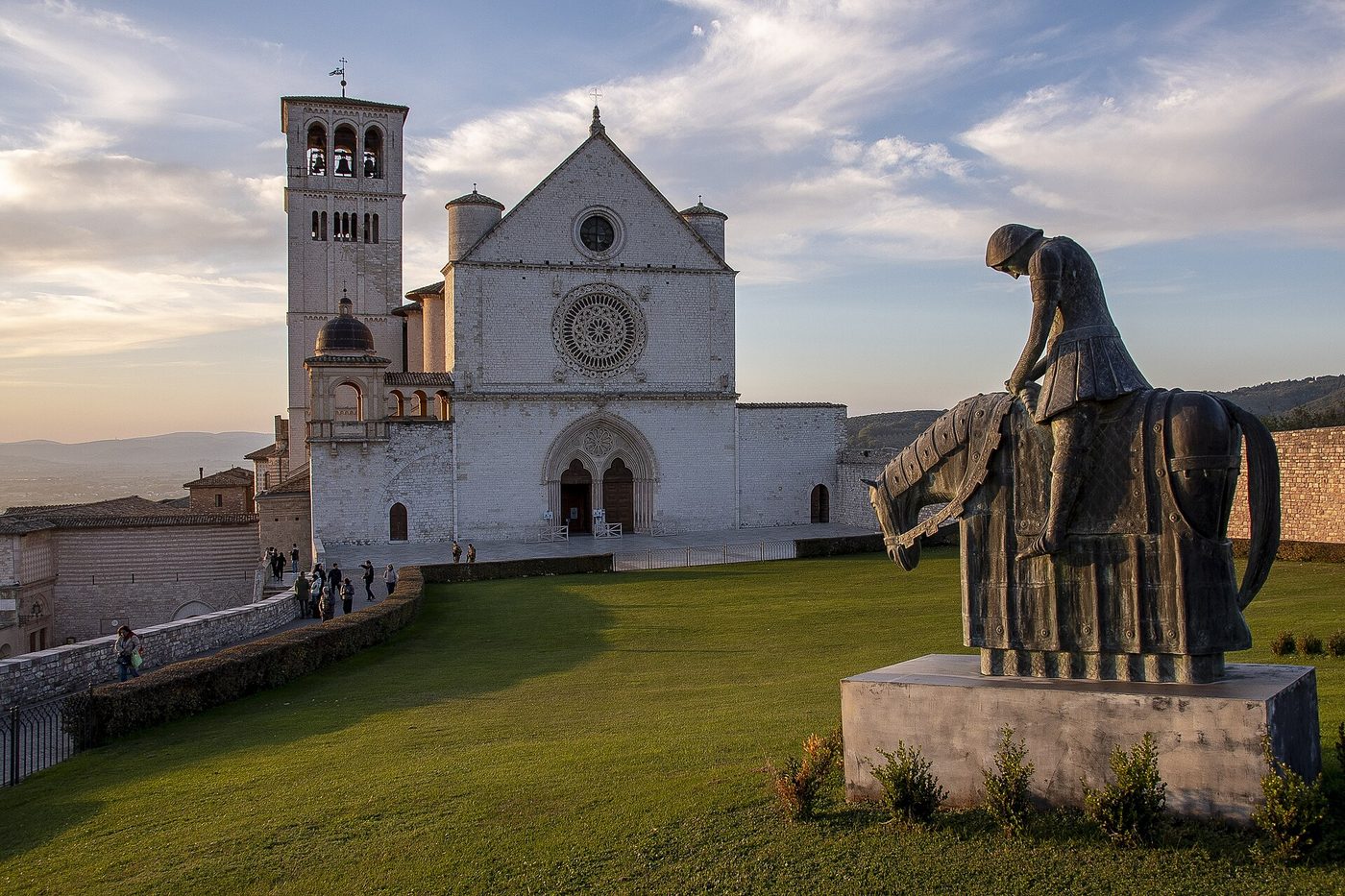
Assisi is where the train does not quite go. The station sits in the valley at Santa Maria degli Angeli, about 5 km below the town, so the first decision of the day is bus C from outside the platform or a walk up the brick-paved mattonata. The Porziuncola chapel is about 700 m from the station if you want a first stop. From Piazza del Comune, where a Roman temple front now holds a Baroque church, the town climbs Mount Subasio in pink and white stone, past the Duomo di San Rufino and Santa Chiara to the Basilica of St Francis. It was begun in 1228, built into the hillside and consecrated in 1253. Entry is free. Cimabue, Giotto, Simone Martini and the Lorenzetti brothers painted the walls. The 1997 earthquake brought down part of the vault and damaged the Giotto frescoes, and UNESCO listed the site in 2000. Lunch is strangozzi at Trattoria Pallotta, through an arch just off the main square. Finish at Rocca Maggiore, the fortress at the top, where the reward is the view.

Hill, arch and fountain
Perugia's station is called Perugia and is nowhere near Perugia's centre. Trains stop at Fontivegge, about 2 km below the old town on its hill, so the trick is the Minimetrò to the Pincetto terminus and the escalators up to Piazza Matteotti. Do not get off at Ponte San Giovanni or Università by mistake. The other way up runs through the Rocca Paolina, built in 1540–1543 and reduced to a single bastion, where escalators rise from Piazza Partigiani past the streets of the medieval town below. From Piazza Matteotti the pedestrian Corso Vannucci leads to Palazzo dei Priori, home of the Collegio del Cambio with its frescoes by Perugino. Piazza IV Novembre has the Fontana Maggiore by Fra Bevignate and Nicola and Giovanni Pisano. Then walk down Via dei Priori for about 400 m to the Etruscan Arch, which dates from the middle of the 3rd century BC. Lunch is torta al testo, a flat bread filled with sausage and greens, or a porchetta sandwich on Piazza Matteotti. The cobbles turn slippery when wet, so wear shoes with grip. The direct regional train from Assisi takes 19 to 25 min and the return fare is €8. In July the Umbria Jazz festival, running since 1973, fills the same streets.
An organised visit with a guide.

The town on tuff
Orvieto asks for the whole day, and the train is the reason. The journey is regional train (Trenitalia), change of train, taking 2 to 3 h one way and costing €26 return, so do not try to fit it in with Perugia. The town stands on a block of volcanic tuff where the Etruscans built Velzna, and the funicular opposite Orvieto Scalo station climbs the cliff in about 3 minutes. From Piazza Cahen, the well of San Patrizio, finished in 1537 for Pope Clement VII, has two spiral staircases. Then walk to Piazza del Duomo, where the cathedral, begun in 1290, has a striped black and white nave and a mosaic façade. Inside, the San Brizio chapel holds Signorelli's Last Judgement, painted after Fra Angelico began the work. Spend the day on the cathedral and the well, then lunch, and skip the rest. Order umbricelli with wild boar at Trattoria del Moro-Aronne on Via San Leonardo, with a chilled glass of Orvieto Classico, and take gelato from Pasqualetti on the cathedral square. Torre del Moro is the place to be before sunset.
On your own
- Ticket
- €26 return
With a guide
- transport arranged
- a guide on site
- costs more than going alone

Check the same room on both sites: price and cancellation terms can differ.
Italy, in brief
What now
If this sounds like your trip, start here.

Assisi
→The hill town of St Francis, with two basilicas, a Roman forum and a fortress above the rooftops, all close enough to cover on foot in a day.
Assisi in 2 days
→Day one covers the four main sights of the centre and day two the Eremo delle Carceri and the valley, in the order you actually walk them.
Day trips from Assisi
→A hill village, the capital of Umbria, a fortress town and a town on a rock — all four by train from Assisi, from eight minutes to two hours.

Where to stay in Assisi
→Up in the walls everything is on foot, down in the valley are the station, the bus and parking, and the countryside needs a car.

What Assisi costs
→The basilicas are free, tickets are small change, and the room decides the whole bill.

What to eat in Assisi
→Umbrian cooking is peasant cooking: flatbread baked on a testo, eggless pasta and game in the pot.

The best time to visit Assisi
→Spring and early autumn for walking, and around 4 October the town is full of pilgrims.

Getting around Assisi
→By Airlink from Perugia airport to the station, by bus uphill to the centre, then on foot along steep streets.

Italy
→The cities on the high-speed line are an hour or two apart; the coast, Matera and the Tuscan hills lie off it

The Tuscany everyone photographs isn't in any town
→The Tuscany on the postcard has no name on the map and no entrance gate. It is a view from a road, so the real question is where you can stop the car.

Rome for a weekend: what we spent, and what we would change
→The bill from one October 2025 weekend in Rome, line by line: two people, two days, no luxuries, and the three decisions that would change it next time.

Pompeii and Herculaneum from Naples: what fits into one day
→Pompeii and Herculaneum are a train ride from Naples, while Vesuvius needs a transfer uphill, which is why the day so often gets overpacked.
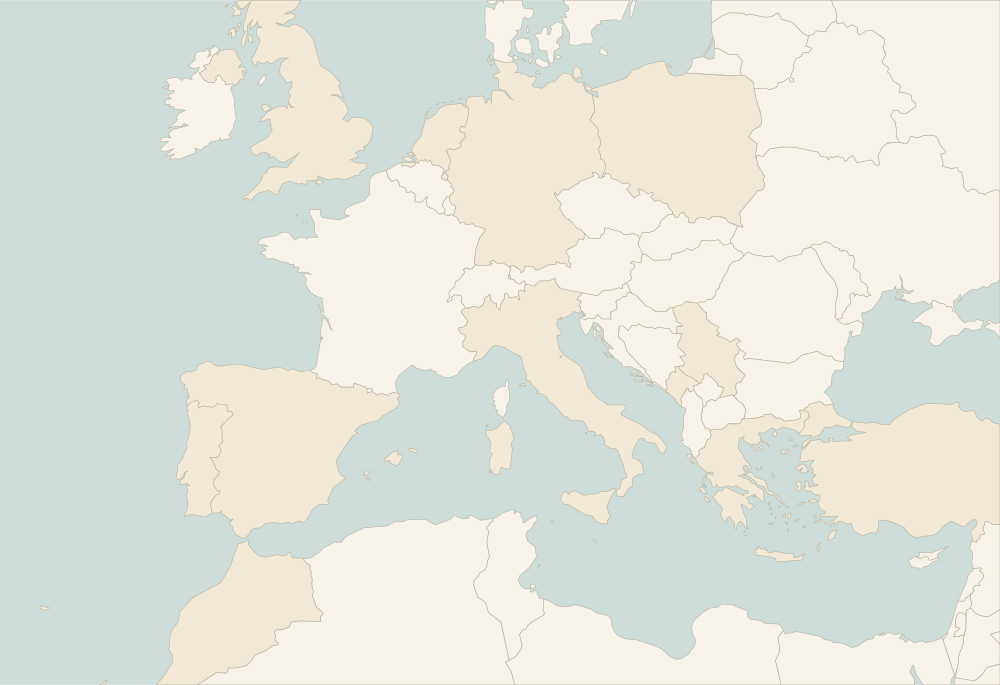
Assisi, Val d'Orcia and Siena from this story
See which of them suits you, then pin what you have already done.
Front row for the next trip
Leave your email and we'll let you know when a new destination or story goes up.