

The best time to visit Cuenca
Spring and autumn for the uphill walks, Easter for processions and music, summer for the heat, winter for quiet and wind.
- Best months
- spring and autumn
- Las Turbas
- before dawn on Good Friday
- July
- average 24.9 °C
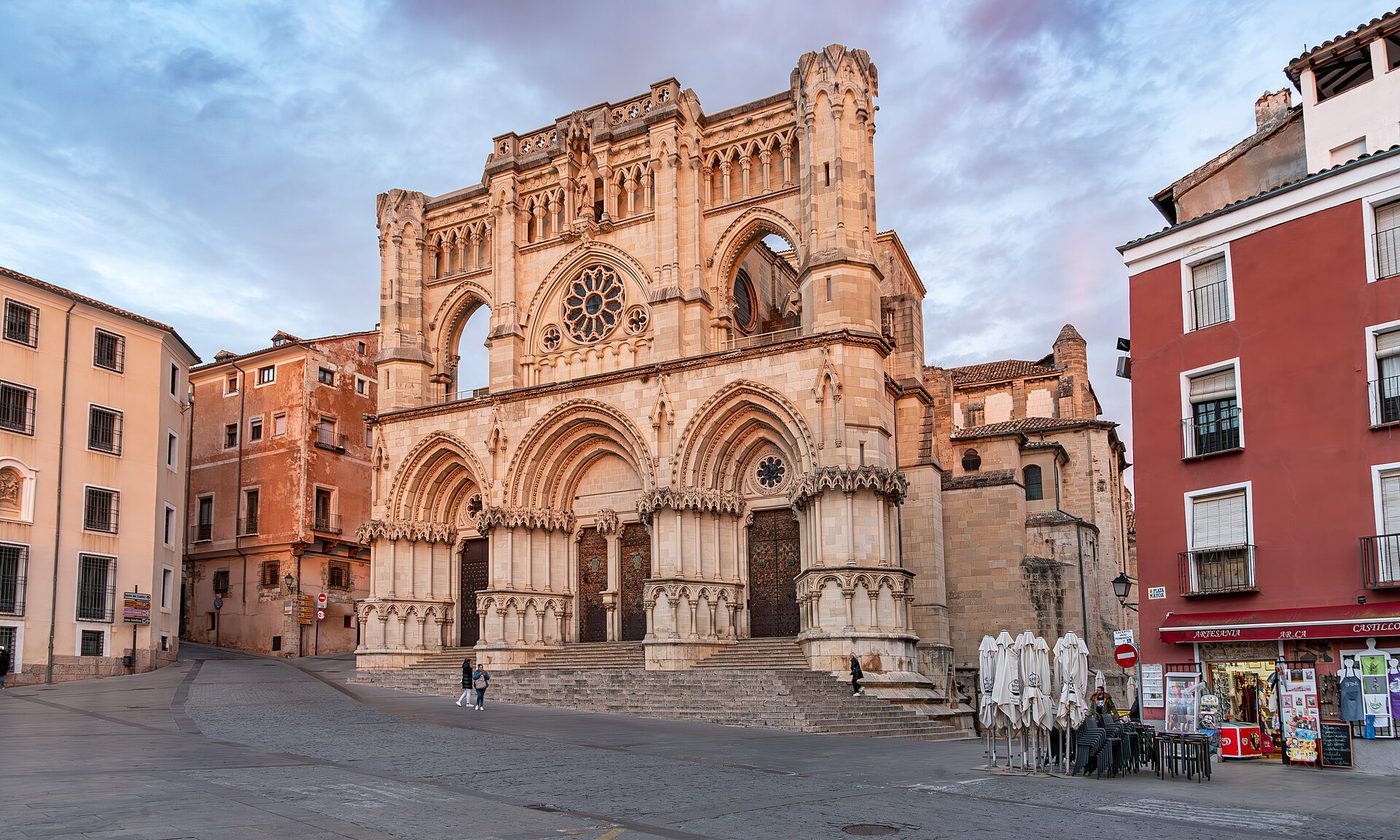
Cuenca is climbed on stone, uphill, so the month you pick should suit your legs before it suits your calendar. The one exception is Easter, when people come for the processions and accept the crowd. Spring and autumn give the easiest walking, summer gives heat and winter gives cold and quiet.
Through the year
Semana Santa and Las Turbas
Semana Santa in Cuenca has held International Tourist Interest status since 1980. It runs from Palm Sunday to Easter Sunday, which falls in March or April. The most striking hour comes before dawn on Good Friday, when Las Turbas leave the church of El Salvador, go down Carretería and climb to Plaza Mayor. Rain cancelled them in 2024, so the weather is part of the bet.
Plaza Mayor and the cathedral get very full, and capacity is controlled near San Felipe Neri. The abstract art museum closes on Thursday afternoon and all day on Friday of that week. Rooms in the old town sell out months ahead, and the drums can be heard there at dawn, which is a reason to book a room on a quiet street. The Religious Music Week, held since 1962, falls around the same days.
Check the same room on both sites: price and cancellation terms can differ.

Summer and winter
July averages 24.9 °C, and it is also the driest month, with one rainy day, while August has two. The old town is a place for the early hours, and the afternoon belongs to a shaded table. January averages 3.5 °C, with eight rainy days, and the wind off the ridge makes it feel colder.
Summer is the time for the Ciudad Encantada in the morning, before the sun gets high. The park opens every day at 10.00 and closes around 18.00 in winter and as late as 19.30 in early autumn. Winter is the opposite deal, as the old town is quiet and the stone streets are yours, if you bring a real coat.

Spring and autumn
April averages 10.5 °C, May 15.4 °C and June 20.1 °C, which is the range for climbing to the Barrio del Castillo and walking the Hoz del Huécar without heat. September gives 17.9 °C and October 13.7 °C. Autumn is wetter, with nine rainy days in October and ten in November, so a rain jacket belongs in the bag.


Where to next
Getting around Cuenca
→The train stops outside town, so a shuttle takes you to the lower centre and line 1 goes uphill to the old town; by car there is one free car park.

Albarracín · 70 km
→A brick-coloured town Spaniards know and foreigners mostly don't
How well does Cuenca suit you?
→Six questions: a score for this place and others like it.
Nomadinho scores out of 100, the same ones behind “Where to go”.
If you like Cuenca
Three places with the closest scores, from any country.


Before you go
Short answers to what people ask most before setting out.
What is the best month to visit Cuenca?
May is the pick for most visitors, at 15.4 °C with six rainy days. June and September are close behind, at 20.1 °C and 17.9 °C.
Is Easter a good time to visit Cuenca?
Yes, if you come for the processions, but the town is full and rooms must be booked months ahead. Las Turbas can be cancelled by rain, as in 2024.
How cold is Cuenca in winter?
In January the mean sits at 3.5 °C and eight days bring rain. Add the wind of the ridge and a proper coat becomes the main item in the bag.
Ready for Cuenca?
Front row for the next trip
Leave your email and we'll let you know when a new destination or story goes up.