

Coimbra
A university founded in 1290 and a town arranged around it, on the line between Lisbon and Porto
- When to go
- October 17° · 13 rainy days
- Per day
- €€price 2 of 5
- How many days
- 1–2days
- For you
- 6 questions →
- Nearest airport
- 73 km Viseu
- Right now

King Dinis founded the university in Lisbon in 1290; it was shuttled back and forth for centuries and has sat in Coimbra since 1537. The buildings crown the hill above the river and are not a museum — over thirty thousand students pass through them each year, in black capes still worn today.
Everything runs on one ticket from the kiosk in front of the medical faculty. The €16.50 ticket covers the Joanina Library, the Royal Palace, St Michael's Chapel, the old chemistry laboratory and the science collections; without the library it is €12.50. That gap is the whole reason for coming, so the choice is not difficult. The ticket office runs nine to seven, and the last entry to the library is at seven. Your library slot is printed on the ticket and a late arrival forfeits it, so book online if you are arriving in the afternoon.

The library was built between 1717 and 1728 for King João V and holds around two hundred and fifty thousand books from the sixteenth, seventeenth and eighteenth centuries. Walls over two metres thick and a teak door hold the temperature at eighteen to twenty degrees with no machinery at all. Insects are handled by a colony of bats that comes out at night and eats them; in the evening the tables are covered with leather, in the morning it is cleaned up. The system has worked for three centuries.
Coimbra fado has nothing to do with Alfama's. It is sung only by men, in academic dress with the cape, at night and almost in the dark — on the steps of the Santa Cruz monastery or by the Old Cathedral. The guitar is built and tuned differently from the Lisbon one. There is no tourist room with dinner attached; this happens outdoors, often as a serenade. In May comes the Queima das Fitas, eight days for eight faculties, and the town keeps a different timetable.
What to see in Coimbra
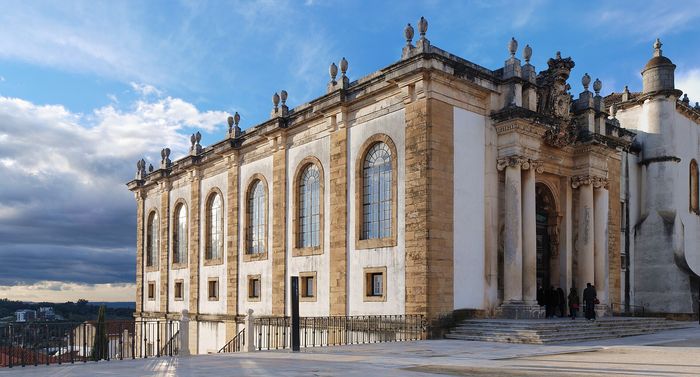
The Joanina Library
Three baroque halls from 1728, with gilded shelves to the ceiling and a painted vault. Entry is by booked slot, in small groups and with no flash, and the visit is short because people bring moisture in with them. It served as the working university library from 1777 into the twentieth century.
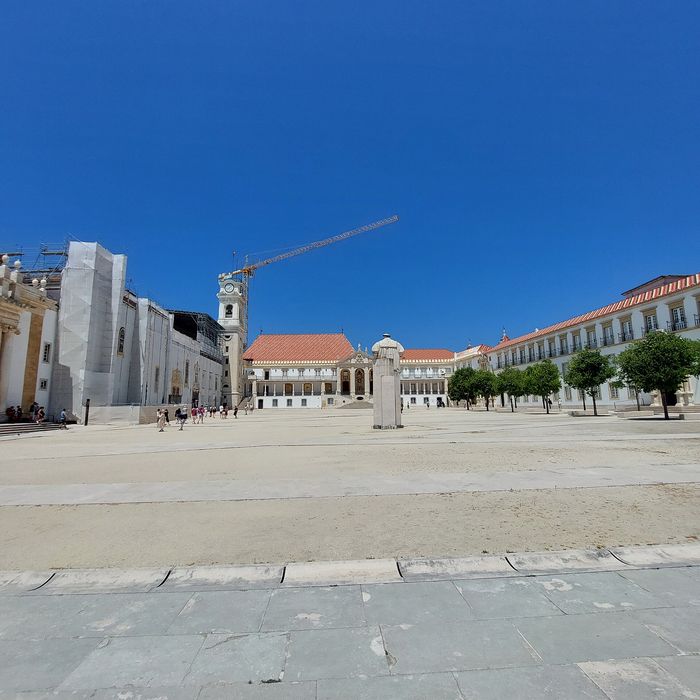
The Paço das Escolas
The university courtyard at the top of the hill, ringed by the old colleges and a baroque tower whose bell carries across the whole town. From here you see the Mondego and the entire lower city, and the courtyard itself is open — reason enough to climb up even without a ticket.
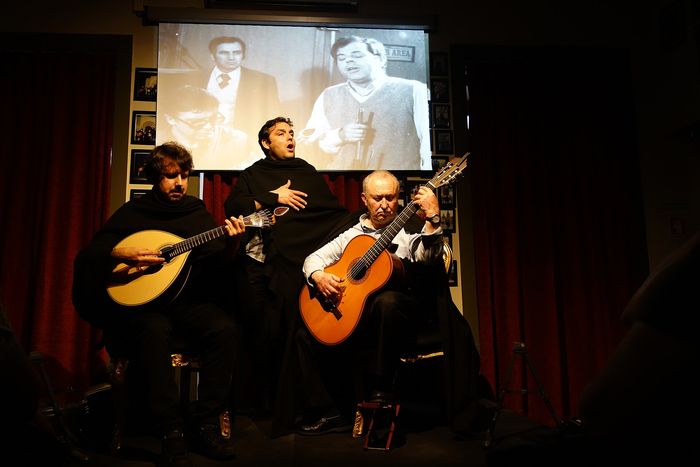
Coimbra fado
There are small rooms in the lower town that play every evening, and that is the reliable way to hear it. The real thing you tend to stumble into around midnight, when a group in capes stops under somebody's window. If you come across it, stop and stay quiet — the audience here keeps still while it lasts.
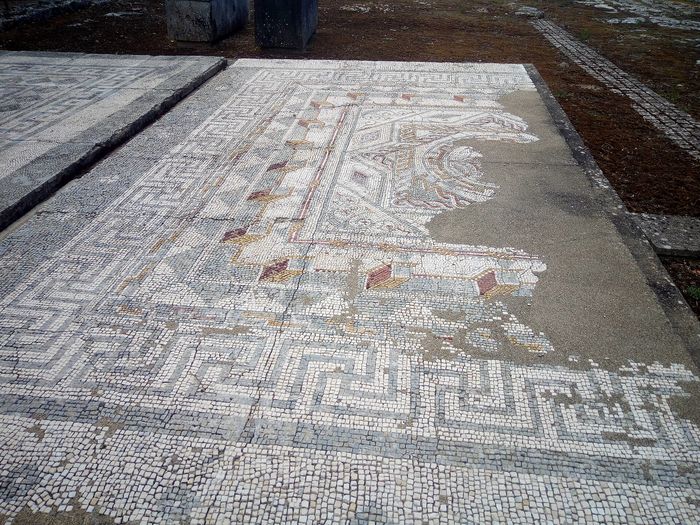
Conímbriga
Sixteen kilometres south, the largest excavated Roman town in Portugal — and only about a tenth of it has been dug. The House of Fountains has kept its mosaics under a canopy since 1986, and the fifteen-hundred-metre wall was thrown up in a hurry, from stone stripped off other buildings.

Queima das Fitas
Eight days in May, one for each of the eight faculties, with the burning of faculty-coloured ribbons, a parade through town and concerts until morning. The biggest student festival in the country — and the one week of the year when Coimbra has no rooms left at any price.
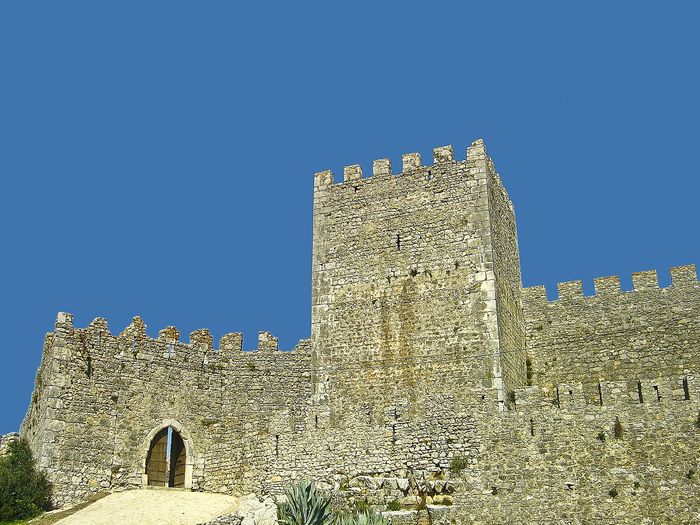
The lower town and the Mondego
Below the university lies the Baixa, flat and full of shops, with the Santa Cruz monastery where Portugal's first two kings are buried. Across the river stand the ruins of Santa Clara-a-Velha, a convent the Mondego flooded for centuries until it was abandoned.


Two things you probably did not know
The eighteenth-century Joanina Library keeps pests down with a colony of bats that hunt insects at night. The furniture is covered with leather in the evening and cleaned in the morning. The routine has worked for three centuries.
The University of Coimbra has run since 1290 and is one of the oldest in Europe. The fado sung in Coimbra is sung only by men, in black capes, and by convention you do not clap but cough.
Ready for Coimbra?
Within reach from here
Places sorted by straight-line distance from Coimbra — day trips or weekends.


All 277 places we write about sit on one page — narrow them down by continent, country, price or what you are travelling for.
Front row for the next trip
Leave your email and we'll let you know when a new destination or story goes up.