

The neighbourhoods of Rome
Four Roman neighbourhoods where people work, study and live, so you will not sleep there, but each fills an afternoon.
- San Lorenzo
- students
- Pigneto
- Pasolini's quarter
- Garbatella
- a settlement from 1920, metro B
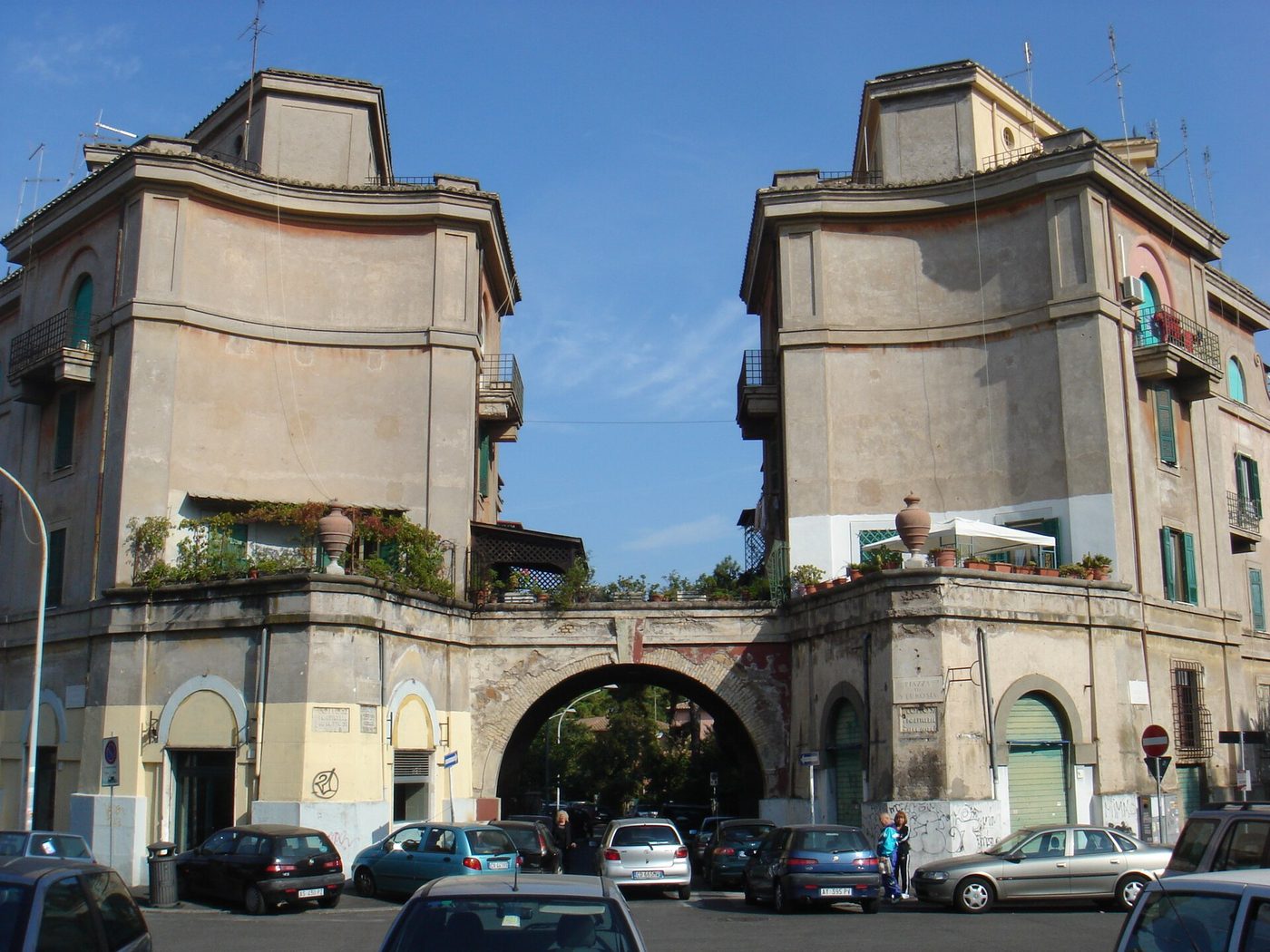
Tourist Rome stops at the Tiber and the old walls, and beyond them lie quarters built by factory workers, railwaymen and students. Four of them, San Lorenzo, Pigneto, Garbatella and Ostiense, have a character and a story of their own, and none is a place to sleep, so this page treats each as an afternoon out.
Students and factories beside the walls
San Lorenzo grew up after Italian unification, when Rome became the capital, on open fields that held only the old basilica of San Lorenzo fuori le Mura and the first rows of the Verano cemetery. Factories followed, among them the Cerere pasta works, the Wührer brewery and the Sciarra glassworks. The workers got a quarter that still keeps its working spirit, with students added because the Sapienza university is next door.
A heavier story belongs to 19 July 1943, when Allied bombers aimed at the large railway yard and their bombs fell on the quarter. The Parco Caduti del 19 Luglio 1943 holds the names of 1,674 ascertained victims, engraved on fifty metal plates that are lit from behind at night. The memorial by the architect Luca Zevi was inaugurated in 2003. Come for one slow afternoon, then stay into the evening where the students do.
3-star hotel, double room, per person per night
Pasolini's quarter with a pedestrian street
Pigneto is a working-class district beside the railway that Pier Paolo Pasolini chose in 1961 for his first film, Accattone, calling it the epic landscape of neorealism. Bar Necci at Via Fanfulla da Lodi 68 still hangs photographs from the shoot, and a few doors along stands the plain Vini e Olii shop where the film itself was made. Via del Pigneto is now a pedestrian strip of wine bars, cafés and kitchens from all over the world, and the colourful murals painted in 2014 are the quarter's tribute to him.
Metro C has a station at Pigneto, opened in June 2015, so you get there without changing, and the street fills up in the evening, which is why it suits the end of the day.
3-star hotel, double room, per person per night
A garden suburb from 1920
Garbatella was founded on 18 February 1920 beside the Basilica of St Paul Outside the Walls, modelled on the English garden-city movement. The buildings are grouped into units called lotti around a shared courtyard garden, which served as a meeting place for residents. By 1930 it was the most densely populated quarter in Rome. About 45,000 people still live there, and the historic Teatro Palladium, run by Roma Tre University, keeps its cultural life going.
Metro line B, the same line that serves the Colosseum, stops at Garbatella, so you step off and walk in through the gateways of the lotti. Wander without a plan, from one quiet courtyard to the next.
3-star hotel, double room, per person per night
Industrial Rome turned into a museum
Ostiense is the industrial zone that Mayor Ernesto Nathan set in motion after 1907, and the 1909 plan gave it a river harbour, the Mercati Generali, a tall gasometer and the Centrale Montemartini power station. The old power station is now a museum and Roma Ostiense station houses Eataly, so an afternoon fits together easily: museum, the Pyramid of Cestius and lunch.
3-star hotel, double room, per person per night
Official ticket
- Museum
- the old Montemartini power station
Through a partner
- options with a guide or audio guide
- usually costs more than the official ticket

How to combine them
Garbatella and Ostiense go together because they are neighbours. Pigneto and San Lorenzo sit on the opposite, eastern side, so each pair asks for its own afternoon. If you only have one, take Garbatella and Ostiense: the museum and lunch in Ostiense, then a walk among the lotti. Sleeping is covered by a separate page, and here you come for lunch, a walk and an evening.


Where to next
Museums in Rome
→Of the seven museums on this page, three shut on Mondays, one on Sundays, and only two require a booked time slot rather than just recommend one.

Assisi · 131 km
→The hill town of St Francis, with two basilicas, a Roman forum and a fortress above the rooftops, all close enough to cover on foot in a day.

How well does Rome suit you?
→Six questions: a score for this place and others like it.
Nomadinho scores out of 100, the same ones behind “Where to go”.
If you like Rome
Three places with the closest scores, from any country.


Before you go
Short answers to what people ask most before setting out.
Should I sleep in Pigneto or Garbatella?
Not as a first choice: both lie away from the main sights, so the page on where to stay covers six neighbourhoods better suited to sleeping.
Which metro line goes where?
Line B to Garbatella and line C to Pigneto, while Ostiense has Roma Ostiense station.
Is Ostiense only worth it for the museum?
No, it also has Roma Ostiense station with Eataly, the Pyramid of Cestius and Roma Tre University, so the museum pairs well with lunch.
Ready for Rome?
Front row for the next trip
Leave your email and we'll let you know when a new destination or story goes up.