

What Rome costs
What Rome really costs per day in 2026 — from €90 with a hostel and pizza al taglio to €330 with a hotel in the centre — and where that €5 coffee comes from.
- Budget
- ~€90 a day
- Mid-range
- ~€200 a day
- Comfortable
- ~€330 a day
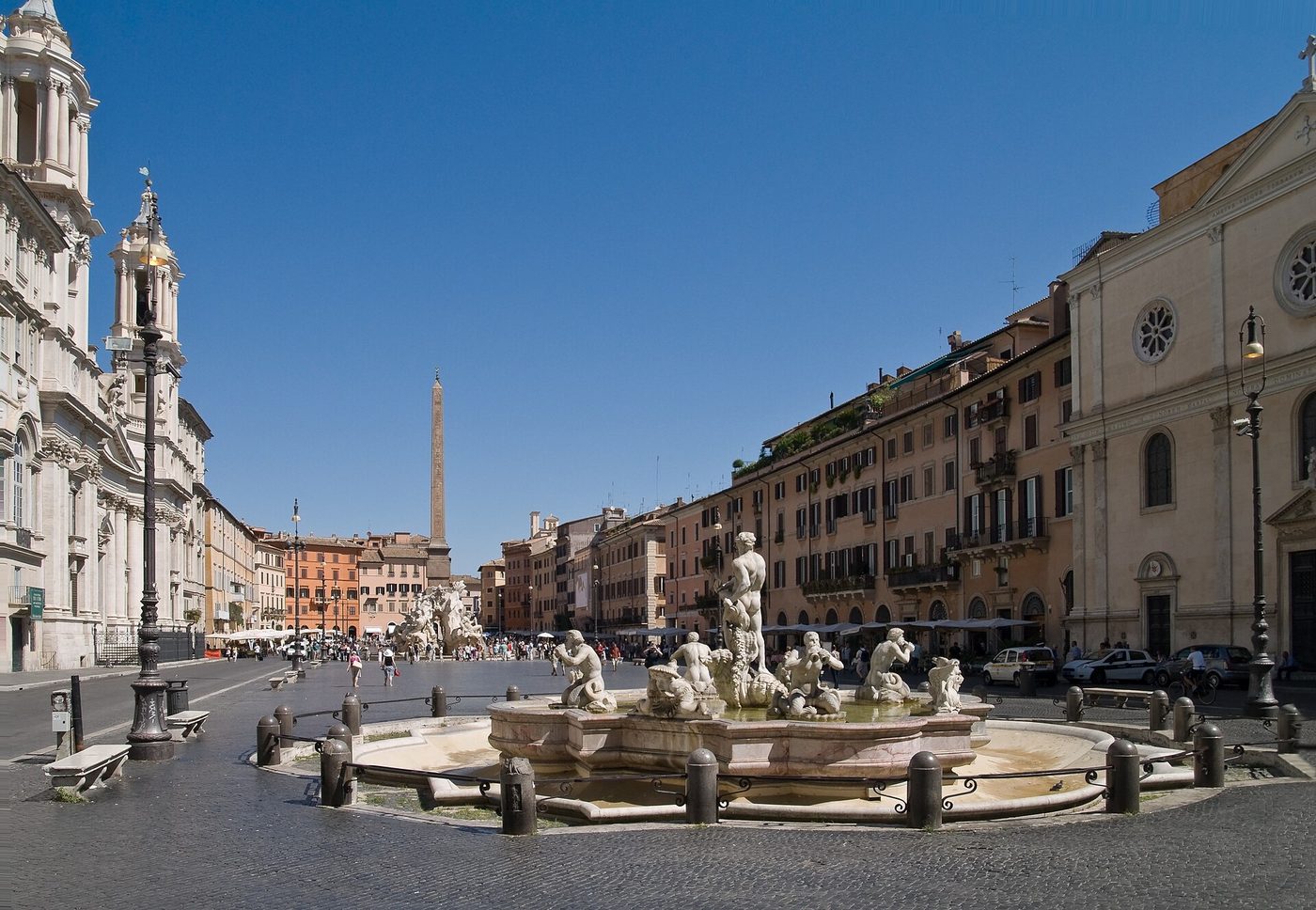
The same small coffee is €1.20 at the counter and €5 at a table on Piazza Navona. The same plate of pasta costs half as much in Testaccio as it does beside the Pantheon. Where you sit down changes the final bill more than how much you are ready to spend.
The three profiles below are per person per day, for two adults sharing a double room, in the main season. The flight and the day trips out of the city are not counted, but the city tax is, because it is paid every night. The figures are averages, not fixed prices, so if you are unsure which tier fits you, start from the middle one and move up or down item by item. None of this is complicated, but a few small habits add up over a weekend.
Prices line by line
Everything per person, in euros. The day is the same basket across the site: a bed, two meals, city transport and admissions.
The three tiers below fill the same basket in different ways, and each suits a different trip. The budget tier means a simple hostel near Termini or in quiet Prati, breakfast at the counter, lunch from a small local bakery and one paid entry a day. Entry tickets are the one fixed cost you cannot avoid, so everything else gets squeezed.
The mid tier adds a B&B room for two in the centre, one sit-down meal a day and all the main tickets across three days. The comfortable tier swaps the hostel for a large four-star hotel, takes both meals at a table and adds a taxi when the summer heat bites. Above that lie only five-star hotels on Via Veneto, where budget stops being a topic. Most of the saving lies in small choices: if you are on the budget tier, take a room in a quiet street, lunch at a bakery and take a long, free walk instead of a short taxi ride.


Where the money actually goes
- The chair. The same coffee is €1.20 at the counter and €3–5 at a table, because in Italy it is legal to charge 'servizio al tavolo'. On Piazza Navona and by the Pantheon a seated espresso passes €5. Drink standing, like every Roman.
- Coperto and service. €1.50–3 per person for bread and cutlery, on every bill; some places add a 10–15% 'servizio' on top. It sits in the small print on the menu, worth a glance before you order.
- Menù turistico. Three courses for €15–20 outside the Colosseum or on Campo de' Fiori sounds cheap until you taste it. The same money in Testaccio or Monti buys one proper dish.
- Airport taxis without the flat fare. The official Fiumicino–centre fare is €55 (fixed, up to 4 people), luggage included, and from Ciampino €40 (fixed, up to 4 people). If the driver 'switches on the meter', get out. The Leonardo Express is €14 online and dearer at the counter, the FL1 regional €8, the Ciampino bus €6.
- Ticket resellers. The same Vatican ticket is €25 on the official site and €35–45 from 'skip-the-line' sellers on the square. Colosseum tickets go on sale 30 days ahead; if there are none, a guided tour is the only legitimate extra.
- Bottled water. €2–3 a bottle in the centre, ten times a day in August. Rome has thousands of nasoni fountains running aqueduct water; one bottle lasts the whole trip.

What is free
- Every church, including St Peter's Basilica, Santa Maria in Trastevere, San Luigi dei Francesi with three Caravaggios and Sant'Ignazio with its fake dome — entry is free, just cover shoulders and knees.
- The first Sunday of the month: the Colosseum, Forum, Pantheon, Borghese (€2 booking fee still applies), Ostia and Tivoli are free; the last Sunday of the month the Vatican Museums, 9–14. The queues are enormous — worth it only if you are there at opening.
- Viewpoints: the Orange Garden and the keyhole on the Aventine, the Gianicolo, the Pincio, the terrace behind the Capitoline over the Forum.
- Piazza Navona, Campo de' Fiori, Trevi from the square (only the basin access is €2), the Spanish Steps, the Circus Maximus, Via Appia Antica on Sundays.
- Water from the nasoni and, at a few 'water houses' around the city, even sparkling.
Tax, tipping, cards
The official city tax is paid on the spot, per person per night, for a maximum of ten nights: hostels €3.50, one star €4, two stars €5, three stars, B&Bs and flats €6, four stars €7.50 and five stars €10, with children under 10 exempt. Tipping is rare, modest and never required in Italian restaurants. Round the bill up or leave a couple of euros when the service was good, and when 'servizio' already stands on the bill, stop there.
Cards must be accepted by every venue since 2023 and mostly are, but a quick counter coffee and the local market still run on cash. Withdraw €50–100 at a real bank's own ATM, because the free-standing Euronet boxes in the centre charge €5–7 a withdrawal, and always pay in euros, since the 'convert to your currency' option a terminal offers costs more.
Buy the plan before you go and switch it on when you land.


The same comparison for 156 places: hostel, hotel, getting into town and a day pass. Travel costs →
Where to next
Rome off the postcard: a keyhole and a cannon at noon
→Ten things Rome doesn't put on postcards — a keyhole on the Aventine, a cannon at noon, a museum in a power station for €11 and a church with three floors underneath.

Assisi · 131 km
→The hill town of St Francis, with two basilicas, a Roman forum and a fortress above the rooftops, all close enough to cover on foot in a day.

How well does Rome suit you?
→Six questions: a score for this place and others like it.
Nomadinho scores out of 100, the same ones behind “Where to go”.
If you like Rome
Three places with the closest scores, from any country.


Before you go
Short answers to what people ask most before setting out.
How much money do you need per day in Rome?
With a hostel and bakery food about €90 per person; with a B&B, trattorias and all the tickets about €200; with a hotel in the centre and restaurants about €330. Tickets depend on the profile: one paid entry a day on a budget, about €100 total over three days mid-range, and in the comfortable tier a guided tour replaces the ticket, pushing the daily average to about €45.
Do you tip in Rome?
It is not expected. Romans round up or leave a couple of euros when it was good. If the bill already shows a 10–15% 'servizio', nothing is added. The coperto (€1.50–3) is not a tip but a charge for bread and cutlery.
Card or cash?
Card wherever possible — every business is required to accept it. Cash is for coffee at the counter, the market and small purchases; get it from a bank's ATM, not the standalone 'Euronet' boxes that charge €5–7 per withdrawal.
Ready for Rome?
Front row for the next trip
Leave your email and we'll let you know when a new destination or story goes up.