

Alghero in 3 days
Sea walls and focaccia on day one, the cave on day two, the necropolis on day three
- Plan
- Day 1 old town
- The cave
- Entry €18
- Cathedral
- Closed Wednesdays and Sundays
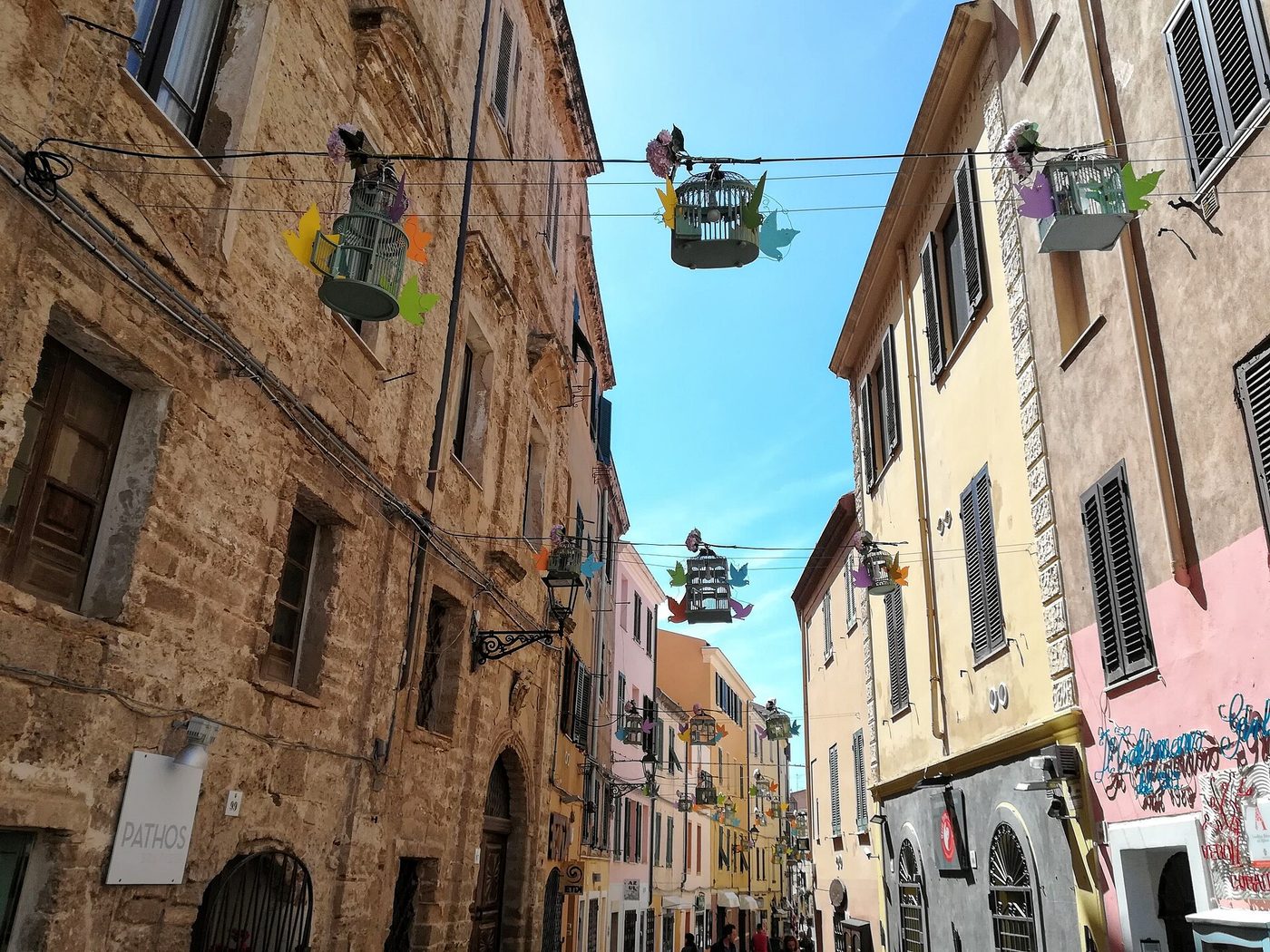
Sardinia sells itself on sand, but Alghero spends its first day on stone, with sea walls, a cathedral, a cloister and a focaccia counter. Three days is the right length, and the first two need no car. The third, with the necropolis and the winery on the plateau north of town, does. Neptune's Grotto on day two is the one fixed appointment, since by land it asks for a time slot, and everything else bends around it.
The sea walls, the cathedral and focaccia
3-star hotel, double room, per person per night
The old town
The harbour and the Bastions. Begin where the walls meet the port and walk them with the sea beside you, since the whole circuit is open to anyone with a pair of shoes. They are mostly 16th-century work with seven towers and three forts, and the stretch with restaurant terraces is the Bastioni Marco Polo.
The cathedral. The bell tower is octagonal and topped with polychrome majolica, and the interior has three naves on a Gothic-Catalan base. The morning opening runs from 10.30 to 13.00, and on its closed days, Wednesday and Sunday, go to the cloister first.
San Francesco. The cloister is square, and its octagonal pillars alternate with columns in a pattern that is easy to miss if you hurry past. Entry is €3 (cloister), and its hours change with the season.
Lunch. Bar Focacceria Milese at Via Garibaldi 11, opposite the harbour, makes the filled focaccia that locals eat on the pavement. One costs €3.50. A sit-down lunch is worth booking in season.
The Coral Museum. It sits in Villa Costantino, a Liberty villa of the 1900s, and the coral explains why this coast is called the Riviera del Corallo. Entry is €5.
Sunset and dinner. Watch the light go from the walls, then eat on Via Principe Umberto, where the sea restaurants are, or at Mos Tapas on Via Carducci 3.
The order follows the opening hours, because the cathedral shuts at lunchtime and the cloister keeps going into the afternoon, which leaves the museum for the quiet hour before dinner on the days it reopens at 16.30. If energy remains, Torre di Porta Terra has an information point and a roof terrace whenever the office is open.
The cave and a beach
The cave and the coast
Breakfast, then the slot. By land the time slot is compulsory, even at the ticket desk. From June to October leave the car at Casa Gioiosa an hour before your slot and ride the shuttle, and from November to May drive up and arrive 40 minutes before it. A late arrival cancels the booking.
Through the cave. The 654 steps down the cliff were cut in 1954, and the cave mouth sits about a metre above the sea. Entry is €18, and the guided tour lasts 30 min. Inside are lit stalactites and stalagmites and a salt lake.
Capo Caccia. The ARST line from town to the cape runs all year at city fares. There are no toilets in the cave, and the café sits by the ticket desk.
Lunch. Eat at the café beside the ticket desk for something quick, or drive back and eat in the old town.
A beach on the way back. Le Bombarde is a pale crescent of sand with a large car park, and it fills up in summer, so come early. Lazzaretto has soft white sand a little further north.
Dress for the stairs and the rules, because swimwear and bare chests are refused at the cave. Wear sturdy shoes or open sandals, and carry water and a hat. Nothing to eat or drink goes inside, and the stairs are not advised for anyone with heart or lung trouble, so a party with a weak heart should take the boat. The boat is the alternative, leaving from Banchina Dogana in the harbour or from the Cala Dragunara jetty in Porto Conte, about 40 minutes each way, from April. It does not sail in rough seas.
The necropolis and wine
I Piani and Porto Conte
Anghelu Ruju. Thirty-eight tombs are cut into sandstone and dated to 3200–2800 BC, and the site joined the UNESCO list on 12 July 2025 as part of the series on the domus de janas, the rock-cut tombs found across the island. The guided visit lasts 1 h and costs €7. The road is the SP 42 dei Due Mari, and no public bus runs there.
Sella & Mosca. The estate at I Piani covers 650 hectares, 520 of them under vine, and visits are by reservation on 079 7000266, so call before you drive out. The sparkling Oscarì is made from Torbato by the classic method.
Lunch. A tasting leaves a gap, and the gap is for lunch.
Palmavera or Mugoni. The Palmavera Nuraghe is a Bronze Age village near Porto Conte, about 12 km from town and beside the SS 127 bis road, and entry is €5. Mugoni is a golden beach in the bay, sheltered on windy days.
Fertilia. Settlers from Ferrara founded it in the 1930s, so the streets carry names from Veneto and Julian March, and after 1947 it took in exiles from Istria, Rijeka and Dalmatia. The lookout has a lion of St Mark.
Anghelu Ruju and the winery share the plateau, so they work as a pair, and Palmavera is the piece to move. It closes at 14.00 from November to March, so in winter swap it for the beach. The day needs a car, and the evening in Fertilia suits the end of a long drive, since the airport road passes through the village.
What drops out first
- The Coral Museum goes first, since nothing else on day one depends on it, then the cloister, then Palmavera.
- Fertilia belongs to the evening of day three, so it falls away with a short day.
- The cave and Anghelu Ruju stay, being the two fixed appointments of the trip.
- When the sea is rough the cave does not open. Move the cave day, change the slot, and fill the gap with the museum, the cloister and Fertilia.


Where to next


Nomadinho scores out of 100, the same ones behind “Where to go”.
If you like Alghero
Three places with the closest scores, from any country.


Before you go
Short answers to what people ask most before setting out.
How many days does Alghero need?
Two to three days cover the town, and four add a day trip to Stintino, Sassari or Bosa. Three days fit the old town, the cave and the plateau with the necropolis.
Can you do Alghero without a car?
Yes for the old town and the cave, since the ARST line to Capo Caccia runs all year, the Beach Bus runs from May to September and boats sail from April. The necropolis has no public bus, so day three needs a car or a tour.
What if the sea is rough and the cave is closed?
The cave opens only in fair weather and calm seas, according to its official site. Move the cave to another day and change the slot, then fill the gap with the Coral Museum, the cloister and a drive out to Fertilia, none of which depends on the sea.
Ready for Alghero?
Front row for the next trip
Leave your email and we'll let you know when a new destination or story goes up.