

Xi'an
The eastern end of the Silk Road, and an army farmers hit while digging a well in 1974
- When to go
- September 22° · 10 rainy days
- Per day
- €€price 2 of 5
- How many days
- 2days
- For you
- 6 questions →
- Nearest airport
- 26 km Xi'an
- Right now

Xi'an takes two days: one for the Terracotta Army outside the city, one for the walls and the Muslim Quarter inside them. The army ticket is €15–19 from March to November, released seven days ahead at midnight, in your own name against your passport — and at the gate the passport is the only ticket.
The army was found on 29 March 1974 by farmers digging a well, a kilometre and a half east of the burial mound of the emperor Qin Shi Huang. The three pits are estimated to hold over eight thousand soldiers, 130 chariots and 670 horses. The first, 230 by 62 metres, holds the main army of more than three thousand figures; the second has cavalry and chariots, the third the command post. The other two are smaller and unfinished — broken pieces, numbers, archaeologists at work — so go from pit three to pit one and leave the biggest sight for last.

The city walls were begun in 1370, twelve metres high and 13.74 kilometres round, among the oldest and best preserved in China. You hire a bike on top and the loop takes an hour and a half to two; on foot the same circuit is about four hours.
The Muslim Quarter is food, not a sight. This is where the Hui live, Chinese-speaking Muslims, and their street cooking is unlike the rest of the country: lamb, cumin, noodles pulled rather than cut. The quarter is fullest in the evening, so lunch is the better slot.
What to see in Xi'an
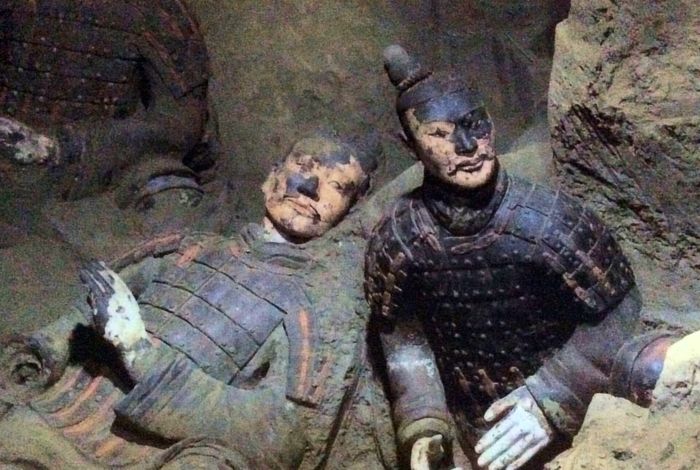
The Terracotta Army
Three pits and a hall of bronze chariots. The same ticket covers Lishan park around the emperor's burial mound, with the shuttle there included.
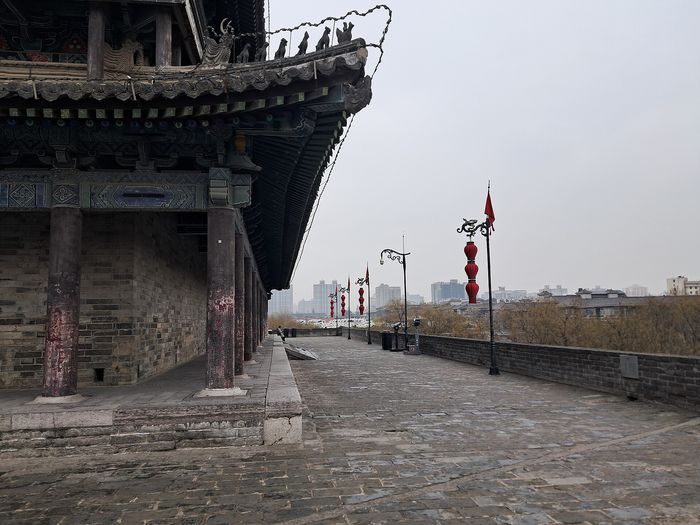
The city walls
The walkway on top is twelve to fourteen metres wide, room for bikes and walkers together. A lap by bike is the best hour in Xi'an.
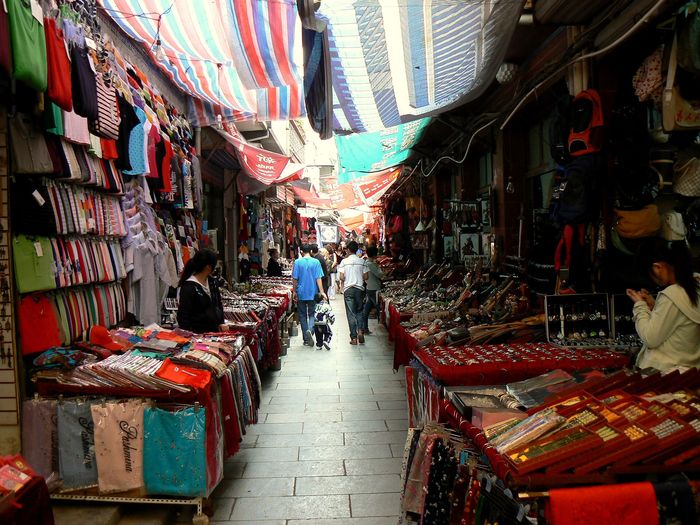
The Muslim Quarter
Yangrou paomo is the quarter's dish: bread you crumble into the bowl yourself before lamb broth is poured over it. Go at lunchtime.
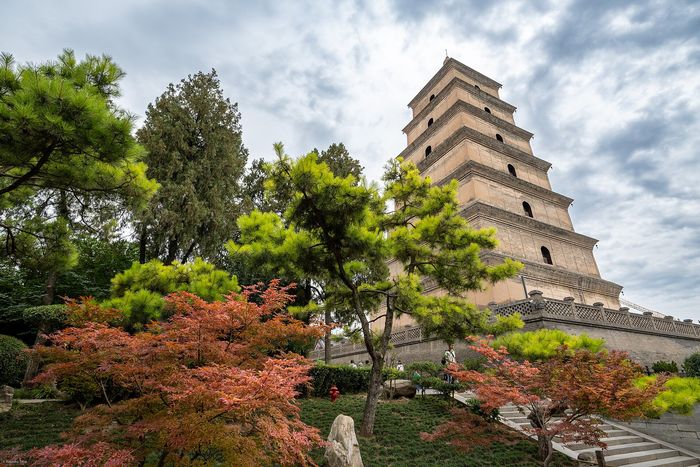
The Giant Wild Goose Pagoda
Seven storeys and 64 metres, with 248 steps to the top open to visitors. In the Da Ci'en temple around it the monk Xuanzang translated the scriptures he had brought back from India.
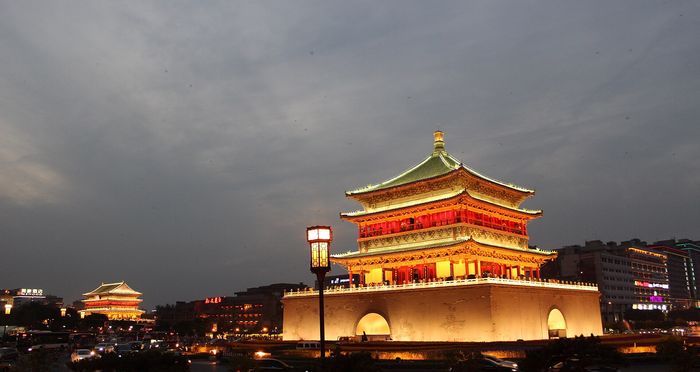
The Bell and Drum Towers
Two fourteenth-century towers marooned in traffic, what remains of the system that announced the opening and closing of the city gates.
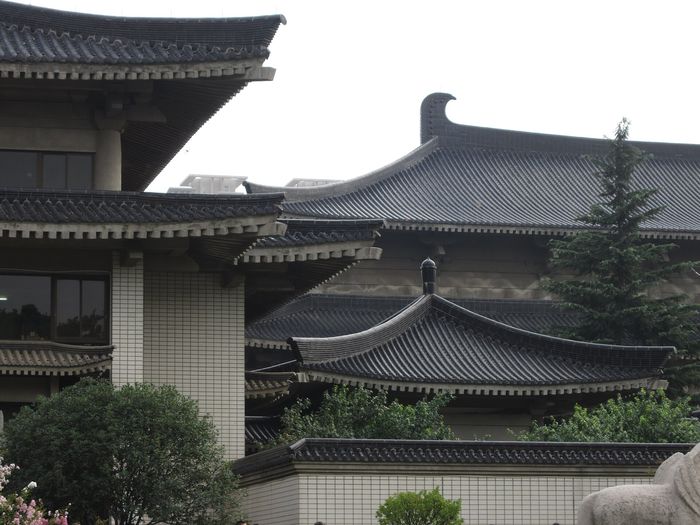
Shaanxi History Museum
Admission to the main galleries is free with a passport booking up to five days ahead; the Tang tomb murals hall has its own ticket, €34.72. This is where you find what the pits lack — gold, seals and objects off the Silk Road.


Two things you probably did not know
The Great Wild Goose Pagoda was built in 652 to hold the scriptures the monk Xuanzang brought back from India. His seventeen-year journey became the basis for Journey to the West, one of the four great Chinese novels.
Xi'an was the eastern end of the Silk Road and the capital of thirteen Chinese dynasties. Its fourteenth-century walls run almost fourteen kilometres and you can cycle around the top.
Ready for Xi'an?
Within reach from here
Places sorted by straight-line distance from Xi'an — day trips or weekends.

China
→A country the size of a continent, where the hard part is sorted out before you fly: payment, internet and tickets
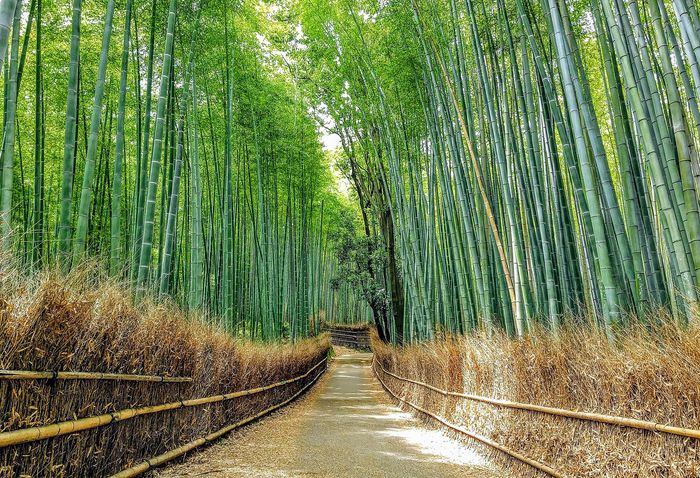
Japan
→A country where a train five minutes late hands the passenger a written delay certificate

Vietnam
→A country sixteen hundred and fifty kilometres long, where north and south are never in season together
All 277 places we write about sit on one page — narrow them down by continent, country, price or what you are travelling for.
Front row for the next trip
Leave your email and we'll let you know when a new destination or story goes up.